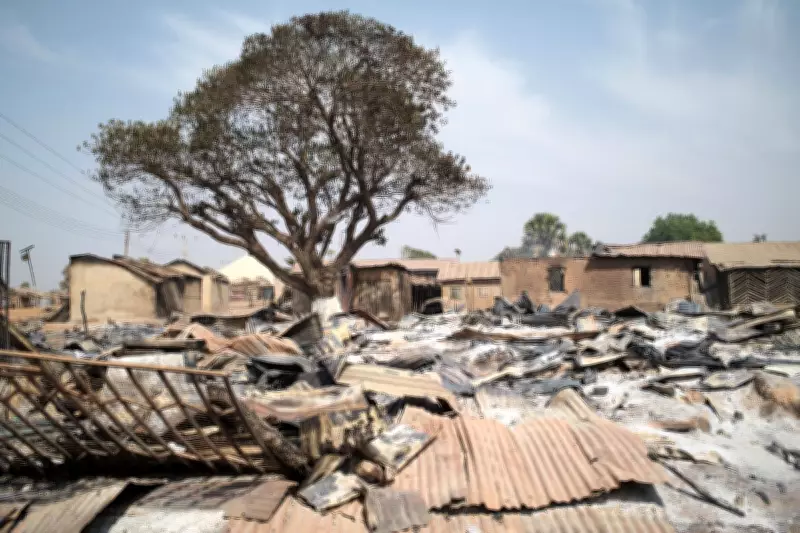
Nigerian Villagers Lured to Mosque Before Brutal Massacre
In a horrific attack that has shocked Nigeria, extremists in the villages of Woro and Nuku used a call to prayer to lure residents before slaughtering them. The assault, which lasted for ten hours, represents the deadliest incident in the country for several months, with authorities confirming at least 162 fatalities while villagers report a higher toll and numerous kidnappings.
A Calculated and Brutal Assault
The attackers arrived on motorbikes, going door-to-door in the predominantly Muslim villages, shooting residents and setting homes and shops ablaze. According to survivors interviewed by The Associated Press, the gunmen later entered a mosque, announced the call to prayer, and shot everyone who responded. Villagers were rounded up, their arms tied behind their backs, lined up, and executed with shots to the head.
Umar Bio Kabir, a 26-year-old schoolteacher, was playing football with friends when the attack began. "God said I would survive or else I would have been among the dead," he recounted, describing how they ran for their lives but not all his companions escaped.

No Security Response During Ten-Hour Ordeal
Residents reported receiving no assistance throughout the prolonged violence. Iliyaus Ibrahim, a farmer whose brother was killed and pregnant sister-in-law kidnapped along with her two children, stated: "We did not see anybody from when it started in the evening till the morning when it ended." However, Kwara state police spokesperson Adetoun Ejire-Adeyemi contradicted this account, insisting security operatives were present but providing no further details.
Aftermath: Burial of the Dead and Exodus of Survivors
By Thursday, only about twenty men remained in the villages, tasked with burying scores of victims. While the official death toll stands at 162, residents have buried nearly 200 bodies and continue to recover charred remains. Kabir helped bury several close friends, explaining: "Even as I am speaking to you, we have not finished packing the bodies. There are not enough people left in the village."
The aftermath was described as harrowing:
- Harmattan winds blew ashes from burned buildings with a lingering stench of blood
- Zinc roofs clattered in the wind, the only sound in the deathly quiet villages
- Survivors gathered essentials onto bikes, taxis, and trucks to restart life elsewhere
Zakari Munir, helping his brother relocate to Kaiama, gestured toward burning buildings and declared: "Everyone who lived here has been killed."
Nigeria's Security Crisis Spreads Southward
The attack in Kwara state, which borders Benin, has raised significant concerns about the southward expansion of Nigeria's security crisis. Previously confined to northern regions, armed groups are now moving south as military pressure and territorial competition intensify. Nigeria hosts multiple armed factions, including:
- Boko Haram and its splinter group, the Islamic State of West Africa Province
- Various amorphous groups commonly referred to as bandits
- The Lakurawa group from Niger (announced by the military in 2024)
- Jama'at Nusrat al-Islam wal-Muslimin, which claimed its first Nigerian attack in Kwara in 2025
According to United Nations data, several thousand people have been killed in Nigeria's protracted conflict, with analysts criticizing inadequate government protection for citizens. In response, the Nigerian government announced a new military operation in Kwara on Wednesday, following President Bola Tinubu's state of emergency declaration last year aimed at adding thousands more police officers.
A Complex Crisis Beyond Religious Lines
The massacre occurred amid recent U.S. government focus on Nigeria, after former President Donald Trump accused the West African nation of failing to protect Christians from alleged genocide. The Nigerian government rejected this claim, with analysts noting it oversimplifies a complex crisis that targets people regardless of faith. In Woro and Nuku, Muslim victims were apparently killed for resisting extremist preachings.

Nigeria has entered a military cooperation partnership with the U.S., which launched airstrikes against Islamic State-affiliated militants on December 25 and has provided weapons to Nigeria. Meanwhile, survivors like Maryam Muhammed, who lost her husband and home, gathered for Islamic prayers in Kaiama. The 57-year-old, briefly taken by attackers before being released in the chaos, searched through smoldering bodies to find her husband, who had been responsible for performing the call to prayer at the local mosque. "When I did not hear his voice when the day broke," she said, "I knew there was trouble."