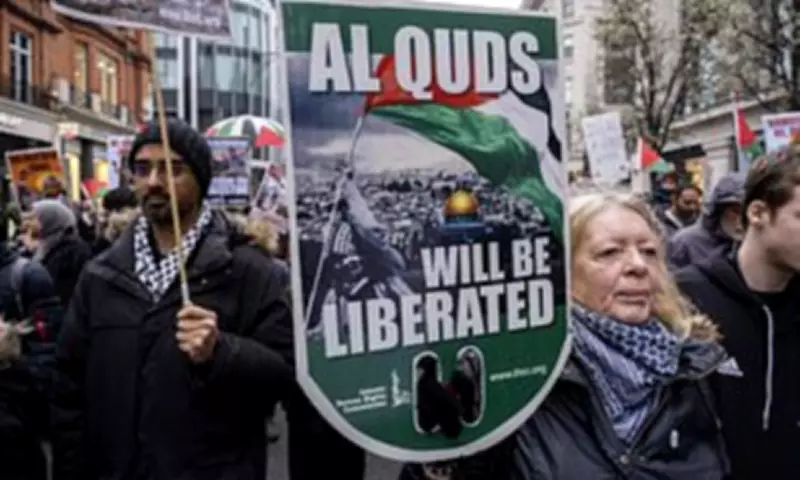
In an unprecedented security move, Scotland Yard will utilise the River Thames as a natural barrier to keep pro-Iranian regime demonstrators and counter-protesters apart during the upcoming Al Quds rally this Sunday. This innovative tactic follows the Metropolitan Police's decision to downgrade the event from a march to a static demonstration, citing significant concerns over potential serious public disorder.
Unique Circumstances Demand Unique Plan
Assistant Commissioner Ade Adelekan emphasised the exceptional nature of the security strategy, stating, 'We have not used this tactic before, but because this is a unique set of circumstances we need a unique plan to keep these groups apart.' He highlighted that the ongoing conflict in Iran has heightened tensions, with the rally and counter-protest expected to attract up to 12,000 participants, far exceeding attendance at previous annual Al Quds events.
Home Secretary Approves March Prohibition
Home Secretary Shabana Mahmood this week approved a Metropolitan Police request to prohibit the march, marking the first such prohibition since 2012. However, she clarified that it was not legally possible to ban a static demonstration entirely. Explaining the police's rationale, Mr Adelekan said, 'It is our assessment that even with strict conditions we could not prevent the two sides coming together and risking serious public disorder.'
The counter-protest is anticipated to involve various groups, including The Lion Guard of Iran, Stop the Hate, and the Free Iran Coalition, all opposing supporters of the Ayatollah regime. Mr Adelekan further warned that it might even be necessary to segregate different factions within the counter-protesters themselves, due to their divergent agendas.
Strategic Locations and Operational Details
The Al Quds demonstrators will assemble on the south side of the River Thames at Albert Embankment, while counter-protesters will gather across the water at Millbank. This geographical separation is designed to minimise direct contact. Assistant Commissioner Adelekan elaborated, 'Dividing where the two groups assemble means they will use different transport hubs, plus they are divided by the river and we can control the bridges as well.'
Lambeth Bridge will remain closed to all traffic except emergency vehicles, enhancing control over movement between the two sides. The Metropolitan Police will deploy more than 1,000 officers to manage the event, with reinforcements drawn from other forces through mutual aid arrangements.
Historical Context and Broader Implications
Reflecting on his 31-year career with the force, Mr Adelekan noted, 'I cannot think of another time we have used this tactic before, so as far as I am concerned it is new.' While he acknowledged that the measures cannot guarantee the complete absence of disorder, he expressed confidence in their ability to mitigate risks effectively.
The Al Quds demonstration, held annually during Ramadan and named after the Arabic term for Jerusalem, has previously featured controversial elements, including calls for Israel to be 'wiped off the map' and displays of flags associated with Iranian-backed groups. Mr Adelekan reiterated the police's stance, stating, 'While we will protect the right to freedom of speech, there is a zero-tolerance approach to hate crime and anyone who crosses the line can expect to face arrest.'
In parliamentary discussions, Home Secretary Shabana Mahmood described the Islamic Human Rights Commission (IHRC), the event's organiser, as 'an organisation that has been closely associated with the Iranian regime.' She affirmed that restrictions on the protest, including its location, were operational matters for the police to determine.
To facilitate this large-scale operation, officers are being redeployed from neighbourhood policing duties to cover the event and patrol Jewish neighbourhoods in London, ensuring broader community safety amidst the heightened security measures.