Melbourne Police Photo Ignites Height Requirement Controversy
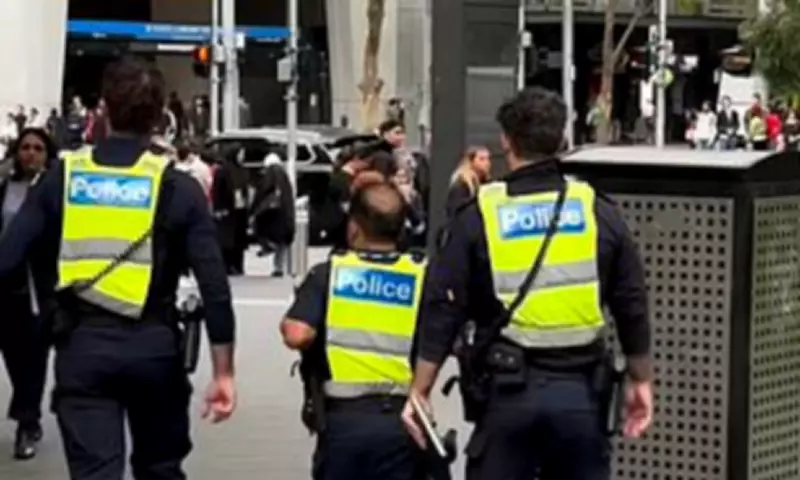
A photograph capturing three police officers walking through Melbourne's city centre has unexpectedly sparked a heated public debate regarding height requirements within law enforcement agencies. The image, taken outside the State Library of Victoria and shared by FF News Room, clearly shows one officer standing significantly shorter than his two colleagues, reaching only to their shoulders.
Public Reaction and Historical Context
The photograph prompted immediate reactions from Australians across social media platforms, with many expressing surprise and questioning whether physical stature should be a consideration for police recruitment. "They can't be for real, there must be a height and weight restriction when applying," one commenter asserted, while another added, "I thought there would be a minimum height requirement for men and women when applying for the role."
However, Victoria Police has officially clarified that they maintain "no minimum or maximum height requirement" for prospective officers. Their recruitment process instead focuses on physical fitness standards, medical suitability, and psychological assessments to ensure candidates can perform essential policing duties effectively.

This contemporary policy stands in stark contrast to historical practices. Multiple Australians recalled stricter physical standards from previous decades. "I was told I couldn't join Victoria Police because I'm five foot eight inches and you had to be six foot back in the late 80s," one person revealed. Another added, "Back in my day, you had to be six foot tall and weigh over 90 kg to join the force." A third comment highlighted, "My mum applied and was refused due to height, and heck, she's much taller than him."
Defending Diversity in Policing
Amidst the criticism, numerous Australians rallied to defend the police force and argue that height should be irrelevant to policing capability. "Height doesn't matter if you can do Jet Li or Bruce Lee style. Anyone can be taller but doesn't mean not fit for the job, same as David and Goliath," one supporter commented, drawing parallels to historical underdog narratives.
Another defender stated, "If someone meets the requirements of the job, it doesn't matter how tall or short someone is. Being tall has advantages, and being shorter actually can have advantages too." This sentiment was echoed by others who emphasized character over physical attributes: "At least he has the guts and integrity to do the job. Most people commenting need to look themselves in the mirror and ask themselves 'would I be capable of putting myself on the line every day to serve and protect'."
A fourth commenter urged for greater respect, saying, "How about we stop picking on people just out there doing their job based on their appearance."
Personal Accounts of Height-Related Bullying
The debate has brought to light troubling personal accounts of height-related bullying within police ranks. In 2021, Sydney police officer Alan Thorn spoke publicly about his distressing experiences. Standing at five foot two inches tall, Thorn revealed he was given the cruel nickname "Frodo" by his instructor during training, a reference to the hobbit character from The Lord of the Rings.
"I had no idea what Frodo meant until I asked one of the young blokes there and he informed me it was a hobbit out of Lord of the Rings," Thorn recounted. "I don't believe a lot of people would have known my real name, they just knew me as Frodo."
His ordeal extended beyond this single nickname. Colleagues also called him "Papa Smurf" and created a wall display featuring images of dwarves and crude memes, which they nicknamed "The Great Little Wall of Thorny." Thorn claimed this persistent bullying contributed to him suffering from depression, anxiety, and PTSD, leading him to consider legal action against the force.
This case underscores the potential psychological impact of focusing on physical characteristics rather than professional competence within law enforcement environments.

Modern Policing Standards and Community Implications
The ongoing discussion raises important questions about diversity, inclusion, and effectiveness in modern policing. Victoria Police's current policy reflects a broader shift toward valuing skills, fitness, and psychological resilience over arbitrary physical measurements. This approach potentially allows for a more diverse police force that better represents and connects with the varied communities it serves.
However, the passionate public response to this single photograph indicates that societal perceptions about what a police officer should look like remain deeply ingrained. The debate continues to balance historical expectations with contemporary values of equality and capability-based assessment in essential public service roles.