Maduro Returns to New York Federal Court Amid Narco-Terrorism Allegations
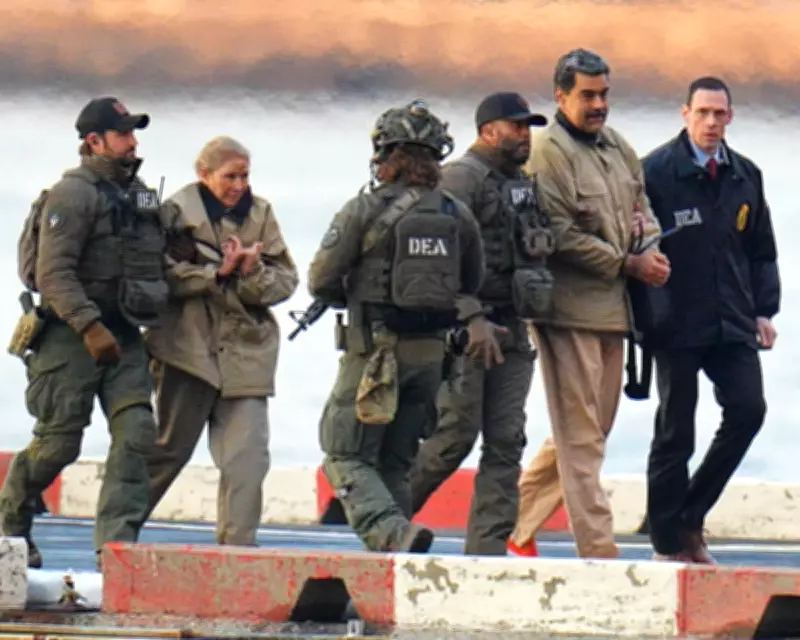
The deposed Venezuelan president, Nicolás Maduro, is set to reappear in a Manhattan federal court on Thursday, facing serious narco-terrorism charges. This follows his dramatic capture by US military forces earlier this year, alongside his wife, Cilia Flores, in a raid that sparked international controversy.
Controversial Capture and Legal Proceedings
US special forces executed a pre-dawn raid on January 3rd, apprehending Maduro and Flores in Caracas. The operation reportedly resulted in approximately 100 fatalities, raising legal and ethical questions among experts who have debated its legality and potential classification as war crimes. Both Maduro and Flores entered not guilty pleas during their arraignment on January 5th.
Charging documents accuse Maduro of leading a corrupt government that actively promoted illegal activities, including drug trafficking, over decades. The case has drawn significant attention due to its high-profile nature and the geopolitical tensions between the US and Venezuela.

Detention Conditions and Political Fallout in Venezuela
While Maduro's son, Nicolás Maduro Guerra, has publicly stated that his father remains in good spirits and physical condition, experts describe the conditions at the New York detention centre as dire. Meanwhile, in Venezuela, Maduro's political influence is rapidly diminishing under his successor, acting president Delcy Rodríguez.
In less than three months, Rodríguez has purged nearly half of Maduro's cabinet, removing key allies such as defence minister Vladimir Padrino López and attorney general Tarek William Saab. She has focused on economic revitalisation, claiming at a business summit in Miami that Venezuela has attracted over 120 energy companies globally and is poised for an economic takeoff.
Legal Funding Dispute and US Pressure
Maduro's legal team has pushed for case dismissal, alleging that US authorities are violating his constitutional right to counsel by obstructing funding from the Venezuelan government, which is under sanctions. The US Treasury Department's Office of Foreign Assets Control initially granted a waiver on January 9th but reversed it hours later, citing an administrative error.
Maduro's lawyers argue that this interference deprives him of chosen representation and could lead to a constitutionally suspect verdict. Prosecutors counter that it is highly unusual to allow a sanctioned government to fund legal defenses, though they typically permit defendants to use personal funds.
The case unfolds amid renewed US-Venezuela relations, with the US embassy in Caracas reopening and high-level visits occurring since Maduro's capture. Former US president Donald Trump warned Rodríguez to align with US interests, hinting at potential consequences.