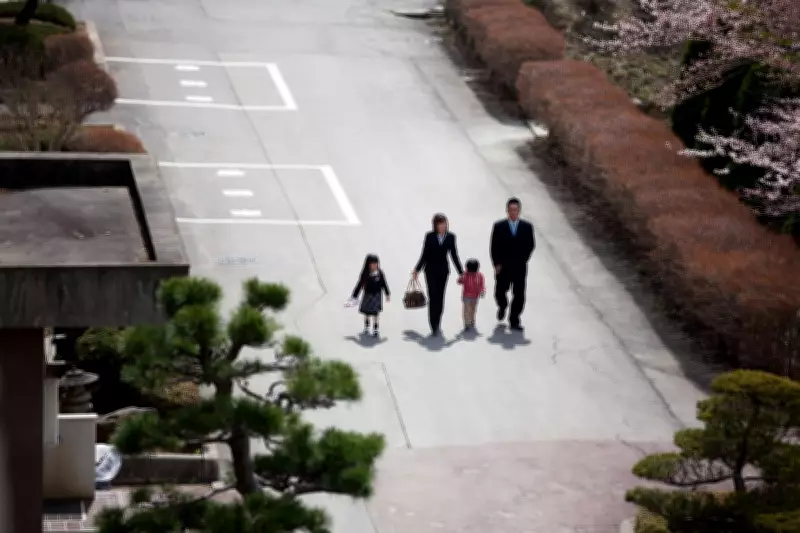
Japan's Historic Custody Reform Allows Divorced Parents to Share Childcare
In a landmark shift, Japan has introduced sweeping legal changes that now permit divorced couples to share custody of their children for the very first time. This reform, which took effect on Wednesday, marks a significant departure from the previous system that mandated only one parent retain legal custody after a separation.
Ending a Century-Old Sole Custody Rule
Under the revised Civil Code, couples who have separated can now mutually agree to either share custody or have one parent take sole custody. This update represents the most substantial overhaul of Japan's custody rules since family structures were first codified in the late 19th century. Previously, Japanese law strictly required that only one parent hold legal custody post-divorce, a policy that often resulted in one parent losing meaningful involvement in their child's life.
Emphasis on Cooperation and Child Welfare
The amended law places a strong emphasis on parental cooperation, stating that parents—whether together or separated—should respect each other's individuality and work jointly in the best interests of their child. In practical terms, this means that major decisions affecting a child's future, such as relocation or education, must be agreed upon by both parents in joint custody cases. However, day-to-day matters, like part-time work permissions, can be handled by one parent alone, and urgent situations, including medical emergencies, allow for independent decision-making.

Court Oversight and Safety Provisions
If parents cannot reach an agreement at the time of divorce, the matter will be settled by a family court. Judges will determine whether joint or sole custody is more appropriate, with the child's welfare as the guiding principle. The law also draws a firm line in cases involving harm: if there is evidence of abuse or risks to a child's physical or mental safety, or if domestic violence between parents makes cooperation unrealistic, courts are required to grant sole custody. Despite this, some observers remain uneasy about whether courts are adequately prepared to identify such risks, particularly in complex or subtle cases of domestic abuse.
Retroactive Applications and Financial Support
The reform opens the door for parents who divorced under the old rules to revisit earlier custody decisions. They can apply to a family court to seek a change in the arrangement, although this option is not guaranteed. Courts may reject applications if there are concerns, such as a history of abuse or prolonged failure to provide child support without valid reasons.
On the financial side, the revision introduces a new provision aimed at supporting children after divorce. A parent living with the child can claim a monthly payment of 20,000 yen per child from the other parent, even if no prior agreement exists. This measure is designed as temporary support until formal arrangements are put in place and applies to divorces finalised on or after 1 April. Previously, child support could only be enforced if both parents agreed or if the matter was taken through legal procedures.
Enhanced Enforcement Mechanisms
The updated law also introduces a system that gives child support claims priority over other debts, allowing payments to be collected more effectively if they go unpaid. Notably, parents will no longer need official notarised documents to secure such claims; a written private agreement will now suffice, according to local media. This change aims to streamline the process and ensure better financial protection for children in divorced families.