Gerry Adams Appears in High Court as Civil Trial Over IRA Bombings Commences
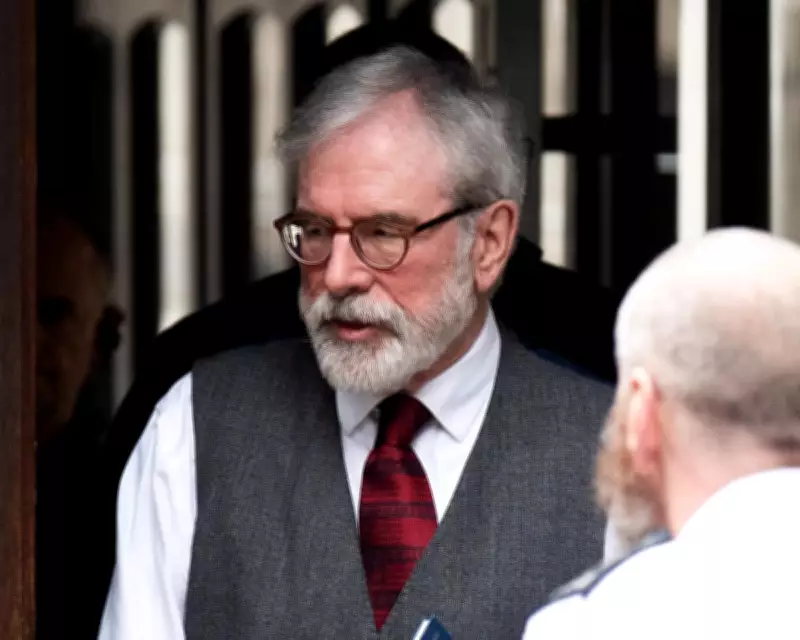
Gerry Adams, the 77-year-old former leader of Sinn Féin, arrived at the Royal Courts of Justice in London on Monday, marking the start of a high-profile civil trial. He is scheduled to give evidence next week and has consistently denied any membership in the Irish Republican Army (IRA). The trial focuses on allegations linking him to bombings during the Northern Ireland conflict.
Claims of Culpability in Troubles-Era Attacks
In opening statements, the high court heard that Gerry Adams is "as culpable for IRA bombings on the UK mainland as the individuals who planted and detonated the devices." The case is brought by three victims: John Clark, injured in the 1973 Old Bailey bombing; Jonathan Ganesh, affected by the 1996 London Docklands bombing; and Barry Laycock, a victim of the 1996 Manchester bombing. They are seeking symbolic vindicatory damages of £1 each from Adams.
Anne Studd KC, representing the claimants, argued in written submissions that Adams played an instrumental role in the Provisional IRA (PIRA), balancing armed struggle with political efforts through the "ArmaLite and the ballot box" strategy. She stated, "Their focus is to shine a light upon the involvement of the defendant in the PIRA in the course of that conflict and to prove on balance of probabilities that he was so intrinsically involved in the PIRA organisation that he is as culpable for the assaults giving rise to these claims as the individuals who planted and detonated the bombs."

Evidence Presented Against Adams
Studd highlighted several pieces of evidence to support the claims. She noted that Adams admitted involvement with the IRA to a special branch officer after his arrest in 1972 and attended government meetings that year as a PIRA member with authority to act on its behalf. The case also relies on testimonies from former IRA volunteers, including Dolours Price, who was imprisoned for the Old Bailey bombing, and intelligence officials from the Troubles era.
Additionally, Studd referenced a 1976 article Adams wrote under the pen name Brownie for Republican News while detained under internment, which stated, "Rightly or wrongly, I’m an IRA volunteer." She emphasized that while Adams contributed to the Northern Ireland peace process, "the claimants say that on the evidence he also contributed to the war."
Adams' Defense and Denials
In response, Adams' lawyer, Edward Craven KC, strongly refuted the allegations in written submissions. He argued that the claimants waited too long to bring the case, stating, "Even if the claim were not bound to fail on limitation grounds, the claim must inevitably fail on the merits. The defendant strenuously denies any involvement in the bombings." Craven emphasized the gravity of the accusations, describing them as "the most serious allegations imaginable," and insisted that the evidence presented by the claimants is insufficient and relies heavily on anonymous hearsay.
Craven further questioned why law enforcement never arrested Adams if there was reasonable suspicion, calling it "extraordinary and inexplicable." He suggested that many republicans, including Price, harbored hostility towards Adams due to opposition to the peace process. Craven also argued that even if Adams were a member of the IRA army council, which he denies, "the mere fact of that membership would not in itself be sufficient to render him liable for bombings carried out."
Trial Proceedings and Context
The trial continues as the court examines decades-old events amidst what Craven described as "a deeply partisan conflict which has spawned countless personal and political grievances, schisms and animi." The outcome could have significant implications for historical accountability in the Troubles era. Adams, present in court, maintains his innocence, setting the stage for a contentious legal battle over his alleged role in one of the UK's most turbulent periods.