Forensic Science Pioneer Henry Lee Passes Away at 87
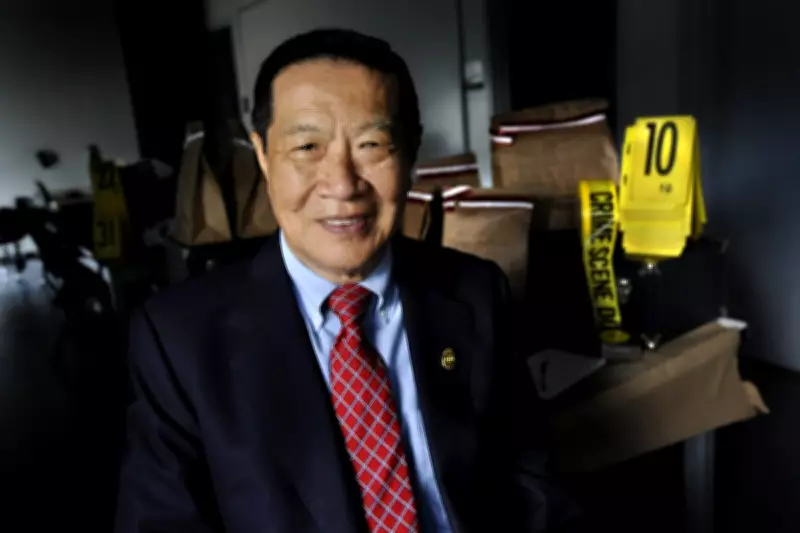
Henry Lee, the celebrated forensic scientist whose testimony in the OJ Simpson trial brought modern crime scene investigation into the public eye, has died. He was 87 years old.
Lee passed away peacefully on Friday at his home in Henderson, Nevada, after a short illness, according to a joint statement from his family and the University of New Haven, where he taught for over five decades.
A Career Defined by High-Profile Cases
Lee rose to national prominence during the 1995 trial of OJ Simpson, where he questioned the handling of blood evidence. His expertise extended to numerous other notorious investigations, including:

- The 1996 murder of six-year-old JonBenet Ramsey in Colorado
- The 2004 trial of Scott Peterson, accused of killing his pregnant wife Laci
- The 2007 murder trial of record producer Phil Spector
Earlier in his career, Lee made a significant breakthrough in the 1986 disappearance of flight attendant Helle Crafts in Connecticut. Using minuscule fragments of bone, a thumb tip, a tooth crown, and hair found near her home, he helped prosecutors secure a conviction against her husband—despite the absence of a body.
Controversy and Scrutiny in Later Years
Despite his achievements, Lee's work faced scrutiny later in his life. In 2023, a federal court ruling found him liable for fabricating evidence in a 1985 murder case that led to two Connecticut men being imprisoned for decades.
The controversy centered on testimony about what Lee initially identified as bloodstains on a towel. Subsequent testing, conducted during the men's appeals, revealed the stains were not blood. A federal judge in 2023 stated there was no evidence to support Lee's original testimony.
Lee consistently defended his reputation, denying any evidence fabrication and suggesting that potential blood traces might have degraded over the twenty years between the crime and the defense's testing.
From Humble Beginnings to Forensic Legacy
Born in China as the eleventh of thirteen children, Lee moved with his family to Taiwan, where he earned a degree in police administration and rose to the rank of police captain. After immigrating to the United States in 1964 with his late wife, he obtained advanced degrees in forensic science and biochemistry.
Lee spent much of his career based in Connecticut, serving as head of the state's forensic laboratory. At the University of New Haven, he transformed a single fingerprint kit into a comprehensive multidisciplinary forensic science program. He later established the Henry C. Lee Institute of Forensic Science to train professionals and provide case consultations.
"Dr. Lee was a remarkable individual," said University of New Haven President Jens Frederiksen. "His contributions to our University as well as forensic science and law enforcement are extraordinary and unmatched. His legacy lives on in the generations of students and law enforcement professionals he impacted throughout his brilliant career."
An author or co-author of more than forty books, Lee was finalizing a publication on missing-persons investigations in his final days, which is still expected to be released.