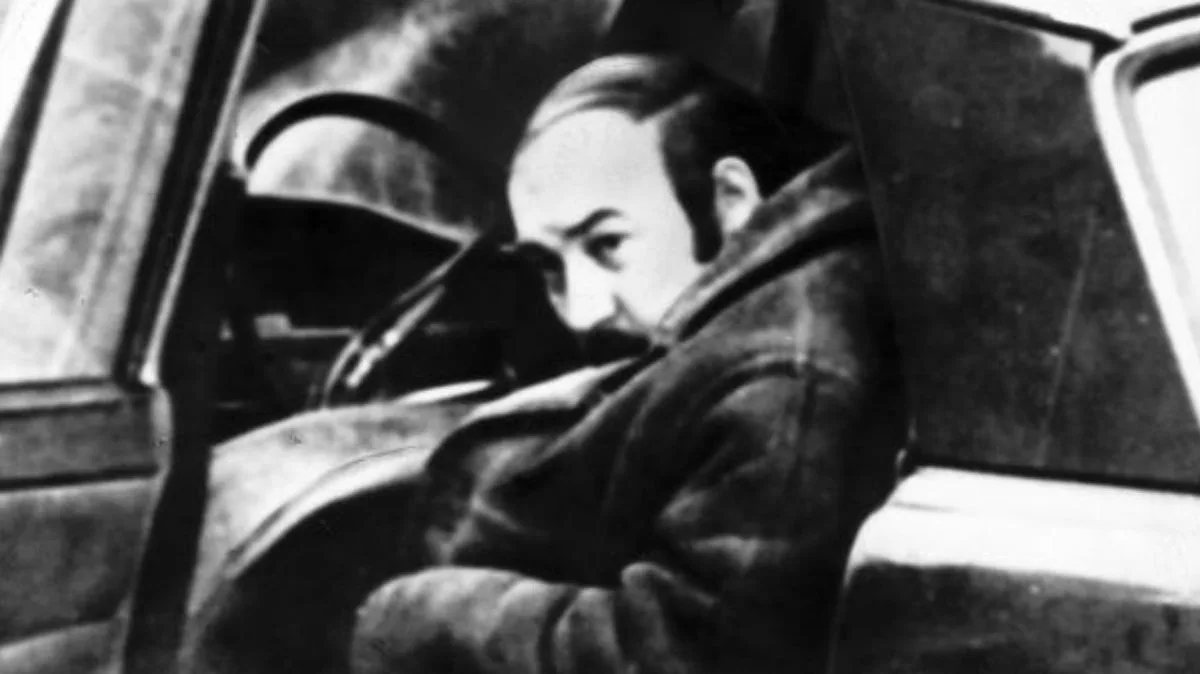
Bertie Smalls, the first supergrass in UK criminal history, had a £1 million bounty on his head after his testimony led to the imprisonment of 28 criminals, who collectively received 414 years in jail. The armed robber, known for his walrus moustache and comb-over, broke the criminal code of silence by testifying against his former associates in the Wembley Mob.
Smalls was turned after his arrest in connection with a £237,000 bank raid in Wembley in August 1972. He struck a deal with then Director of Public Prosecutions Sir Norman Skelhorn, granting him complete immunity from prosecution in exchange for his cooperation. Over six months of trials at the Old Bailey, his evidence convicted 28 crooks, while Smalls admitted to involvement in 20 robberies without facing any charges.
Detective Chief Superintendent Jack Slipper, who captured train robber Ronnie Biggs in Rio de Janeiro, praised Smalls as 'the greatest weapon the police have ever had against the underworld.' Slipper noted that Smalls would have to live with a £1 million price on his head for the rest of his life due to the many enemies he made.

Among those jailed on Smalls' word was Mickey 'The Pimpernel' Green, who later built a £50 million drug smuggling empire. Green, who ran the Wembley Mob, switched to drugs after serving an 18-year sentence based on Smalls' evidence. He evaded authorities worldwide for decades and was once tipped off about an IRA kidnap plot.
The supergrass system, though ancient in concept, was revolutionised by Smalls in the UK. Subsequent informants like Maurice O'Mahoney and Micky 'Skinny' Gervaise followed, leading to numerous convictions in armed robbery cases throughout the 1970s and 1980s.