Fugitive FBI Suspect Tracked to Remote Welsh Village Faces Extradition to United States
A federal judge has ruled that a fugitive alleged terrorist, who was tracked down and arrested in a secluded Welsh village after evading capture for over two decades, can be extradited to stand trial in the United States. The landmark decision was delivered today at Westminster Magistrates Court, concluding a lengthy international manhunt that spanned continents.
Two Decades on the Run Ends in North Wales Arrest
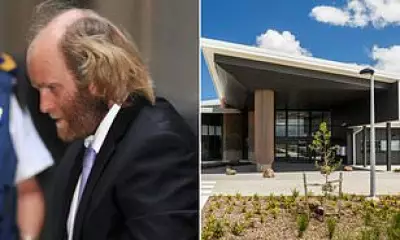
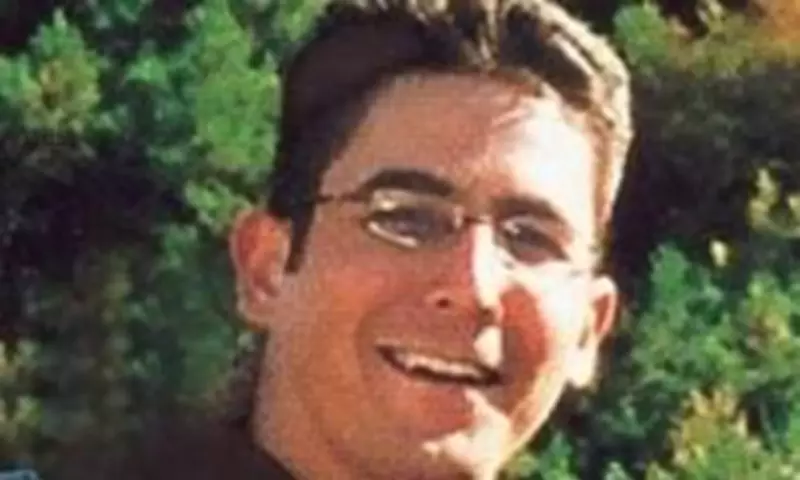
Daniel Andreas San Diego, a 47-year-old American citizen, spent 21 years as a fugitive from justice, wanted in connection with a series of bombings in the San Francisco area. His flight from authorities finally ended in November 2024 when officers from Britain's National Crime Agency, supported by Counter Terrorism Policing and North Wales Police, arrested him at his rural cottage near the village of Maenan in the Conwy Valley.
The suspect had been living under the assumed name 'Danny Webb' in a remote bungalow boasting stunning views into the foothills of Snowdonia. He had purchased the property for £450,000 in August 2023, offering £15,000 over the asking price to secure the home. Former owner Aled Evans described the purchaser as a 'quiet' and 'soft-spoken' man who appeared 'besotted' by the panoramic views from the balcony and 'excited' about mountain biking opportunities in the surrounding woodland.

Alleged Animal Rights Motivations Behind Bombings
San Diego stands accused of orchestrating three bomb attacks in August and September 2003, all allegedly motivated by his connections to animal rights activism. The FBI maintains that his actions were linked to an animal rights group, with the targeted businesses having connections to British firm Huntingdon Life Sciences, a company long criticized for animal testing practices.
The first incident involved two bombs detonated at biotechnology firm Chiron Inc. near Oakland, California, in August 2003. Authorities responding to the initial explosion discovered a second device that the FBI believes was specifically planted to target emergency responders. The following month, a nail bomb exploded outside nutritional products company Shaklee, an attack also claimed by the Animal Liberation Brigade in a statement warning that 'this is the endgame for the animal killers.'
Remarkably, no injuries were reported in any of the three bombing incidents. However, the FBI alleges they discovered a 'bomb-making factory' in San Diego's abandoned vehicle after he led police on a 65-mile chase through California prior to his disappearance.
From FBI's Most Wanted List to Welsh Hideaway
San Diego's status as a wanted fugitive reached unprecedented levels when he was added to the FBI's most-wanted terrorist list in 2009, becoming the first domestic terrorist to appear on the list alongside international figures like al Qaeda leader Osama bin Laden. A substantial £200,000 bounty had been placed on his head as authorities pursued leads across multiple countries.
Neighbors in the quiet Welsh community where he eventually settled knew him only as 'Danny' and reported that he rarely exchanged more than brief greetings during his year-long residence. His arrest came as a profound shock to the local community, who had no inkling that their reclusive neighbor was one of America's most sought-after alleged terrorists.
Legal Battle Over Extradition Concludes
During extradition hearings last year, San Diego's legal team mounted a vigorous defense against his removal to the United States. They argued that he could not receive a fair trial if extradited, citing concerns about 'the political capture of the criminal justice system' and potential interference from the U.S. Department of Justice under former President Donald Trump.
However, Judge Samuel Goozee today dismissed these arguments, stating unequivocally that there was 'no evidence of any improper political involvement in San Diego's case or any evidence of any presidential interference in San Diego's case, now or in the future.' The ruling clears the path for San Diego's transfer to American authorities to face charges of 'maliciously damaging and destroying by means of an explosive,' for which he was indicted in 2004.

FBI's Persistent Pursuit Finally Bears Fruit
Following the arrest, then-FBI Director Christopher Wray emphasized the agency's unwavering commitment to pursuing justice regardless of time elapsed. 'There's a right way and a wrong way to express your views in our country, and turning to violence and destruction of property is not the right way,' Wray stated. 'Daniel San Diego's arrest after more than 20 years... shows that no matter how long it takes, the FBI will find you and hold you accountable.'
While today's ruling represents a significant victory for American authorities, San Diego's legal team retains the right to appeal the decision, potentially prolonging the legal proceedings. The case continues to highlight the complex intersection of activism, alleged terrorism, and international law enforcement cooperation in an increasingly interconnected world.