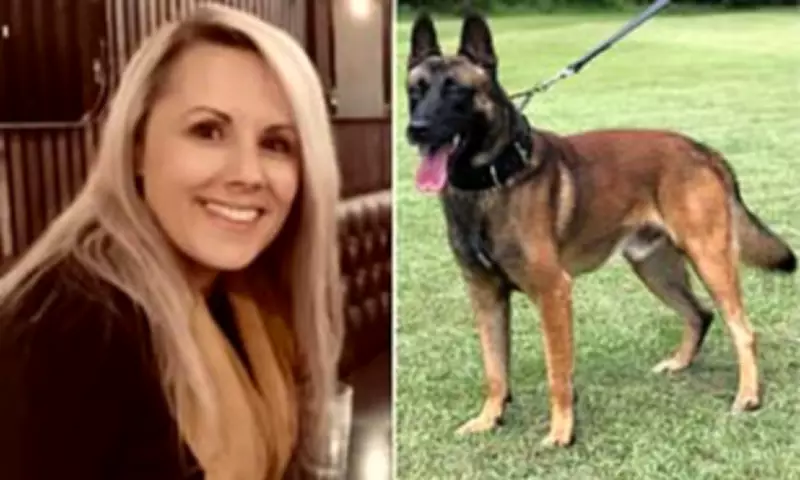
Senior Detective Sues Police Chief Over Trainee Dog Attack at Home
A senior police detective is pursuing a six-figure compensation claim against her chief constable after suffering a traumatic attack by a trainee police dog in her own kitchen. Detective Chief Inspector (DCI) Lynn Wilczek has lodged a civil action under the Animals Act 1971, alleging that the Belgian Malinois pup named Frank was potentially dangerous and caused her significant physical and psychological harm.
The Incident and Injuries
According to court submissions, the attack occurred when DCI Wilczek attempted to pet Frank, who was at home with her husband, a police dog handler. The trainee police dog suddenly lunged at her face, biting her cheek and nostril, resulting in laceration and puncture wounds. These injuries have led to mild scarring that may require camouflage makeup or plastic surgery to address.
Beyond the physical trauma, DCI Wilczek, once a fervent dog lover, has developed a specific phobia of dogs and a severe generalised anxiety disorder characterised by somatic anxiety symptoms and catastrophic thinking. Her barrister, John Schmitt, emphasised that she continues to experience pain at the injury site, though the attack has not impacted her career, as she now works in the Child and Adult Protection team handling complex abuse cases.

Legal Proceedings and Complexities
During a pre-trial hearing at Central London County Court, Judge Luke Ashby heard that Frank was a police 'gift dog,' donated by a member of the public in December 2021 for potential training. Lawyers argued that as a gift dog undergoing assessment, Frank became property of Kent Police, making the chief constable liable under Section 2(2) of the Animals Act 1971. This section requires the court to evaluate the dog's likelihood of causing such damage or severe harm.
Mr Schmitt described the case as legally complex, noting that DCI Wilczek must establish Frank had a known volatile character to prove liability. This will involve expert evidence from a canine behaviour specialist and an examination of the police training regime. Barrister Hayley McLorinan, representing the chief constable, highlighted that the trial will focus on what was known about the dog's characteristics at the time.
Broader Implications and Next Steps
Under the Police Reform and Social Responsibility Act 2011, chief constables are established as 'corporations sole,' meaning the office is a distinct legal entity. If DCI Wilczek's claim succeeds, damages will be paid from the police fund. The case is set to proceed to a full trial unless a settlement is reached out of court.
This incident raises questions about the management and assessment of trainee police dogs, particularly those kept in home environments. DCI Wilczek's claim underscores the risks associated with integrating untrained animals into domestic settings, even under the supervision of experienced handlers. The outcome could influence future protocols for handling gift dogs and trainee animals within police forces across the UK.