Boston Officials Issue Urgent Warnings Over Frozen Charles River Dangers
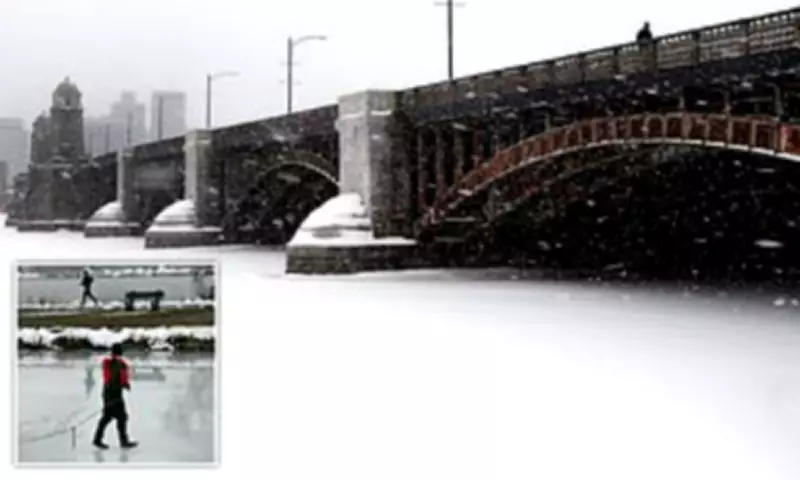
Boston officials have once again issued stern warnings to residents, urging them to stay off the frozen Charles River. This comes after images emerged showing individuals strolling, skating, and even cycling across the ice, despite repeated safety advisories from authorities. The Charles River, which spans approximately 80 miles from Hopkinton to Boston Harbor, serves as a natural boundary between Boston and Cambridge, the latter being home to Harvard University.
Unpredictable Ice Conditions Pose Severe Risks
Authorities have emphasized that although the river's surface may appear solid, the water beneath continues to flow, with levels rising and falling by up to two feet daily. This movement causes the ice thickness to vary dramatically, creating areas that are firm alongside others that are dangerously thin. Even during prolonged deep freezes, the ice can break without any warning, putting lives at immediate risk.
Snow cover on the ice adds another layer of danger, as it can insulate parts of the river and prevent proper freezing, further compromising stability. Laura Jasinski, executive director of the Charles River Conservancy, stated unequivocally that it is 'just not safe' to step foot on the ice. She stressed, 'We want people to be able to use the Charles in as many ways as possible, but safety is first, second, and third.'

Residents Defy Warnings, Prompting Emergency Responses
Despite these clear warnings, some residents continue to test their luck on the frozen river. Officials in both Boston and Cambridge are intensifying their pleas for people to stay off the ice, following repeated sightings of pedestrians, skaters, and bikers during this year's cold snap. The Cambridge Fire Department reported responding six times last winter to incidents involving individuals on the ice, including three rescues in January and February alone.
In a recent incident, State Police ordered a man off the frozen river last month after he was seen riding an e-bike across the surface. Office workers along the Cambridge side of the river have told the Boston Globe that they regularly observe people venturing out during cold spells. Timothy Hutama, a marketing analyst, recounted watching three people walk about halfway across the river on Monday before turning back.
'Maybe not the safest thing to do,' Hutama remarked, adding that he would not risk joining them out of fear of falling through. This concern is well-founded, as in 2021, a cyclist filming himself for YouTube broke through the ice while riding on the Charles, though he managed to climb out without serious injury.
Historical Context: From Recreation to Tragedy
The Charles River was once a popular site for winter recreation. After the river was dammed in the early 1900s, skating parties drew large crowds when colder, more predictable winters allowed the surface to freeze more reliably. However, a series of drownings and near-death incidents gradually shifted public opinion, leading officials to discourage winter recreation on the river altogether.
In 1985, MIT students gained national attention after moving a bed, desk, and chair onto the frozen river as part of a prank, prompting Cambridge emergency responders to order them off the ice. Tragically, that same winter, another MIT student died after falling through the ice, underscoring the lethal risks involved.
Authorities continue to warn that ice thickness varies across the Charles River and can break without warning, urging the public to heed safety advisories and avoid any activities on the frozen surface to prevent further accidents and potential fatalities.