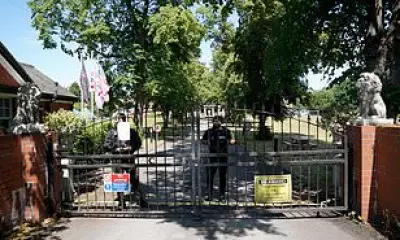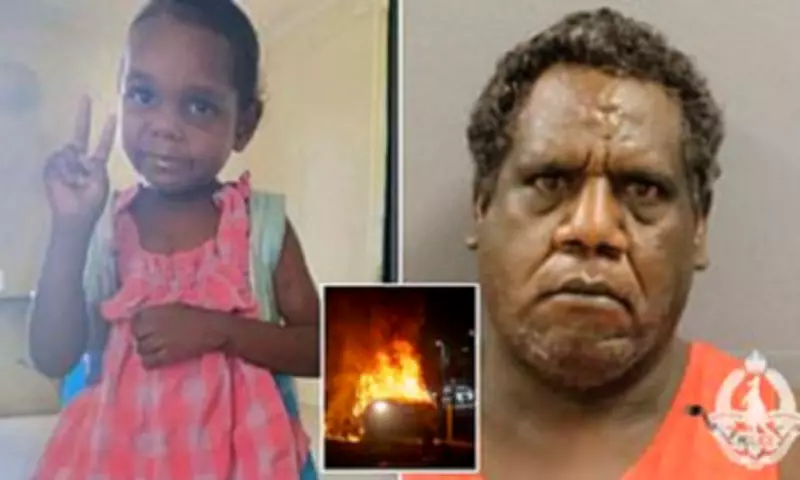
The search began in the early hours, before the heat settled over Alice Springs in Australia's Northern Territory. At around 1:30 am on April 26, a five-year-old Aboriginal Warlpiri girl was reported missing from the Ilyperenye Old Timers camp on the southern edge of town.
Massive Search Effort
For days, police and volunteers combed the surrounding land, moving across red dirt tracks and dry riverbeds, hoping she had been abandoned and might still be found alive. Around 300 people joined the search, covering five square kilometres on foot and 80 more by air and vehicle.
The little girl, who cannot be named under cultural law and is now known as Kumanjayi Little Baby, had been raised by her mother and extended family in the camp, where overcrowded housing and limited services shaped daily life. Relatives said she was unable to speak and communicated mostly through hand gestures.

Suspicion Falls on Relative
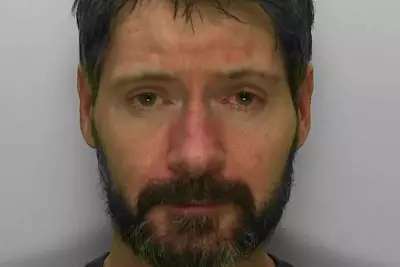
As the search widened, attention quickly turned to Jefferson Lewis, a 47-year-old distant relative who had been staying at the same residence. Locals later said he had been acting strangely in the days before the girl disappeared, drinking heavily and keeping to himself. Just hours earlier, witnesses reported seeing her holding hands with a man known to her family, later identified as Lewis.
By later that day, police had found his shirt, a child's underwear, and a duvet cover in the dry bed of the Todd River, declaring the area a crime scene. Forensic testing later detected both his DNA and the child's on the underwear.
Manhunt and Discovery
What followed became one of the Northern Territory Police's largest manhunts. Officers travelled across Alice Springs and into remote communities in the Northern Territory and Western Australia, knocking on doors and following leads. The search was complicated by Lewis's lack of a digital footprint; police also believed he may have been helped to evade capture.
On April 30, five days after the girl disappeared, Kumanjayi Little Baby's body was found near the banks of the Todd River, about five kilometres from her home. Police said they were treating her death as a homicide.
Vigilante Justice
Within hours, Lewis was tracked down at another town camp on the outskirts of Alice Springs. But by the time police arrived, a group of residents had already located him and taken matters into their own hands. According to locals, a group of young boys recognised him first, spotting him lying in long grass behind a shipping container, holding a stick. When he tried to run, they shouted for help.
The chaos that followed unfolded quickly: more than 30 people joined in a violent assault on the man in a shocking case of vigilante justice. The assailants used rocks, an old pram, and the stick he had been holding as weapons to beat Lewis unconscious.
'They wanted to break his legs,' one local told the Daily Mail. 'At first he tried to get away but he had no chance. They surrounded him. They wanted to cause maximum pain and were jumping on him, kicking him, smashing rocks into his head.' Many people joined in after the young men had the first go, the local added.
Some in the crowd filmed the attack and published the harrowing footage to social media. In one video, Lewis lay motionless as people gathered around. In another, a voice shouted, 'There he is, the ugly c***. Right there.' 'There are rumours that he was stabbed almost 40 times,' the source said. 'He was drenched in his own blood so I believe it.'
Others in the crowd called for an ambulance. 'People thought he may be dead and some people called the ambulance because they believed only God should take a life.' When police and paramedics arrived, they formed a circle around him as rocks were thrown. 'Don't save him,' someone shouted. 'Look, they are chucking him in the back of the ambulance, protecting him knowing what the f*** he did.'
Hospital Riot and Unrest
After a struggle, Lewis was taken to Alice Springs Hospital with severe head injuries. But the violence did not stop there. Within hours, around 400 people gathered outside the hospital, demanding he be handed over for 'payback' under customary law. Projectiles were thrown at officers and vehicles, a police car was set on fire, and four out of five ambulances were damaged and rendered inoperable.

After five hours of unrest, riot police were forced to use tear gas and pepper spray to disperse the crowd. However, the violence then spread across town. A nearby service station was ransacked and looted, while fires were lit in bushland and in skip bins. The damage was estimated at A$200,000.
During the unrest, five emergency workers were tragically injured. More than a dozen people have since been arrested, while police continue to search for others suspected of helping Lewis evade capture in the days after the child disappeared.
Official Responses
Police Commissioner Martin Dole said, 'Members of that town camp decided to inflict vigilante justice upon Jefferson and we received numerous phone calls saying he was in the process of being assaulted.' On the looting, he added, 'What you will see is not people trying to practice traditional law. What you will see is criminal behaviour, plain and simple.'
Kumanjayi Little Baby came from a large and well-known Central Australian family, connected to artists and public figures. Her family asked that her name not be used after her death, in keeping with Aboriginal cultural practices. In the days that followed, they appealed for calm, urging the community to allow the justice system to take its course.
Her mother, Jacinta White, spoke directly to her daughter in a statement: 'I know you are in heaven with the rest of the family. Me and your brother will meet you one day. We are giving our lives to Jesus. It's going to be so hard to live the rest of our lives without you.'
Legal Proceedings
Lewis, who had been released from prison just six days before the abduction after serving time for aggravated assault and domestic violence offences, was charged on May 2 with murder and two counts of sexual assault. He had been directed to return to his hometown of Lajamanu after his release but travelled instead to Alice Springs, where he moved between dwellings at the Ilyperenye Old Timers camp.
On May 5, he appeared before Alice Springs Local Court via video link. The hearing lasted about 20 minutes and he was excused from appearing shortly before the girl's family arrived. The case was adjourned until July 30.
There were emotional scenes outside court after Kumanjayi Little Baby's family turned up to witness the hearing, only to realise they had missed it. An elder woman could be seen sobbing as she walked up the court steps, with Kumanjayi Little Baby's brother. They had white ochre on their faces, which is worn by Indigenous people during the mourning period.
Wider Impact
Across Alice Springs, the shock has not subsided, reigniting debate over conditions in town camps and the safety of Aboriginal children. There have been calls for inquiries, while Prime Minister Anthony Albanese has pointed to federal spending on remote housing.
Meanwhile, Mayor Asta Hill has said she is worried that the riots will overshadow the generosity of spirit on display in the days following Kumanjayi Little Baby's disappearance. Speaking to the Guardian, she said, 'What happened at the hospital last night kind of interrupted this feeling of the stillness of pausing in grief, I suppose. I'm honestly concerned because this story that's told about Mparntwe (Alice Springs) nationally is often negative. We're always in the news for the wrong reasons, and the loss of Kumanjayi Little Baby is absolutely devastating. But a really important part of that story is also the love and care that this entire community showed for her and her family in the search for her.'