Savannah Guthrie's Emotional 'Proof of Life' Plea Faces AI Deepfake Complications
In a deeply emotional appeal, television journalist Savannah Guthrie has publicly pleaded for "proof of life" of her 84-year-old mother, Nancy Guthrie, who disappeared from her Tucson-area home last weekend. The heartbreaking request, however, confronts unprecedented challenges in today's era of artificial intelligence and sophisticated deepfake technology.
The New Reality of Digital Manipulation
"We live in a world where voices and images are easily manipulated," Savannah Guthrie stated in her direct address to the kidnapper, acknowledging the technological landscape that complicates traditional verification methods. Where once a grainy photograph might have served as sufficient evidence of a kidnapping victim's wellbeing, advanced AI tools now enable realistic impersonation through photos, audio, and video.
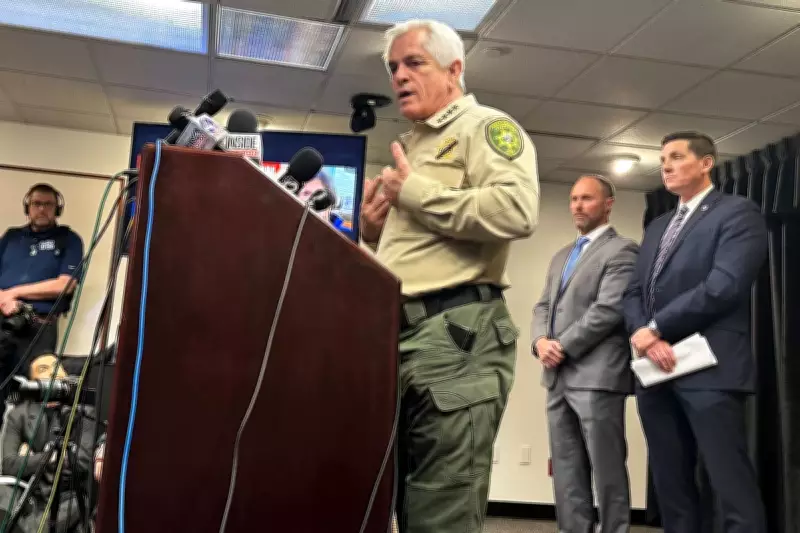
Heith Janke, the FBI chief in Phoenix, emphasized this technological shift during a Thursday news conference. "With AI these days you can make videos that appear to be very real. So we can't just take a video and trust that that's proof of life because of advancements in AI," Janke explained, highlighting law enforcement's growing concerns about digital deception.

Evolving Criminal Tactics and Investigative Challenges
Hoaxes—whether high-tech or low-tech—have long presented difficulties for law enforcement, particularly in high-profile cases like Nancy Guthrie's disappearance. As technology advances, criminals have become increasingly savvy, utilizing digital tools to confuse authorities, mask their identities, and manipulate victims' families.
The FBI issued a warning in December about individuals posing as kidnappers who can provide seemingly authentic photos or videos of loved ones alongside ransom demands. While police have not confirmed receiving any deepfake images of Guthrie, investigators are taking seriously at least three purported ransom notes received by news organizations.
Former FBI agent Katherine Schweit noted that publicly shared images of Nancy Guthrie could potentially be used to create convincing deepfakes. Schweit traced the evolution of ransom demands from analog methods—like the handwritten note demanding $50,000 left during the 1932 Lindbergh baby kidnapping—to today's digital landscape of emails, texts, and sophisticated manipulation tools.
Family's Emotional Appeal and Investigative Progress
Savannah Guthrie appeared in an emotional Instagram video on Wednesday, flanked by her sister and brother, her voice cracking as she spoke directly to the kidnapper. The family expressed willingness to "talk" and "listen" while emphasizing their need to know their mother remains alive.
Investigators maintain they believe Nancy Guthrie is "still out there," though no suspects have been identified. In a separate development, a California man was charged Thursday with sending text messages to the Guthrie family seeking bitcoin after following the case on television. Court filings indicate no suspicion of his involvement in the actual disappearance.
Strategic Communication and Investigative Adaptation
Schweit described Savannah Guthrie's direct address to the kidnapper as a tactical move. "The goal is to have the family or law enforcement speak directly to the victim and the perpetrator, and ask the perpetrator: What do you need? How can we solve this? Let's move this forward," she explained.
Janke suggested the FBI may have influenced Guthrie's decision to release a video message, stating, "We have an expertise when it comes to kidnappings, and when families want advice, consultation, expertise, we will provide that." He emphasized, however, that "the ultimate decisions—on what they say and how they put that out—rests with the family itself."
Schweit reflected on the expanding nature of investigative work in the digital age: "Investigative techniques accumulate over time. There's never less to do as years go by; there's more to do. Digital and forensic work is a perfect example. It just adds to the other shoe-leather work we would have done in years past... Nothing can be dismissed. Everything has to be run to ground."