To her neighbours in the quiet West Yorkshire village of Wyke, Sidrah Nosheen was an unassuming 34-year-old who ran a small henna tattoo business from her rented semi-detached home. She was known for dropping off homemade curries, keeping to herself, and doting on her two cats and dog. Her only visible extravagance was a second-hand BMW parked on the drive. But this facade of suburban normality concealed a shocking reality: Nosheen was a central figure in an international drug trafficking gang, storing and processing £8.5 million worth of heroin in her back bedroom.
The Raid That Revealed a Drug Factory
In June 2024, armed officers from the National Crime Agency (NCA) descended on Nosheen's four-bedroom home. Neighbours watched in stunned silence as a stream of evidence bags was carried out. Inside, investigators found her spare room had been converted into a fully operational heroin processing plant. The setup included a wallpaper pasting table used as a workbench, scales, buckets, and other paraphernalia.
Officers discovered a total of 85kg of high-purity heroin, meticulously hidden within the lining of leather jackets, packed inside cardboard boxes of clothing, and concealed within bundles of saris. Nosheen's role involved removing the drugs from their hiding places and sorting them into one-kilogram deal bags for distribution across the UK.

A Double Life Unravelled
While presenting herself as a modest beauty therapist, Nosheen played a "crucial role" in a sophisticated organised crime group smuggling heroin from Pakistan to the UK. A search of her phone revealed hundreds of messages with an accomplice in Pakistan, discussing supply chains and logistics. On one documented occasion, she collected £250,000 in cash for the crime syndicate from a contact in Bradford.
Despite her involvement in a multi-million pound enterprise, Nosheen's personal life was chaotic. Her landlords described a constant battle to get her to pay the £750 monthly rent, with arrears climbing to nearly £9,000. She lived in what they called "squalor," with properties damaged by pets and filled with rubbish. Remarkably, when a court ordered her to pay the outstanding rent within 24 hours, she produced the entire sum in cash the next day—a detail that made sense only in hindsight.
The Pakistan-UK Drug Pipeline
According to organised crime expert Gary Carroll of Claymore Advisory Group, this case highlights a "very well established pipeline" for heroin smuggling from Pakistan to the UK. While most UK heroin originates in Afghanistan, a significant southern route runs through Pakistan. The drugs are often shipped from ports like Karachi, travelling a long maritime route around Africa before arriving at major UK ports like Southampton, London Gateway, and Felixstowe.
"These organised crime groups in Pakistan have family ties to many cities including Bradford," Mr Carroll explained. "It helps to form part of an established pipeline. It means they don't have to trust other crime groups; it's a lot easier to trust those linked through family." This network explains why hubs like Bradford and Birmingham, with large South Asian communities, are key distribution points.
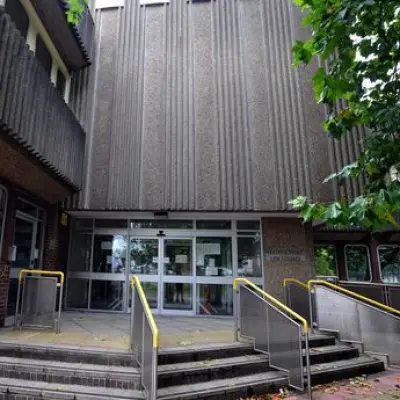
At Bradford Crown Court, Sidrah Nosheen was sentenced to 21 years and six months in prison. The NCA confirmed her central involvement in the conspiracy. For her former neighbours, the revelation was surreal. One recalled her as an "ordinary woman" who once cooked them a curry, utterly unaware that a multi-million pound narcotics empire was operating next door. The case stands as a stark reminder of how organised crime can embed itself within the most ordinary of communities.