The Silent Struggle of Divorced Fathers: Living Minutes Yet Worlds Apart
When David McCready separated from his wife fifteen months ago, he could never have anticipated the profound emotional chasm that would develop between him and his daughters. Despite living merely six minutes away from their home, he has never experienced such overwhelming distance in his entire life.
The Unbearable Proximity of Separation
Divorce carries an uncanny resemblance to unemployment, according to McCready's reflections while standing at Blackfriars station. Watching London's diverse population rush past—married couples hurrying home to families, singles navigating their evenings, parents managing school runs—he felt completely redundant in this bustling urban landscape.
Current statistics reveal that between one-third and one-half of all UK marriages now culminate in divorce. The actual number of quietly unhappy couples remaining together out of habit, fear, or for their children likely exceeds what most people care to acknowledge. Similar to job loss, the true realization of what has transpired gradually dawns after the initial shock subsides.

"When you lose employment," McCready observes, "the search for new work consumes you, while simultaneously making you yearn for your previous position. Divorce operates in parallel fashion—your mind fixates on everything you're missing, even if that marriage brought unhappiness."
The Mathematics of Emotional Distance
Now separated for fifteen months and officially divorced for six, McCready's children reside just ten minutes away—six if he walks briskly, which he frequently finds himself doing unconsciously. They share the same borough, the same school routes, yet inhabit entirely different realities.
"There exists a particular kind of distance that has nothing whatsoever to do with geographical miles," he reflects. He spends four nights out of every fourteen with his daughters, though this arrangement sometimes fluctuates. He no longer functions as a daily presence in their lives, yet he remains neither estranged nor absent.
His daughters, both girls, refer to his residence as "Daddy's house" rather than "home." He has never corrected this terminology and remains uncertain whether he ever will.
The Echoing Silence of an Empty Home
Few experiences prepare someone for returning to an empty house day after day. While nobody questions why you took so long or where you've been, equally nobody expresses joy at your return. Depart for several days and everything remains precisely as you left it—the heating switched off during your absence means returning to a cold dwelling.
"Your children's beds remain perfectly made, awaiting their next visit," McCready notes. "All that greets you are photographs when you walk through the door, accompanied by a deafening silence. No inquiries about dinner plans, no 'how was your day, honey?' questions, no discussions about who said what to whom."
This adjustment constitutes a daily struggle, made more poignant by the realization that he took all these ordinary interactions for granted while living that previous life. Resentment sometimes creeps in—the "what's for dinner?" texts become daily irritations—yet when these communications vanish entirely, the resulting silence proves difficult to reconcile.
The Unplanned Pilgrimages
This narrative isn't about what went wrong in the marriage—that represents a longer story belonging to both parties. The reality involves living in the same neighborhood with the same corner shop and identical school routes. He resides sufficiently close that on nights without his children, he sometimes embarks on long walks he claims have no destination, yet they consistently conclude at the same location.
"I stand outside our former home," he confesses. "Not for extended periods—just long enough to glance upward at the windows, attempting to discern what they might be doing at that precise moment. Are my daughters eating? What did they have for tea? Have they bathed, or are they already in bed? Then I whisper 'goodnight, girls' aloud to an unresponsive front door before walking briskly away."

The Beautiful Chaos of Visitation
When his daughters visit, the experience embodies both everything he hoped for and nothing he felt prepared to handle. The house transforms from silence to chaos within moments of their arrival—bags dropped, cupboards overflowing with snacks, the refrigerator suddenly containing actual food because he rarely bothers cooking properly for himself alone.
He loads and unloads the dishwasher what feels like five times daily. The experience proves wonderfully immersive yet exhaustingly relentless in ways he would never admit to his children. There exists no partner to share responsibilities with, nobody to "tap in" when energy runs low. The silver lining emerges as leftovers to consume after they depart—at least beneficial for waistline management.
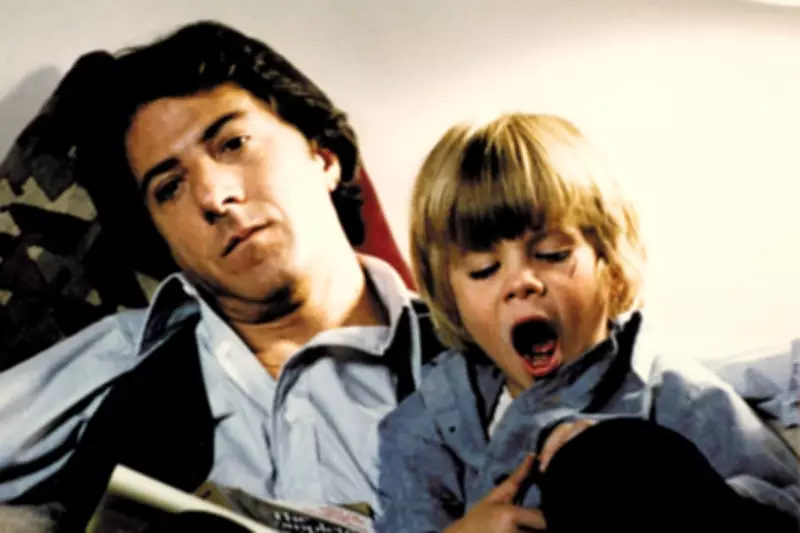
He reads to them nightly during visits. At ages ten and five, they cuddle together before bedtime, the three forming a cozy pile. He's noticed that nearly every children's book centers around Mummy, who naturally represents the most important person in their world. But Daddy matters equally, and he's working toward peace with that reality.
The Ordinary Tuesdays That Hurt Most
The most challenging moments aren't the anticipated milestones—Christmas celebrations, birthday parties, school performances. One braces for those occasions. The genuine difficulty emerges on ordinary, unremarkable Tuesdays when one daughter would have wandered into the kitchen during meal preparation and simply started talking about everything and nothing simultaneously.
"In those moments," he recalls, "you would have half-listened while stirring whatever simmered on the hob, thinking nothing of the interaction at the time. Now you think everything of it."
His children, being young, have adapted more rapidly than he has managed. Children demonstrate pragmatic capabilities that humble adults—they comprehend the new world's rules before parents finish reading the manual. They know which house stocks which cereal, which remote control operates which television, moving between both lives with fluency he continues striving to learn.
The Lingering Guilt and Hope
Guilt never completely dissipates. He wonders about invisible damage—whether two households, packed bags, and traveling sleep animals will leave marks only discovered later. Then one daughter laughs at something silly or asks for a snack and trampoline time before removing her coat, and he thinks: they will be fine.
Regarding their mother, they maintain amicable relations. Both love their children completely. On days when this feels sufficient, it genuinely is.
"What they don't realize," he reveals, "is that on nights they're absent, I leave their bedroom doors open. I'm uncertain why—it doesn't diminish the house's quietness. But a closed door feels like a statement I remain unprepared to make."
The Rituals That Bridge the Distance
On the final night of every visit, they host "Daddy Disco." Everyone selects a song, and they dance around the living room like absolute fools until exhaustion prevails. This tradition began to make goodbyes feel less like farewells and has become what they inquire about even before arriving.
Then they depart. And the dishwasher remains full.
He still passes through Blackfriars most mornings, still watches the same urban melting pot rush past—married individuals, single people, those navigating complicated in-between situations. He no longer begrudges any of them, no longer tallies statistics or measures his circumstances against theirs.
"I've nearly stopped performing the arithmetic," he concludes. "The fourteen nights, the six minutes, the fifteen months. Numbers cannot possibly capture what I'm experiencing now. You don't comprehend what a noisy house represents until standing in a silent one. You don't understand presence until it arrives and departs on schedule. And you don't fully grasp love—not truly—until realizing everything that matters resides six minutes away, and six minutes have never felt so impossibly distant."