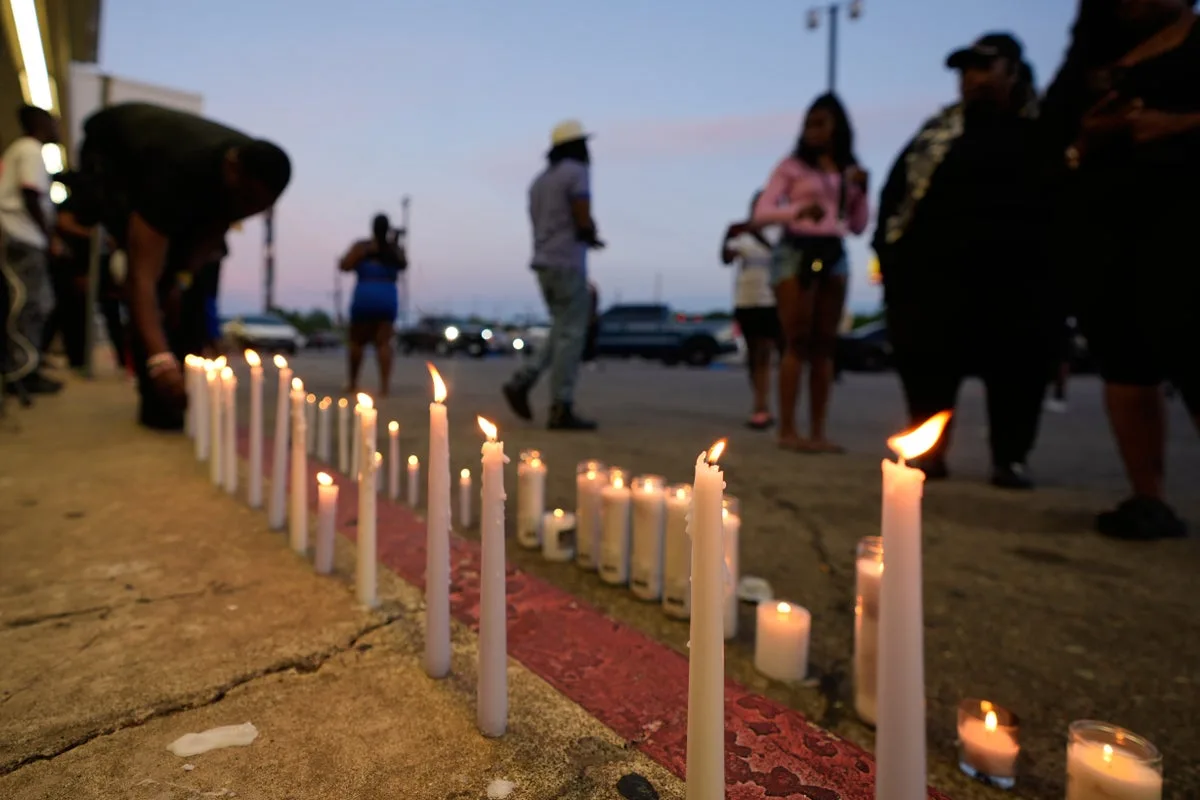
Deadly Domestic Violence Cases Spark National Call for Black Community Resources
Two headline-grabbing, deadly domestic violence cases—one in Louisiana and another in Virginia, both targeting Black mothers—have ignited a national conversation about domestic violence prevention and mental health care resources available to Black communities. These tragedies have prompted urgent calls from advocates who see them as a stark reminder of troubling underlying trends and disparities in access to care.
Tragic Incidents Highlight Systemic Vulnerabilities
On Sunday morning, a man identified by police as Shamar Elkins fatally shot seven of his children and another child in Shreveport, Louisiana. According to a relative, Elkins was in the midst of separating from his wife, who was wounded in the incident. Last Thursday, police discovered the bodies of former Virginia Lieutenant Governor Justin Fairfax and his estranged wife, Dr. Cerina Fairfax, in their suburban Washington, D.C., home. Authorities stated that Justin Fairfax shot his estranged wife and then himself, while their two children present were unharmed. Similar to Elkins, Fairfax was undergoing a separation and faced an impending court deadline to vacate the residence.
While the specific triggers for these killings remain unclear, experts emphasize that the harrowing details echo familiar patterns seen nationwide. They underscore the critical need for solutions addressing root causes of disparate violence, particularly in Black communities where vulnerabilities are heightened.
A Silent Epidemic with Racial Disparities
Shreveport Councilman Grayson Boucher described the Louisiana killings as emblematic of "a true epidemic of domestic violence" in the city of approximately 180,000 people. However, these trends extend far beyond Shreveport. Research indicates that race and gender intersect to make Black women especially vulnerable to domestic violence.
A 2014 study by the Centers for Disease Control found that more than four in ten Black women experience physical violence from an intimate partner during their lifetimes—a rate significantly higher than that for white, Hispanic, Asian, or Pacific Islander women. Paméla Tate, executive director of Black Women Revolt, noted that historical institutionalized racism fosters skepticism toward police and child services agencies, making Black women reluctant to seek help and more susceptible to violence.
Further compounding this issue, a 2025 study by the Violence Policy Center, based on 2023 federal data, revealed that Black women are twice as likely to be murdered by men compared to their white counterparts. The study found that over ninety percent of Black female victims knew their killers, with guns frequently used in these homicides.
Mental Health and Resource Gaps in Black Communities
Speculation has arisen regarding the role of mental health crises in both shootings. A relative of Elkins' wife reported that Elkins had voluntarily checked into a Department of Veterans Affairs hospital for mental health assistance in January. In Virginia, court documents indicated that Justin Fairfax's "mental and emotional health" deteriorated before the murder-suicide, with heavy drinking and withdrawal from family following sexual assault allegations in 2019.
Dr. Christine Crawford, an adult and child psychiatrist, highlighted that financial troubles, marital issues, and work problems, combined with underlying mental health vulnerabilities, can lead individuals to "crack." She pointed out that many Black people face barriers to mental health care due to costs, lack of insurance, and other economic factors, creating desperation that leaves them feeling out of options.
University of Michigan Social Work Professor Daphne C. Watkins emphasized that mental health disparities in Black communities are not accidental but result from structural racism in education, employment, and society. Her research shows that ten percent of Black adults experience moderate to severe depression, while eighteen percent suffer from anxiety disorders. However, Black men often forego treatment due to cultural expectations and financial constraints, allowing stressors to accumulate without an outlet.
Mental Health Not an Excuse for Violence
Despite these discussions, some advocates firmly reject mental health as an excuse for domestic violence. Paméla Tate argued that many individuals with depression or schizophrenia do not harm their partners, let alone commit murder. She noted that both Shaneiqua Elkins and Cerina Fairfax could have faced mental health challenges themselves but chose not to purchase firearms, highlighting that the issue extends beyond mental illness to include power dynamics and control.
Ultimately, these tragic cases have stirred a national dialogue, calling for enhanced prevention resources, improved mental health access, and systemic changes to address the unique vulnerabilities faced by Black communities in combating domestic violence.