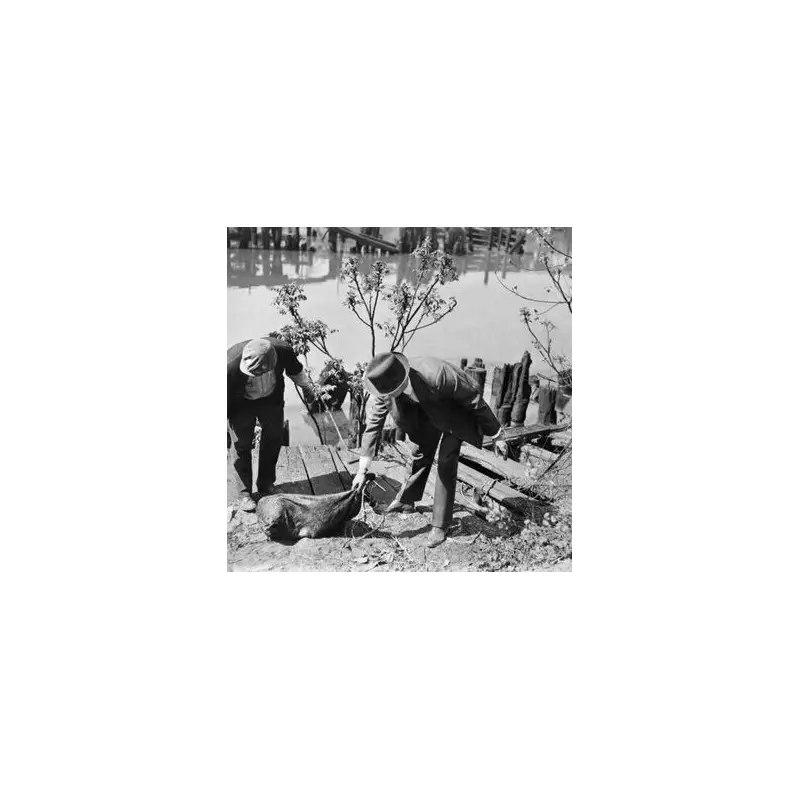
One of America's most gruesome and enduring unsolved mysteries began in the mid-1930s in Cleveland, Ohio, where a serial killer known as the Cleveland Torso Murderer or the Mad Butcher of Kingsbury Run terrorised the city. Over a bloody few years, more than 12 people were brutally beheaded and dismembered, with the killer evading capture and leaving behind a legacy of horror.
The Grisly Discoveries Begin
The backdrop was the Great Depression, with many destitute citizens living in the shantytown of Kingsbury Run, an area rife with pubs, brothels, and gambling. The nightmare started in September 1934 when a woman's partial remains washed up near Lake Erie. Dubbed the 'Lady of the Lake' or Victim #0, her head was missing and her skin showed signs of chemical preservation.
A year later, the true scale of the terror emerged. Two teenage boys found the decapitated and emasculated body of 28-year-old Edward Andrassy. Soon after, another male corpse was discovered in the same location. Both men appeared to have been drained of blood and were likely decapitated while still alive, according to contemporary reports.

A Pattern of Precision and Panic
The fourth victim, Florence Polillo, a waitress and barmaid, was found wrapped in newspaper and packed into baskets downtown. Her discovery set a grim pattern, with several subsequent victims found dismembered and distributed around the city. Most were reduced to mere torsos; others were missing heads and limbs.
Medical examinations pointed to a killer with surgical precision and an in-depth knowledge of human anatomy. Some decapitations were executed with a single, clean stroke. By the close of 1936, six new murders had been linked to the same perpetrator within a year, sparking intense media frenzy and public fear. In a desperate bid for identification, police even exhibited the death mask of one victim, known as the Tattooed Man, at the 1936 Great Lakes Exposition, but to no avail.
The Investigation and Prime Suspects
Authorities launched Cleveland's largest ever criminal investigation, interviewing thousands and conducting undercover operations. A major raid in Kingsbury Run in 1938 led to dozens of detentions but yielded no concrete evidence. The case saw two main figures linked to the crimes.
First was Frank Dolezal, a bricklayer who gave a inconsistent confession to murdering Florence Polillo. He was later found dead in his jail cell. The investigation then focused intensely on a man referred to as 'Dr. X,' widely believed to be Francis E. Sweeney, a brilliant but troubled surgeon who lived near Kingsbury Run. Despite extensive interrogation, Sweeney never confessed. Notably, he checked himself into a sanatorium around the time the murders ceased, as noted by the Cleveland Police Museum.
Ultimately, no one was ever officially charged for the Cleveland Torso Murders. The case, marked by its sheer brutality and the killer's anatomical skill, remains a cold case, a dark puzzle from the Depression era that continues to haunt the annals of American crime.