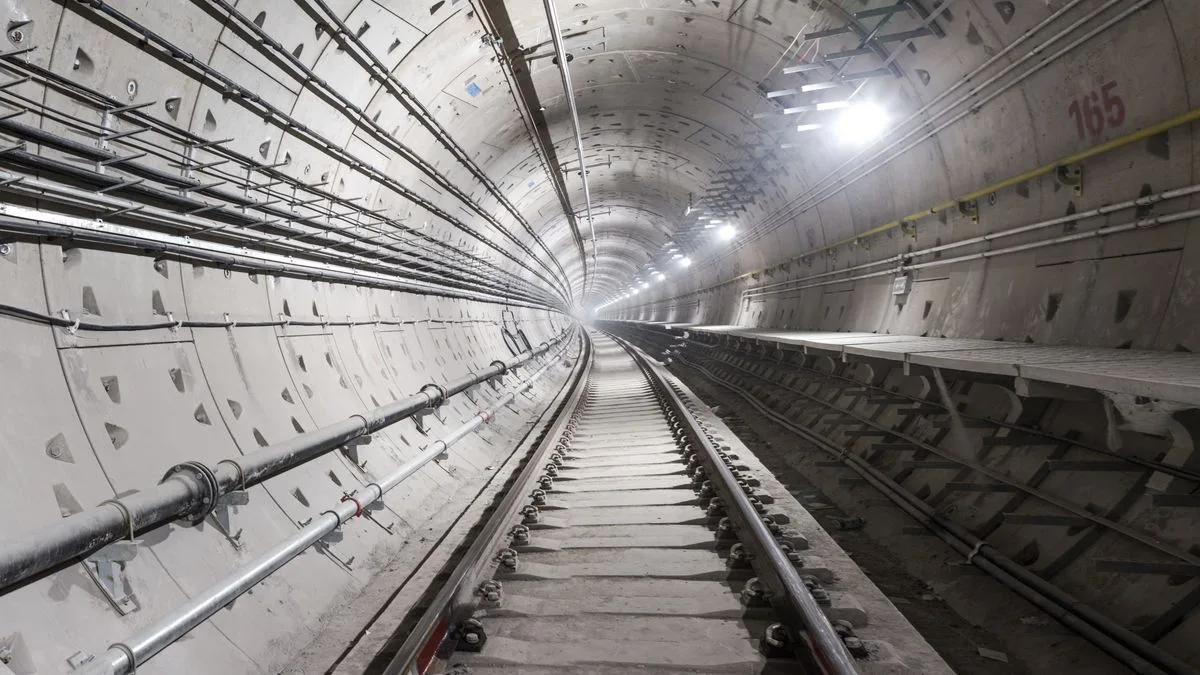
China has officially approved the construction of the world's longest underwater tunnel, a colossal infrastructure project designed to revolutionise travel across the Bohai Strait. The Bohai Strait Tunnel will feature twin tubes for high-speed trains, stretching an astonishing 76 miles and reducing a gruelling six-hour journey to a swift 40-minute commute.
Engineering and Economic Ambition
With an estimated cost exceeding £23.3 billion (220 billion Yuan), the project represents one of the most ambitious engineering feats of the modern era. Construction is projected to take between 10 and 15 years, dwarfing the six-year build time of the Channel Tunnel between the UK and France.
The planned route will see trains reaching speeds of over 150mph, significantly outpacing the Eurostar services in the Channel Tunnel. Approximately 56 miles of the tunnel will be submerged beneath the seabed, a length greater than the combined underwater sections of the Channel Tunnel and Japan's Seikan Tunnel.
Connecting Economic Powerhouses
The primary goal is to forge a direct, high-speed link between the major industrial cities of Dalian and Yantai. Dalian has evolved into a leading financial, shipping, and logistics hub for East Asia, while Yantai has seen substantial growth in petrochemicals, automotive manufacturing, and tech sectors.
Currently, the fastest connection is an eight-hour train ferry. By slashing travel time by nearly 90%, Chinese officials aim to dramatically boost economic integration and output. As Lu Dadao from the Chinese Academy of Sciences noted, the tunnel will also relieve pressure on overloaded railway hubs like Beijing by creating a new strategic corridor.
Safety, Challenges, and Environmental Concerns
Planners have emphasised that the tunnel will incorporate cutting-edge safety technology to navigate the earthquake-prone zone between the Liaodong and Shandong peninsulas. This will include advanced ventilation, waterproofing, structural sensors, and numerous emergency exits.
However, the scheme faces criticism from environmental campaigners. The construction zone is a crucial habitat for wildlife, including the spotted seal, a Class 2 protected species, and areas have been identified as potential nature reserves. Academic Sun Fenghua has stressed the necessity for "serious research into all issues" before proceeding, highlighting the significant ecological stakes.
Once completed, the Bohai Strait Tunnel will not only set a new global record but also fundamentally reshape transport networks and economic dynamics in northern China, marking a monumental step in 21st-century infrastructure.




