
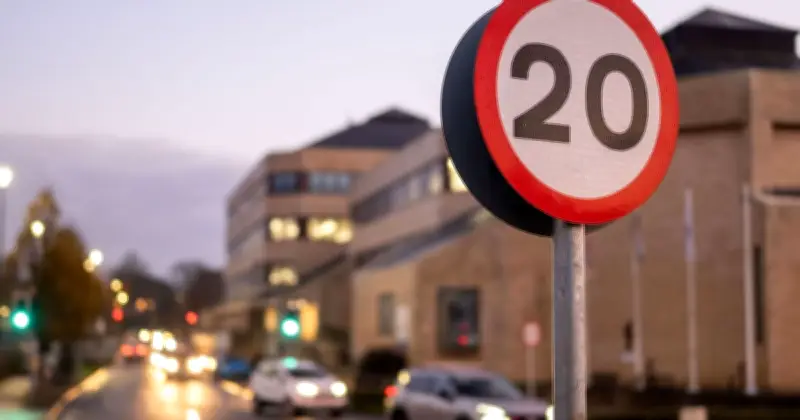
UK drivers may be able to request changes to road conditions, including speed limits, in their local area. GOV.UK has a page titled "Request a speed limit change," available only in England and Wales. It states: "Your council is responsible for setting local speed limits." To begin, enter your postcode and follow the guidance provided.
Road Safety Concerns
According to road safety charity Brake, 29,911 people were killed or seriously injured in crashes last year, an increase of 1,047 (4%) from the previous year. This is the highest number of deaths and serious injuries on Britain's roads since 2018.
Ross Moorlock, CEO at Brake, said: "The number of people killed or seriously injured in road crashes in Britain is deeply troubling. The fact that, based on provisional figures, it has increased from last year is unacceptable. These are not just statistics. They are real people and real families facing unimaginable heartache and loss. We know that outcomes like these are not inevitable – every road crash is a preventable tragedy. The Government must respond with conviction and take firm action to make road death and injury a thing of the past."
Speed as a Key Factor
Speed is a primary factor in UK road crashes, contributing to roughly a third of all fatal collisions, according to the UK Gov site. Speed limits and travelling too fast for conditions are routinely recorded by police as major precipitating factors, as higher velocities drastically increase stopping distances and the severity of impact forces.
For example, Surrey County Council notes that reducing vehicle speeds can help to reduce the likelihood and severity of collisions, encourage more walking and cycling, sustain local shops and businesses, and make communities more pleasant places to live. However, it cautions: "The desire for lower speeds has to be balanced against the need for reasonable journey times and the position of the road within the county council's Strategic Priority Network. We aim to set speed limits that take the above factors into account and allow vehicles to travel at an appropriate speed for the main use of the road."
Submitting a request does not guarantee any road changes, but it can help alert decision-makers to possible hazards or issues raised by drivers.
Speeding Penalties
Discussing speed limits, GOV.UK stresses: "You must not drive faster than the speed limit for the type of road and your type of vehicle. The speed limit is the absolute maximum - it does not mean it's safe to drive at this speed in all conditions."
The minimum penalty for speeding is a £100 fine and 3 points on your licence. If you get 12 or more points in 3 years, you may be banned from driving. For new drivers, this rule is stricter: if you are still within 2 years of passing your driving test, your driving licence will be revoked if you build up 6 or more penalty points. You can check your driving licence record to see if you have points on your licence.




