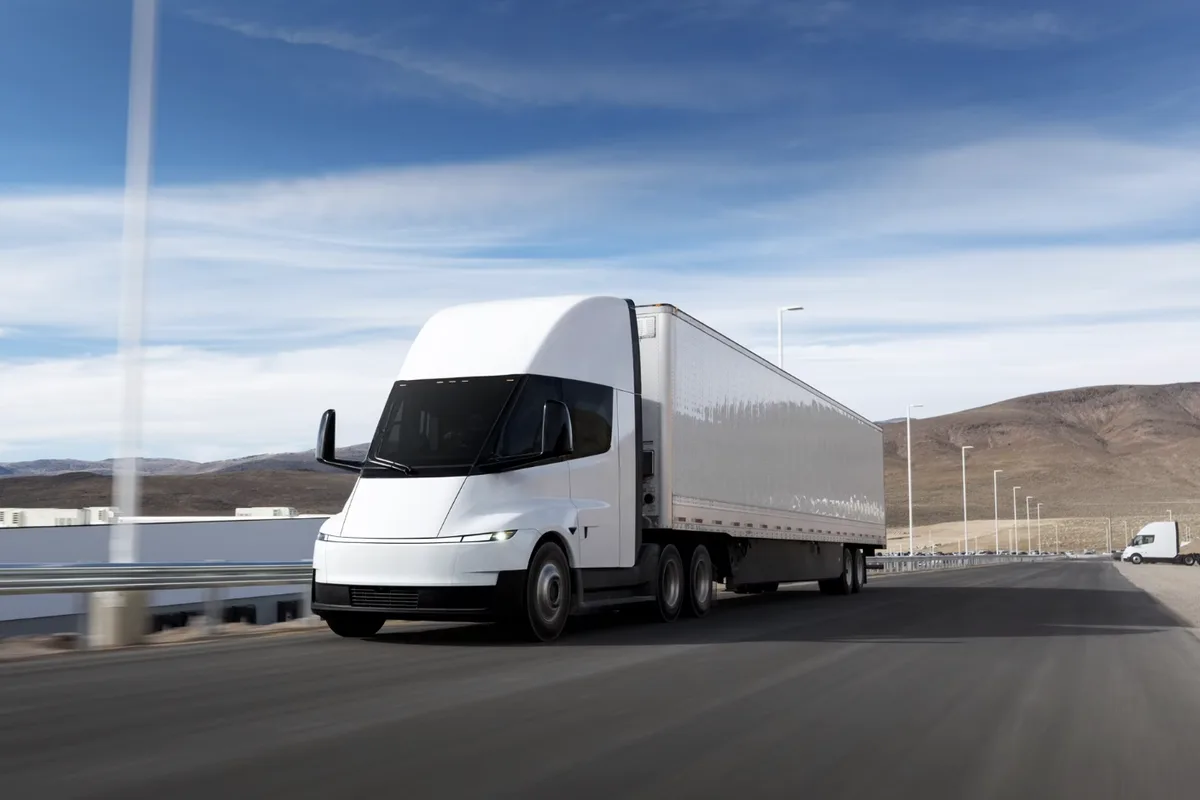
Tesla's Semi truck has entered high-volume production, seven years later than originally planned. The electric heavy-duty vehicle was first unveiled in 2017, with CEO Elon Musk promising production would begin in 2019.
The timeline slipped repeatedly, from 2020 to 2021 to 2022, before a limited pilot line delivered a few early units to PepsiCo. A $3.6 billion expansion of Tesla's Gigafactory in Nevada in 2023 included a dedicated Semi factory, but by 2024 the mass production target was pushed back to 2026.
By contrast, Volvo's electric truck, announced a year after the Tesla Semi, entered volume production just a year later. The Swedish automaker is now the global leader in electric truck manufacturing.
Tesla's missed deadlines follow a pattern of overly optimistic timelines set by Musk. The second-generation Roadster, unveiled alongside the Semi in 2017, was meant for 2020 but is now scheduled for 2027. Similar delays have affected Full Self-Driving technology and the Model 3 production ramp.
Despite the delays, Tesla says it expects to produce up to 50,000 trucks per year at its 1.7-million-square-foot facility in Texas. When unveiled, Musk claimed the Semi would deliver over 1,000 horsepower, accelerate from 0 to 100km/h in 20 seconds, and have a range of up to 500 miles for the Long Range version.