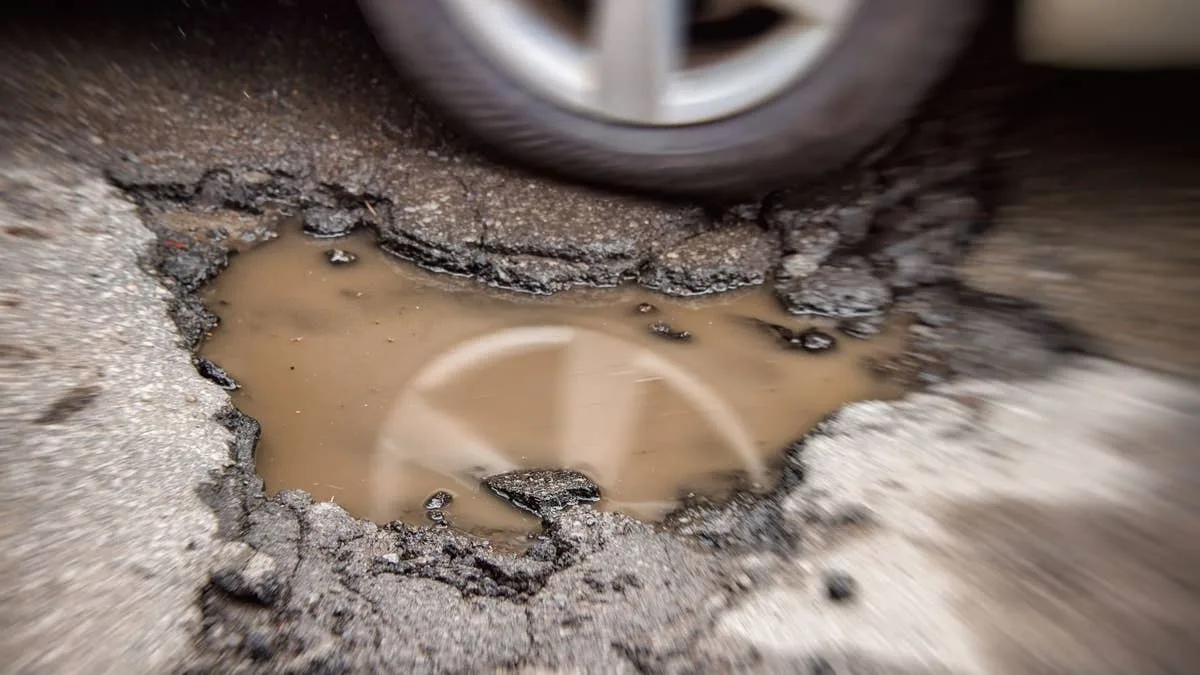
UK motorists are being urged to master a simple visual trick to avoid the scourge of potholes, as new figures reveal the average repair bill for related damage has hit a staggering £320 per incident. With some drivers facing costs exceeding £1,000 for damage to tyres, suspension, and steering, the advice comes at a critical time.
The Pothole Problem: Cost and Council Delays
The warning coincides with the approach of National Pothole Day, highlighting a persistent issue on British roads. Research from the price comparison site Go.Compare paints a concerning picture of the repair landscape, revealing that the time taken for local authorities to fill reported potholes varies dramatically across the country.
In some areas, repairs are completed in just over a day. However, in other regions, drivers are left waiting for a remarkable 209 days for a pothole to be fixed, forcing them to remain on high alert for months on end. Potholes typically form when water seeps into existing road cracks, freezes, and expands, worsening the damage.
The Instructor's Steering Wheel Safety Trick
In response to this widespread hazard, Ros, a driving instructor from Cheltenham's Drive School of Motoring, has demonstrated a practical method to avoid potholes where it is safe to do so. She shared the technique in a detailed YouTube video, stressing that safety must always come first.
"You can only use this if it's safe to do so," Ros emphasised. "If there's cars around or other road users, sometimes you're going to have to go through the pothole to avoid a collision. Cars and other road users are more important than the pothole."
How the Reference Point Technique Works
The trick involves using a specific reference point on the steering wheel to judge your vehicle's position relative to the hazard. Ros instructs drivers to visually divide their steering wheel.
Imagine cutting the wheel in half vertically. Then, take the left-hand section and split it in half again. The point where this inner quarter begins is your key marker. "That's where you're going to want to put the pothole if it is safe to do so and there is no one around," Ros explained.
She added this skill to a driver's "toolkit," but reiterated the critical caveat: it should never be attempted if it compromises the safety of other road users.
What to Do When You Can't Avoid a Pothole
For situations where swerving is impossible, Ros offers straightforward advice to minimise damage. "Sometimes, because of other users, you're going to have to go through it, which is horrible," she said. "So, just reduce your speed down to make sure that the damage to your car is the least that it can be."
Motorists who spot a pothole are encouraged to report it directly to the local authority responsible for the road's maintenance. However, the Go.Compare study underscores that the response time can be frustratingly inconsistent depending on your location.
With the financial burden of pothole damage falling heavily on drivers, combining vigilant reporting with defensive driving techniques remains the best strategy for navigating the UK's crumbling road network.




