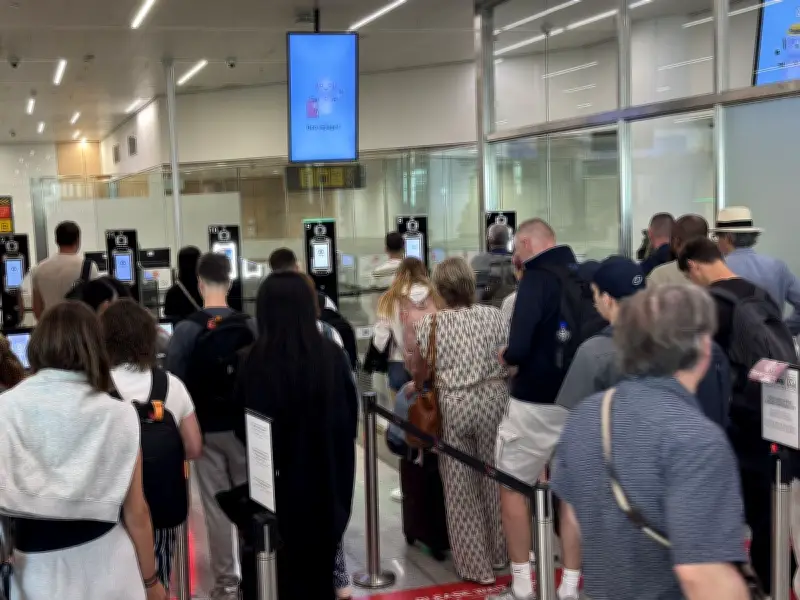
Ryanair has warned travelers to expect lengthy delays at passport control across Europe this summer, as problems with the EU's new Entry/Exit System (EES) continue to cause disruption. The airline said millions of families could be affected, urging passengers to allow extra time for their journeys.
EES Hotspots Identified
Ryanair identified 15 airports as recurring 'EES hotspots' where passengers face significant delays due to slow processing times and excessive queues on both arrivals and departures. These include Lisbon, Tenerife South, Madrid, Lanzarote, Alicante, Malaga, Milan Bergamo, Milan Malpensa, Verona, Paris Beauvais, Berlin, Cologne, Frankfurt Hahn, Krakow, and Budapest.
System Failures and Infrastructure Gaps
According to Ryanair, months after EES went live on April 10, many airports still lack fully functioning self-service kiosks, while border staffing levels and infrastructure remain inadequate for peak passenger volumes. This results in avoidable delays, longer queues, and unnecessary stress for UK passengers during the busiest holiday period.
Ryanair's chief operations officer, Neal McMahon, said: "Families heading away for a well-earned summer holiday should be thinking about suitcases, suncream and sangria, not standing in passport queues for hours. The reality is that the EES system isn't working properly and families are paying the price for a system that does not work months after launch."
Call for Suspension or Extension
Ryanair supports calls from EU member states to urgently extend current EES flexibilities into early 2027, allowing time to fix malfunctioning kiosks, increase staffing, and ensure efficient operation before full enforcement. European airports and airlines have also urged the European Commission to suspend EES until September.
McMahon added: "Passengers should not be the testing ground for unfinished border infrastructure. We support calls from EU Member States to urgently extend the EES flexibilities. This will give airports and border authorities the time to improve the infrastructure, fix the broken devices and hire more staff so that families can travel through Europe without disruption."
Background on EES
The EES system, launched on April 10, requires first-time users to register fingerprints and facial images into the biometric system. Data remains valid for three years, intended to streamline border control. However, repeated reports of passengers waiting hours in queues, with some missing flights, have led to widespread criticism.