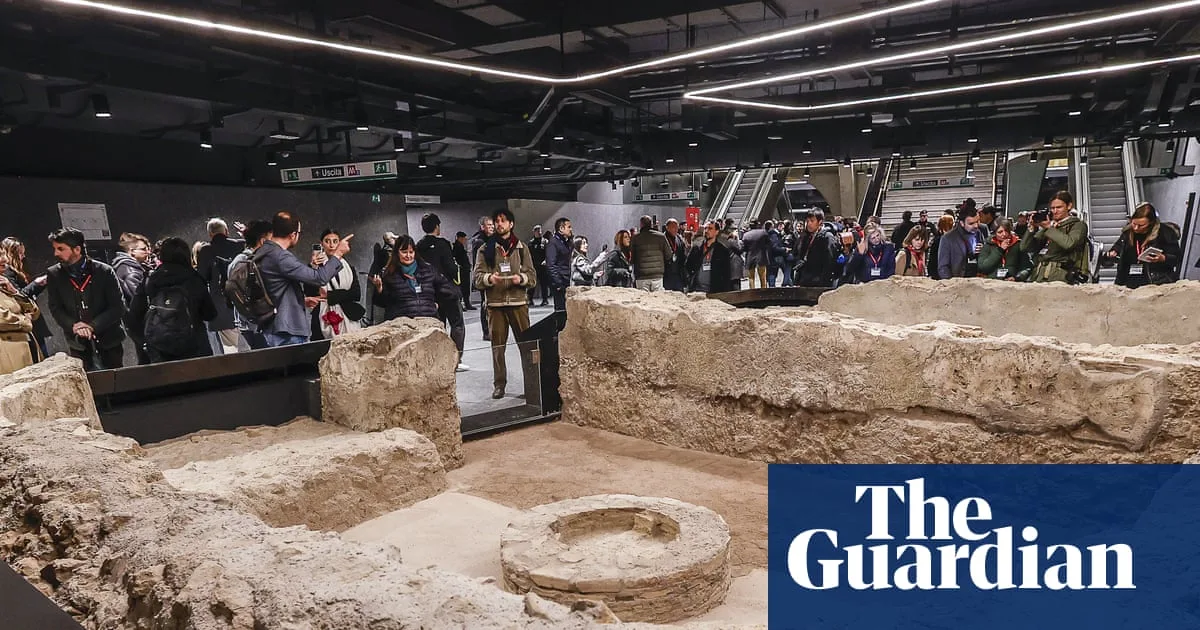
Rome's long-awaited metro stations near the Colosseum and San Giovanni have finally opened, offering commuters relief and tourists a glimpse of ancient treasures unearthed during construction. The Colosseo-Fori Imperiali station, a four-level complex beside the Colosseum, and Porta Metronia in the San Giovanni area, are part of the driverless Metro C line connecting the suburbs to the city centre.
The stations, dubbed 'museum stations', showcase archaeological finds including a Republican-era townhouse, a thermal bath from the early imperial period, and 28 wells containing votive offerings such as stag antlers and hairpins. At Porta Metronia, a vast military barracks from the early second century AD, complete with a commander's house featuring frescoes and mosaic floors, was discovered between 7 and 12 metres deep.
Simona Moretta, scientific director of the excavation, described the military complex as an exceptional find, suggesting soldiers were either part of the emperor's guard or stationed for city security. However, while trains are running at Porta Metronia, the museum area will not open until early next year.
The opening adds 3km to Metro C, which will eventually extend to Piazza Venezia and towards the Vatican. Pietro Salini, CEO of construction consortium Webuild, called the stations 'a strategic milestone that combines progress in infrastructure with conservation of our heritage'.
Tour guide Carlo Andrea, who has chronicled the project on his blog Odissea Quotidiana, said: 'It's been an eternal wait... But on days like this, we're reminded that it's important to build the subway, even if it's a challenge in Rome, because it brings us wonderful things.'