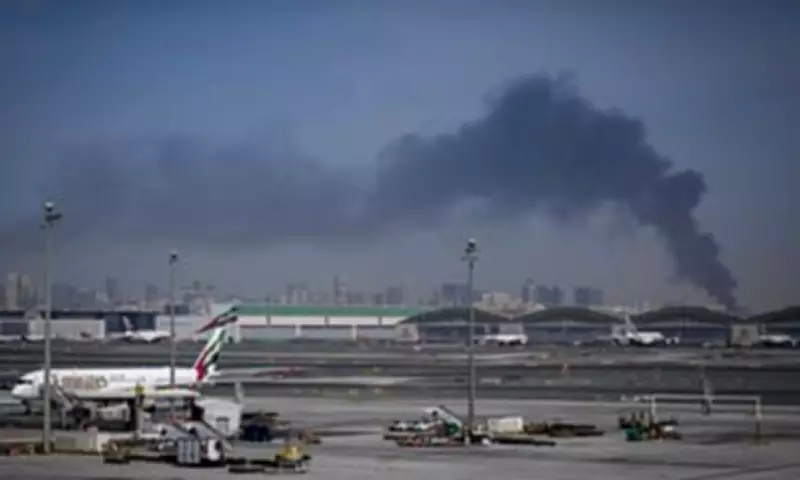
Middle East Flight Chaos: When Will Air Travel Resume for Stranded Brits?
As travel chaos continues to grip the Middle East, many Britons—both at home and those stranded in the region—are understandably anxious about when flights will resume. In light of recent violence and unrest, travellers to and within the Middle East are facing severe disruptions to their holidays, with flights to major hubs across the region cancelled or suspended.
Current Situation and Airspace Closures
The disruption follows US and Israeli strikes on Iran over the weekend, which were met with missile attacks from Iran across the region. While some flights are slowly beginning to repatriate stranded individuals, commercial operations have not yet resumed at full force. Key countries have implemented airspace closures, adding to the travel woes.
According to flight tracking data, airspace over the UAE, Qatar, Kuwait, Israel, Bahrain, Iraq, and Jordan remained largely empty on Wednesday morning. Specific closures include Syrian airspace until 8 March and Iraqi airspace until 7 March. Gulf states like the UAE, Saudi Arabia, Qatar, and Kuwait have partially or fully closed their airspace, exacerbating the situation for travellers.

Predictions for Flight Resumption
It remains unclear exactly when flights will resume, but experts provide cautious timelines. Aviation analytics firm Cirium anticipates cancellations will continue for at least a week, with recovery varying by country and airline. Many airlines have ruled out scheduling any flights until at least Thursday, as reported by the Guardian.
Anton Radchenko, an aviation expert and founder at AirAdvisor, offers insight: "If there's no further escalation, I would expect a meaningful ramp-up over the next several days on key Gulf routes." However, he warns that a full return to normal—with reliable daily frequencies and minimal rerouting—will take longer due to the need to reposition aircraft and crews, clear backlogs, and rebuild missed rotations.
Benjamin Wohl, chief operating officer at Tribeca Jets, adds: "Timing is directly correlated to the everchanging developments on the ground. Israel is beginning to consider a few inbound flights an hour to return stranded citizens. You may see similar actions in Bahrain, Qatar, and the UAE within the next couple of weeks." Experts predict a two to five-week conflict, suggesting air traffic may only normalise after hostilities cease.
Phased Recovery and Ongoing Disruptions
Even when airspace starts to reopen, a return to normal is unlikely to be immediate. Radchenko outlines a phased approach: the first phase involves limited, tightly controlled operations on low-risk corridors, such as London-Dubai and London-Riyadh routes. The second phase will see broader commercial schedules returning, but with short-notice cancellations and reroutes still probable.
Radchenko advises travellers: "Treat the next few days as a fragile recovery period. Confirm flight status frequently, keep routing options flexible, and assume schedules may change at short notice while airspace restrictions remain dynamic." Travel expert Simon Calder echoes this, noting the staggering impact of daily flight cancellations at major hubs like Dubai, Doha, and Abu Dhabi, which affect hundreds of thousands of people.
Airlines and Repatriation Efforts
Some airlines have begun limited operations to assist stranded Brits. British Airways is running flights from Muscat in Oman to London Heathrow on 6 and 7 March, prioritising customers with existing bookings. Virgin Atlantic has restarted services between London Heathrow and Dubai and Riyadh, subject to ongoing safety assessments.
However, Qatar Airways has suspended scheduled operations due to Qatari airspace closures, awaiting safe reopening by authorities. Other carriers, like Emirates, are operating a limited number of repatriation and freighter flights, while Wizz Air has not started any flights in the affected region. The UK government has chartered an emergency evacuation flight from Oman, focusing on vulnerable Britons, but appears to rely primarily on commercial airlines for repatriation.

Advice for Travellers
For those planning holidays to the Middle East, the situation requires careful consideration. If travelling to an area with new travel warnings, cancellation may be possible with compensation. However, for unaffected areas, refunds are unlikely. Ignoring Foreign, Commonwealth & Development Office advice could invalidate insurance, so holidaymakers in affected regions should contact their insurers to confirm coverage.
In summary, while some flights are slowly resuming, full recovery from the Middle East travel chaos will be gradual and dependent on regional stability. Brits are urged to stay informed and flexible as airlines and authorities navigate this volatile situation.