
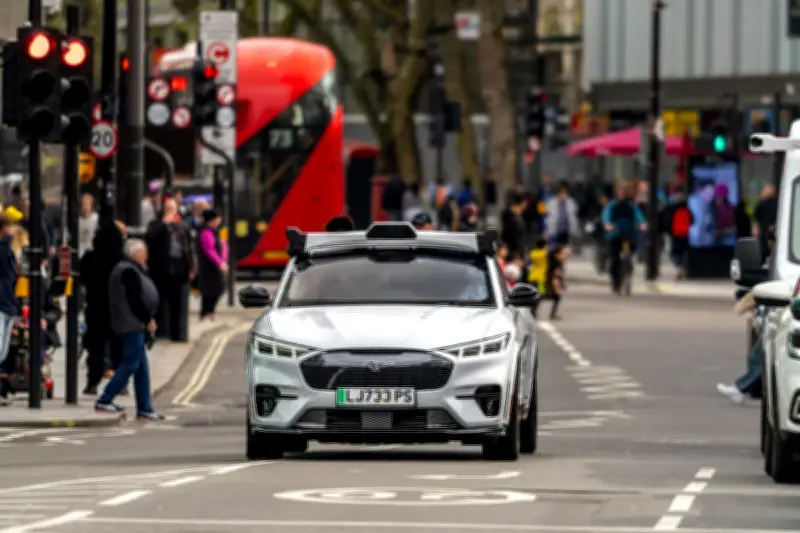
Driverless taxis present a “huge opportunity” to connect parts of outer London, a senior Assembly Member has said – but only if the rollout does not lead to further congestion.
British firm Wayve hopes to deploy its fleet of self-driving cabs on the capital’s roads in the coming months, subject to formal permission from the Department for Transport (DfT), the Driver and Vehicle Standards Agency (DVSA) and Transport for London (TfL).
In response, the London Assembly Transport Committee has launched an investigation to assess the city's readiness for an influx of 'robotaxis' and how they align with the Mayor’s wider transport strategy.
Last week, Assembly Members heard that TfL should draw inspiration from Oslo, where self-driving vehicles are integrated into the public transport network. The Norwegian capital has reportedly managed to serve transport "deserts" while avoiding congestion in busier areas.
As part of the ongoing probe, members of the Transport Committee visited Wayve Headquarters in Islington on Monday to try the self-driving taxis out for themselves.
Following a 15-minute spin on the roads of North London, committee chair Caroline Russell told LDRS that the experience was “reassuring” from a safety perspective but that she still had concerns over what it would mean for the number of vehicles on London’s roads.
“It was very smooth, really quite dull,” the Green Party Assembly Member said.
“There are huge possibilities with the technology that makes sure that people obey speed limits and that they don’t drive too close to a cyclist, that they look out for pedestrians wanting to cross the road and obey all the road rules – that’s absolutely great.
“We also need to think about the model of how they’re actually rolling this out. The autonomous passenger vehicle, which is like a replacement for Uber and private hire drivers, has huge issues with potential job losses, but also potentially means more congestion on our streets.
“So while they’re very safe vehicles, or at least they appear to be at the moment, we need to really think about the congestion issues, and I think that’s the biggest question that TfL needs to be looking at.”
Thomas Ableman, former Director of Strategy and Innovation at TfL, last week suggested policymakers should look to Oslo for inspiration, rather than accept the commercial robotaxi model seen elsewhere.
Trials in the Norwegian city, which started in 2019, ensure autonomous vehicles are being directly integrated into the wider network by operating in areas least served by public transport, and ensuring people can get to rail and bus hubs from afar.
This would be a far better option than simply “adding another private hire fleet” on London’s already congested roads, he said.
Ms Russell suggested that those in outer London – where public transport options are sometimes limited – could see real benefits from driverless taxis operating like “mini buses” carrying passengers to public transport hubs.
“The biggest opportunities are in those outer London public transport deserts where people feel forced to own a car – it’s really expensive owning a car,” she explained.
“People are suffering with the cost of living crisis, and actually if we have more public transport based on mini buses, travelling less used routes, potentially there’s a real benefit from a public transport perspective and in terms of reducing the congestion on our roads.”
Transport Committee member Bassam Mahfouz, who represents the outer London boroughs of Ealing and Hillingdon, said TfL must balance the interests of commuters and existing taxi drivers.
He said: “There’s a lot of excitement amongst a lot of people, particularly in outer London who do use taxis and minicabs more often.
“The balance is obviously with those other people who also live and contribute to our communities in outer London, is making sure that they’ve got jobs to feed their families and ensure they’ve got bright futures ahead of them as well. We’ve got to make sure that balance is in place.”
Black cab drivers are already struggling in London, with numbers falling from 22,810 in 2014 to 14,800 in 2024. The rollout of self-driving taxis could harm the trade further, according to industry figures.
Last week a TfL spokesperson said: “Safety is our top priority, and we are interested in learning more about technologies that could potentially help deliver safety benefits for all road users, including learning from the experience of other cities.
“We recognise the challenge of legislating in response to changes in automated vehicle technology in a timely manner to ensure benefits are delivered and risks are mitigated.
“Legislation must set a high benchmark and consider the impact on all road users, and in London the roll out of AVs must support achieving the aims of the Mayor’s Transport Strategy. For example, the safety ambition for automated vehicles should align with Vision Zero and support the goal of eliminating all deaths and serious injuries from collisions on London’s streets by 2041.
“All cities across the UK, including London, need to understand the opportunities and risks of new technologies for their customers and transport networks in relation to their own local conditions. We look forward to working with Government and industry on next steps.”




