Landslide Leaves Welsh Valley Isolated, Emergency Services Face Two-Hour Detours
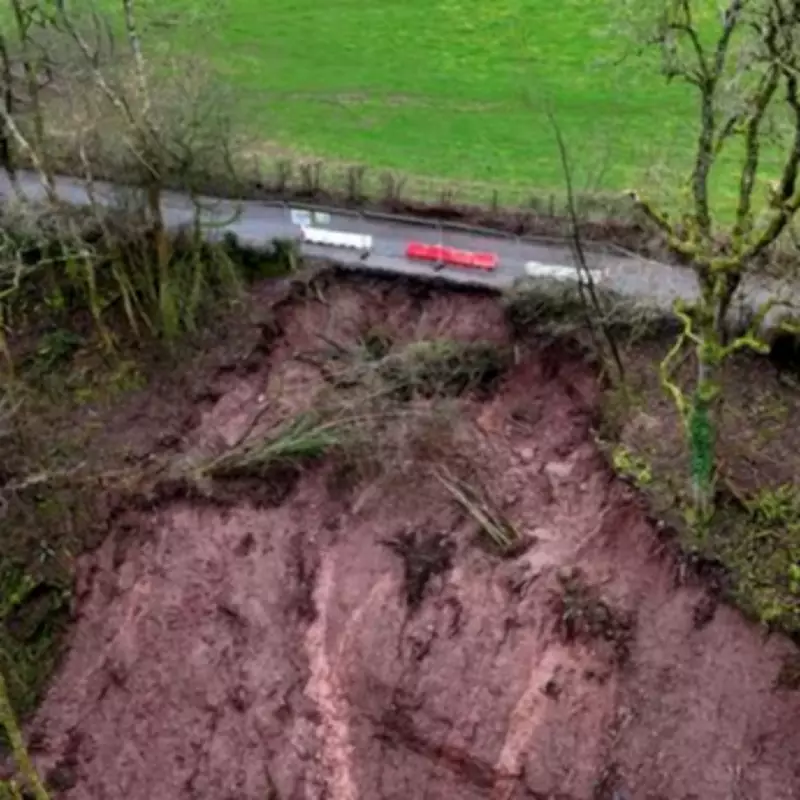
A devastating landslide has severed the primary access route to a rural Welsh valley, leaving residents effectively cut off and emergency services grappling with perilous two-hour detours. The incident, which occurred on January 30, has plunged the community into a state of isolation and anxiety, with locals describing the situation as bordering on a critical incident.
Community Stranded and Feeling Abandoned
The main road connecting Cwmyoy and Llanthony in Monmouthshire was abruptly closed after a riverbank collapsed beneath it. This has left the inhabitants of Llanthony Valley with only one alternative route in or out: the Gospel Pass, which holds the distinction of being the highest road in Wales open to vehicles. However, this pass is currently plagued by icy and wet conditions, making it a hazardous journey that many locals are too fearful to undertake.
"As a community, we feel profoundly let down," stated Michelle Turner, a resident of Llanthony. "We all pay council tax yet we have effectively been cut off with little warning, inadequate communication and no clear or safe plan to protect residents' welfare."

Emergency Access Compromised, Daily Life Disrupted
The closure has precipitated a severe crisis for emergency services. Ambulances and fire engines are now compelled to divert via Hay-on-Wye, resulting in journeys that can extend up to two hours to reach the nearest Accident and Emergency department. Michelle Turner reported that there have already been medical emergencies in the valley, including incidents requiring CPR, where barriers had to be hastily removed to permit emergency access.
The alternative route over Capel Y Ffin into Hay is described as narrow, potholed, and prone to flooding, fog, and ice. It is deemed wholly unsuitable as the sole access for residents, school transport, delivery vehicles, and emergency services. Consequently, some residents now face arduous journeys of up to 37 miles and a 90-minute detour simply to reach Abergavenny.
The ramifications extend far beyond emergency access:
- Farmers are under immense strain, with reports of extreme stress, frustration, and even depression. Obtaining essential supplies has become incredibly difficult, forcing some to risk driving over the unstable landslide when barriers were temporarily opened to prevent livestock from perishing.
- Parents are struggling with disrupted school transport and fulfilling family commitments.
- Critical services are affected, including deliveries of oil or calor gas, boiler servicing, and hospital or medical appointments.
- Businesses are completely cut off, commuting is severely disrupted, and basic services such as postal deliveries have ceased entirely.
Faced with these dire circumstances, some residents have made the calculated decision that crossing the unstable landslide presents a lesser risk than navigating the treacherous Gospel Pass. "After weighing up the dangers of crossing a slip which may collapse if we're unlucky, many residents decided it's safer than driving over the pass," one local explained, while also expressing a desire to deter tourists from ignoring road-closed signs.
Council Response and Ongoing Safety Concerns
Monmouthshire County Council has defended its actions, stating that the road was closed on the day of the initial landslip to allow specialist geotechnical engineers to assess the damage. With further ground movement observed in early February, officials have cited a "serious risk" to public safety as the reason for the continued closure.
A council spokesperson elaborated: "Following the closure between Cwmyoy and Llanthony on January 30 due to a serious landslip, specialist geotechnical engineers have attended to inspect the site. Based on their advice—and the continued deterioration—the road must remain closed due to the serious risk to public safety."

The council asserts it is working with relevant departments and partner organisations to coordinate measures for essential services, including emergency access, school transport, and refuse collection. Investigation, monitoring, and design work have been initiated to develop a safe, engineered solution. However, the road will remain closed until such a solution is implemented, with the council pledging to keep residents updated via a dedicated section on its website.
Despite these assurances, the residents of Llanthony Valley continue to feel isolated and abandoned, their daily lives and safety hanging in the balance as they await a permanent resolution to this crippling infrastructure failure.