A landmark piece of American infrastructure, the nearly century-old Black Hawk Bridge spanning the mighty Mississippi River, is scheduled for a dramatic implosion this Friday. The controlled demolition will clear the path for a modern, safer replacement, drawing an expected large crowd of spectators to witness the end of an era.
The End of a Cherished Landmark
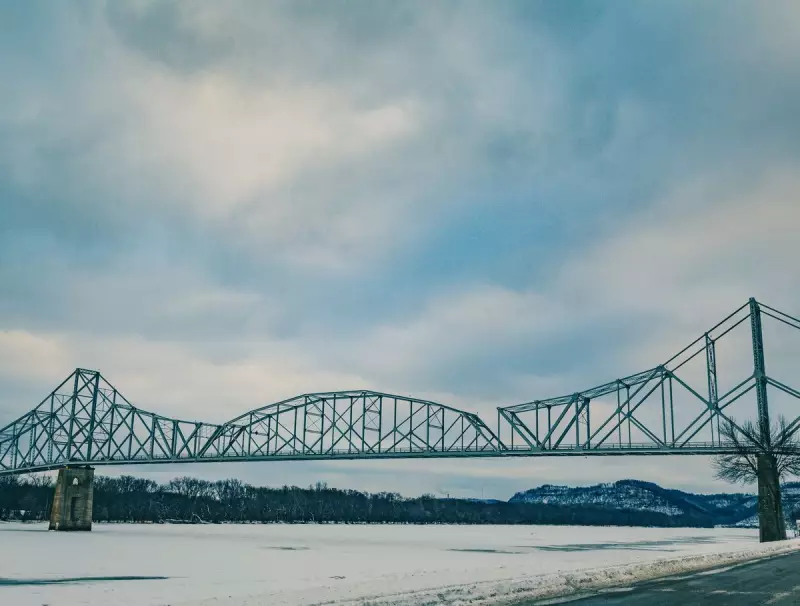
Completed in 1931, the cantilevered bridge, officially named the Mississippi River Bridge but known locally as the Black Hawk Bridge, has connected Lansing, Iowa, with Wisconsin for 94 years. Its distinctive central arch and twin tower trusses made it a recognisable feature of the local landscape. Lansing Mayor Michael Verdon emphasised the profound emotional attachment felt by the community, stating the structure carries immense sentimental value for tens of thousands of people.
The bridge served as the only crossing point for roughly 30 miles (48 kilometres) in either direction, carrying approximately 2,100 vehicles each day before it was permanently closed to traffic in October. Its narrow design often led to precarious situations when two large lorries met, and its positioning in the river made it susceptible to occasional collisions with passing barges.

Logistics of the Demolition and the Interim Solution
Officials from the Iowa Department of Transportation have confirmed that imploding the central span is the most efficient method for removing the largest sections of the superstructure. Daniel Yeh, a department spokesperson, explained that while some parts have already been taken down, the implosion is necessary for the main sections.
The demolition sequence will see the centre span imploded first, followed by the eastern section later on Friday. The western section will be carefully dismantled at a future date due to its proximity to residential homes and a railway line. For now, motorists are relying on a car ferry service to cross the river while construction continues on the new $140 million (£110 million) replacement bridge, which is anticipated to open in 2027.
A Community's Tribute and Lasting Legacy
The town of Lansing, with a population of 968, has deep roots as a historic river port, with a past steeped in steamboats, fur trading, and commercial fishing. The bridge has been a central part of that identity for generations. Mayor Verdon noted that residents plan to salvage material from the old structure to create keepsakes and construct a permanent tribute within the city.
For those unable to attend in person, a live video stream of the implosion will be available online, allowing a global audience to watch this significant moment in infrastructure renewal. The event marks a poignant but necessary step forward, replacing a beloved but outdated landmark with a modern structure fit for the future.