
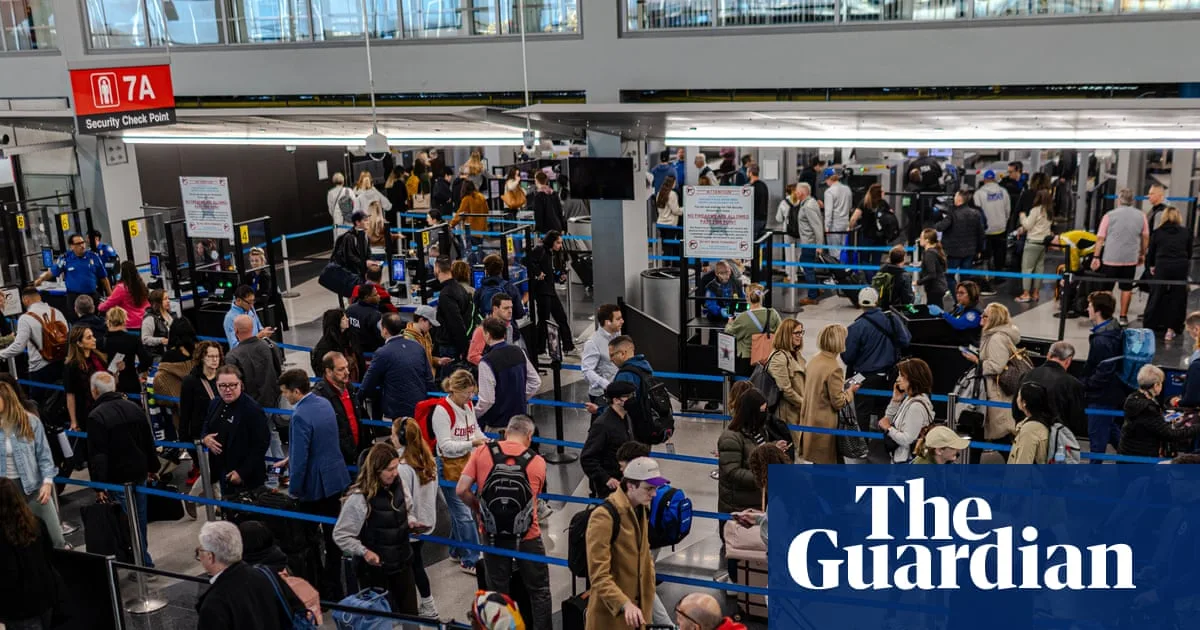
Travellers across the United States are facing significant disruption after the Federal Aviation Administration (FAA) ordered drastic reductions in commercial air traffic amid the ongoing government shutdown, the longest on record. The cuts, which began with a 4% reduction, are set to increase to 10% by 14 November, affecting flights between 6am and 10pm at 40 high-traffic airports, including global hubs such as JFK in New York and LAX in Los Angeles.
As of Friday morning, more than 800 US-linked flights had been cancelled, according to flight tracking website FlightAware, with about four in five cancellations globally related to the US. The transportation secretary, Sean Duffy, warned that cancellations could rise to 15% or 20% if the shutdown continues, as air traffic controllers have been working without pay since the funding lapse began last month.
The FAA said the move was necessary to maintain air traffic control safety. Administrator Bryan Bedford said: “We are seeing signs of stress in the system, so we are proactively reducing the number of flights to make sure the American people continue to fly safely.” Duffy blamed Democrats for any “mass chaos” that ensues, although the shutdown stems from a failure by both parties to agree on spending plans.
A potential agreement to reopen the government reportedly crumbled on Friday after Senate Democrats rejected a proposal linking a stopgap funding bill to three full-year appropriations bills. The National Economic Council director, Kevin Hassett, warned of broader economic consequences, noting that business travel could suffer significantly. Aviation analytics firm Cirium estimated the cuts could represent as many as 1,800 flights and upwards of 268,000 seats.
United, Southwest and Delta airlines began cancelling flights on Thursday evening. United Airlines CEO Scott Kirby said the airline “will continue to make rolling updates to our schedule as the government shutdown continues”, while Delta said it expected to operate the vast majority of its flights. The disruption comes two weeks before the Thanksgiving holiday, typically the busiest travel period of the year, increasing pressure on lawmakers to reach a deal.




