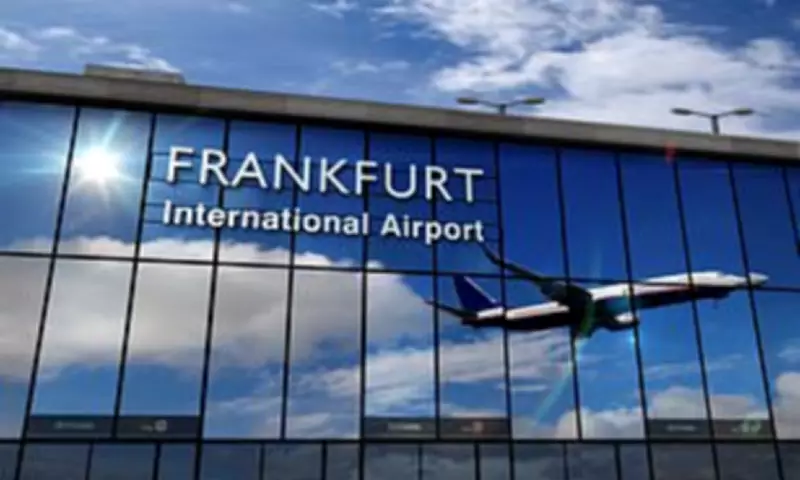
In a groundbreaking move for aviation accessibility, Frankfurt Airport in Germany has become the first airport worldwide to implement an innovative Bluetooth-based system designed specifically to assist travellers with hearing loss. The pioneering technology transmits crucial gate announcements directly to passengers' personal hearing devices, earbuds, and smartphones, transforming the airport experience for those with auditory impairments.
A New Era of Inclusive Air Travel
The newly installed system utilises Auracast, a broadcast audio technology that harnesses Bluetooth connectivity to deliver all public address announcements as a direct audio stream. This innovative approach converts ambient airport noise into clear, personalised audio that passengers can tune into using their own compatible devices. The technology has been strategically deployed at two key departure gates, A16 and A17, within Terminal 1, marking the initial phase of this ambitious accessibility project.
How the Revolutionary System Operates
Instead of struggling to decipher announcements over the constant background hum of terminal activity, affected travellers can now simply connect their devices and listen to updates with crystal clarity, much like taking a telephone call or enjoying music on personal headphones. The system supports a wide range of devices, including Auracast-compatible hearing aids, wireless earbuds, headphones, and various assistive listening apparatus, all accessible through supported smartphones from manufacturers like Google Pixel and Samsung.

This development addresses a significant global need, given that approximately one in five people worldwide – representing more than 1.5 billion individuals – live with some degree of hearing loss. The airport's initiative represents a substantial step toward creating more inclusive travel environments that cater to diverse passenger requirements.
Collaborative Development and Future Evaluation
The project represents a collaborative effort between Sittig Technologies, Fraport (the airport operating company), and the Frankfurt University of Applied Sciences. Over the coming two months, the partnership will actively gather feedback from both travellers and airport staff to comprehensively evaluate how the technology impacts accessibility, passenger comfort, and the overall travel experience.
Executive Perspectives on the Innovation
Alexander Laukenmann, Senior Executive Vice President of Aviation at Fraport AG, emphasised the airport's commitment to passenger wellbeing, stating: 'As the airport operator, we want our passengers to have a comfortable and relaxing stay at our terminals. By bringing clear, personalised announcements directly into passengers' own hearing devices, we are offering another attractive service to our customers while at the same time taking an important step towards a more inclusive airport.'
Johannes Sittig, US CEO of Sittig Technologies, highlighted the transformative nature of the technology, adding: 'Auracast fundamentally changes how announcements work in airports. We are proud to collaborate with Frankfurt Airport as a first mover, guided by a clear vision for a more inclusive, passenger-centric travel experience. Together, we're transforming automated and manual gate announcements into a direct, personal audio service delivered straight to passengers' own devices.'
Broader Implications for Airport Operations
The implementation carries significant implications beyond immediate accessibility benefits. Auracast technology actively supports emerging 'silent airport' concepts, where frequent, disruptive loudspeaker announcements are replaced by direct, personal audio updates delivered discreetly to individual devices. This reduces overall noise pollution within terminal spaces while ensuring critical information reaches those who need it most.
Remarkably, this transformation requires no fundamental replacement of existing airport infrastructure. As Johannes Sittig explained: 'By integrating Auracast into our PAXGuide announcement platform, we're redefining airport communication without requiring airports to replace their existing infrastructure.' This pragmatic approach makes the technology potentially scalable and adaptable for other transportation hubs worldwide seeking to enhance their accessibility provisions.

The initiative at Frankfurt Airport establishes a new benchmark for inclusive design in global aviation, demonstrating how technological innovation can directly address longstanding barriers faced by travellers with hearing impairments while simultaneously improving the airport environment for all passengers.