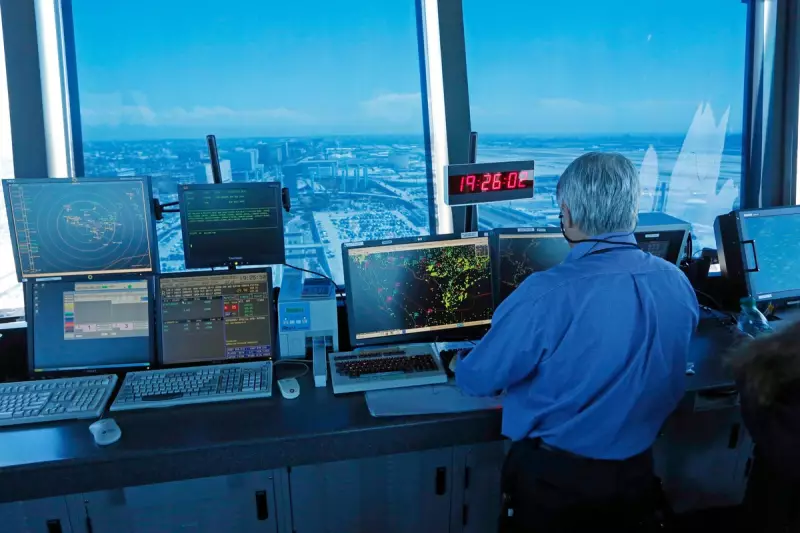
The US Federal Aviation Administration (FAA) has taken a decisive step to modernise its ageing air traffic control infrastructure, awarding a crucial contract to replace hundreds of outdated radar systems across the nation.
Contract Awarded for Critical National Upgrade
On Monday, 5th January 2026, Transportation Secretary Sean Duffy and the FAA announced the selection of two contractors for the monumental task. The firms, RTX and the Spanish company Indra, have been chosen to replace a total of 612 radar systems that form the backbone of the country's air traffic control network. The administration has set a target for the new systems to be operational by the summer of 2028.
This project is a central pillar of a multibillion-dollar overhaul of the national air traffic control system. The FAA aims to complete the entire modernisation effort by the end of 2028, which aligns with the conclusion of President Donald Trump's current term.

The High Cost of Outdated Technology
FAA Administrator Bryan Bedford underscored the urgent need for the upgrade, stating the existing radar network is "outdated and long overdue for replacement." He explained that many units have exceeded their intended service life, becoming prohibitively expensive to maintain and increasingly difficult to support with spare parts.
The scale of the challenge is stark. The FAA has been devoting the majority of its $3 billion annual equipment budget simply to maintain the fragile, decades-old system. Some components are so obsolete they are no longer manufactured, forcing the agency to hunt for parts on online marketplaces like eBay. Remarkably, parts of the system still rely on archaic floppy disc technology.
Real-World Impacts and Future Funding
The risks of failing infrastructure have already materialised. Last spring, technical failures twice knocked out radar for controllers managing airspace around Newark Liberty International Airport. These incidents triggered thousands of flight cancellations and delays at the major hub. While system redundancy usually ensures safety, there have been cases, such as at a Philadelphia facility serving Newark, where both primary and backup systems failed simultaneously.
The FAA did not immediately disclose the exact cost of the new radar systems, which will consolidate 14 different existing radar types into a simpler, more maintainable network. However, the financial commitment is vast. Congress has approved $12.5 billion for the overarching modernisation project, of which over $6 billion has already been committed. Secretary Duffy has indicated that an additional $20 billion will be required to see the project through to completion.
Progress is already underway on other fronts. The agency has replaced more than a third of the system's outdated copper wiring with modern fibre-optic connections and has enlisted the national security contractor Peraton to oversee the extensive upgrade work.