The Catastrophic Chain of Events: Dan Air Flight 1008's Final Moments
On April 25, 1980, at precisely 9:20 AM, Dan Air Flight 1008 departed from Manchester Airport bound for Tenerife, carrying 146 passengers and crew members. The majority aboard were British holidaymakers eagerly anticipating the sun-drenched beaches and stunning landscapes of the Canary Islands. The flight proceeded smoothly for three hours under the command of three experienced aviators: Captain Arthur Whelan, aged 50; First Officer Michael Firth, 33; and Flight Engineer Raymond Carey, 33.
A Fateful Approach and Critical Miscommunication
As the Boeing 727-46 commenced its approach at 1:00 PM local time, unusual wind patterns forced air traffic controllers to redirect incoming aircraft to Runway 12 instead of the standard landing runway. This created an immediate dilemma for 34-year-old controller Justo Camin at Tenerife North Airport, who faced another aircraft already on final approach to the same runway.
Without radar capabilities, Camin relied on procedural methods for managing air traffic. At 1:18 PM, recognizing the potential collision risk, he directed Flight 1008 into a holding pattern to allow the preceding aircraft to land safely. However, no standard holding pattern existed for Runway 12, forcing Camin to improvise.

The controller instructed the crew: "Roger, the er, standard holding pattern overhead Foxtrot Papa is inbound heading one five zero, turn to the left, call you back shortly." Captain Whelan acknowledged with a simple "Roger" but crucially failed to read back the instructions—a standard safety protocol that might have prevented the impending disaster.
The Single-Letter Error That Changed Everything
When Camin said "turn to the left," he intended to say "turns to the left," indicating the direction for multiple circuits in the holding pattern. The missing 's' proved catastrophic. The crew interpreted this as a single turn instruction rather than continuous circling.
Captain Whelan, confused by the unexpected holding pattern that didn't appear on his navigation charts, executed a single left turn and settled on a 150-degree course. The aircraft now traversed mountainous terrain where the minimum safe altitude was 14,500 feet—far above their assigned 5,000-foot clearance.
One minute and six seconds before impact, cockpit recordings captured a pilot's remark: "bloody strange hold, isn't it? It doesn't parallel with the runway or anything." The crew's growing unease was palpable, yet nobody challenged the controller's instructions.
Final Desperate Moments and Impact
Controller Camin, believing the aircraft was positioned safely over water, permitted an additional 1,000-foot descent, unaware they were surrounded by peaks. Captain Whelan expressed his doubts: "I don't like that." His first officer responded: "they want us to keep going more round, don't they?"
Suddenly, the ground proximity warning system blared: "pull up, pull up!" In a frantic attempt to avoid the approaching mountains, Captain Whelan abandoned his left turn for an aggressive right maneuver—a decision that Spanish investigators later determined sealed the aircraft's fate.
Flight Engineer Carey's desperate warning—"let's get out of here"—was followed by his final cries of "bank angle, bank angle!" recorded moments before the cockpit voice recorder ceased functioning.
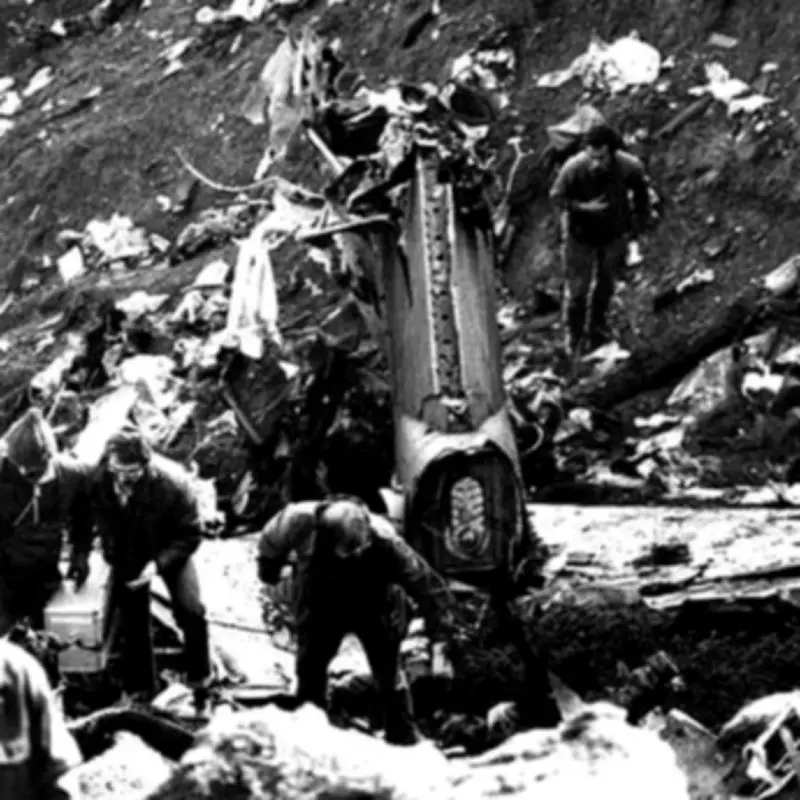
At 5,450 feet, Dan Air Flight 1008 struck La Esperanza mountain, just 92 feet below the summit. The impact immediately destroyed most of the aircraft, scattering wreckage across the mountainside. The tail section was thrown hundreds of meters before tumbling into a ravine and breaking apart.
Aftermath and Conflicting Investigations
Rescue teams arrived within hours but found no survivors among the 146 passengers and crew. The devastation was so complete that not a single intact body was recovered, with some victims remaining unidentified.
Spanish investigators placed full blame on the Dan Air flight crew, while British investigators maintained the controller should have recognized the danger earlier and implemented a standard holding pattern. The British team criticized Camin's decision to allow descent to 5,000 feet when official guidelines mandated 7,000 feet for holding patterns.

Both investigations agreed that had Captain Whelan read back the controller's instructions, or had Camin included the crucial 's' in "turns," the tragedy might have been prevented. The disaster prompted heightened attention to precise communication protocols throughout aviation operations, particularly emphasizing pilots' responsibility to read back air traffic control instructions.
Despite this catastrophic event—Britain's worst aviation disaster at the time—Dan Air continued operations until British Airways acquired the airline in 1992. The memory of Flight 1008 and the 146 lives lost that day serves as a sobering reminder of how minute communication errors can cascade into unimaginable tragedy.