
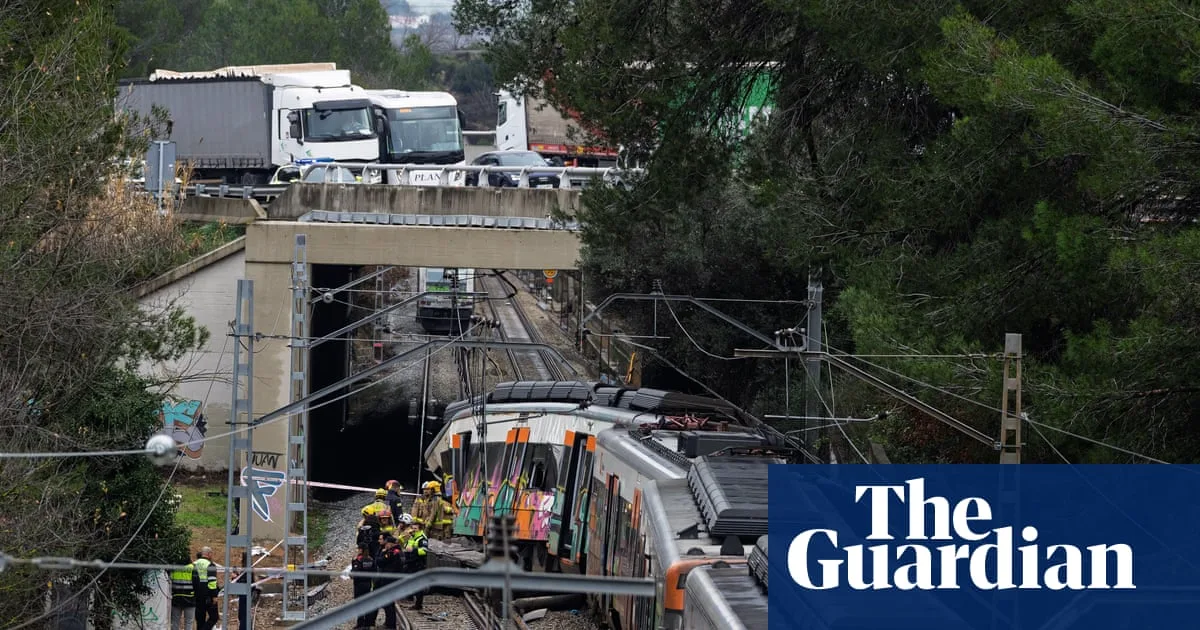
A trainee driver was killed and 41 people injured when a commuter train derailed near Barcelona on Tuesday evening, just days after a high-speed collision in southern Spain left at least 43 dead and 152 injured.
The accident occurred at around 9pm local time when a retaining wall collapsed onto the track near Gelida, Catalonia, apparently due to unusually heavy rainfall. The driver, named as 27-year-old Fernando Huerta from Seville, died in the incident, and five of the injured are in critical condition.
The local rail network was shut down for inspections, stranding hundreds of thousands of passengers and causing severe disruption on roads. Earlier that day, a separate incident on the Maresme coast saw a train strike a rock on the track, though only minor injuries were reported.
Sunday night's crash near Córdoba involved a high-speed Iryo train and an Alvia train colliding. Black box data indicates the Iryo driver did not initially realise the collision had occurred, and control centre calls show confusion in the aftermath. The cause remains unclear.
Spain’s largest train drivers’ union, Semaf, has called for an indefinite strike, demanding criminal liability for those responsible for safety and citing “constant deterioration” of the rail network. Opposition parties have criticised the government, with the Popular party’s leader demanding an immediate clarification of railway safety.
Transport minister Óscar Puente has stressed that the two accidents are “completely unrelated”. Despite the incidents, EU statistics show Spain’s rail network is among Europe’s safest, with only one passenger death in 2024 compared to 20,000 road deaths across the continent.




