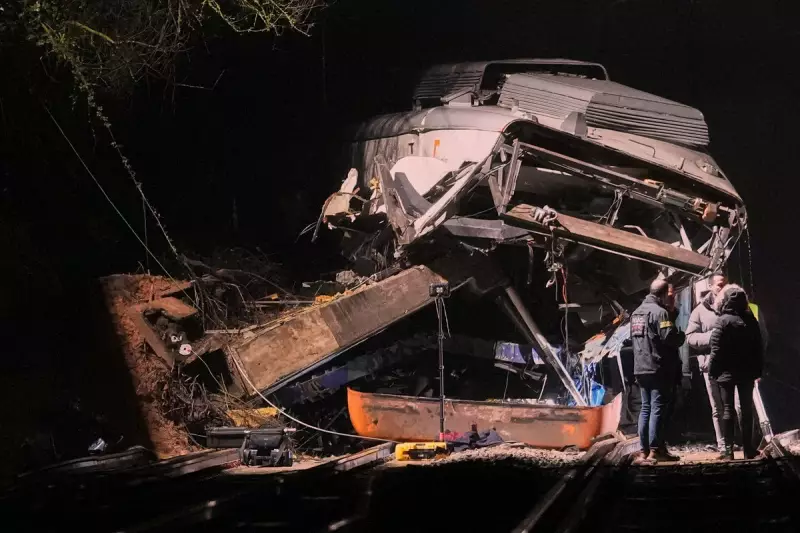
Rail services across Spain's northeastern Catalonia region have been suspended following a significant commuter train crash near Barcelona, which occurred just days after a separate deadly high-speed rail collision in the south of the country. The incident has resulted in at least one fatality and multiple injuries, compounding a period of national mourning.
Details of the Barcelona-Area Commuter Train Incident
Spanish authorities confirmed that a commuter train crashed on Tuesday night near the town of Gelida, located approximately 37 kilometres (23 miles) outside Barcelona. The train collided with a retaining wall that had collapsed onto the tracks, leading to the immediate suspension of all commuter rail services in the Catalonia region as emergency crews worked through the night to complete rescue operations.
Casualties and Emergency Response
According to emergency services in Catalonia, the crash affected 37 individuals, with five sustaining serious injuries and six others in less critical condition. Regional firefighters reported that most of the injured were passengers in the first carriage of the train. All passengers were successfully evacuated from the wreckage, with rescue efforts continuing to ensure no further victims remained trapped.

Spanish Prime Minister Pedro Sánchez expressed his condolences and solidarity, posting on social media platform X on Tuesday night: "All my affection and solidarity with the victims and their families." This statement underscores the gravity of the situation as the nation grapples with multiple transport tragedies.
Context of National Mourning Following Southern Spain Crash
The Barcelona commuter train crash comes amidst three days of national mourning declared after a devastating high-speed train collision in southern Spain on Sunday. That incident, occurring some 800 kilometres (497 miles) away, claimed the lives of at least 42 people, with emergency workers still searching for additional victims in the wreckage at the time of the Catalonia crash.
Rail Network Reliability and Safety Concerns
While Spain's high-speed rail network is generally regarded as efficient and reliable—having been a source of national pride until recently—the commuter rail service has faced ongoing challenges with reliability. However, accidents resulting in injuries or fatalities are uncommon across both systems, making these consecutive incidents particularly alarming for passengers and authorities alike.
Spain's railway operator ADIF has suggested that the containment wall collapse near Gelida was likely caused by heavy rainfall that has affected the northeastern region this week. This highlights potential infrastructure vulnerabilities exacerbated by adverse weather conditions, raising questions about maintenance and safety protocols.
The dual tragedies have cast a shadow over Spain's transport sector, prompting calls for thorough investigations and renewed focus on rail safety measures. As services remain disrupted in Catalonia, commuters face significant inconvenience, while the nation collectively mourns the loss of life from both incidents.