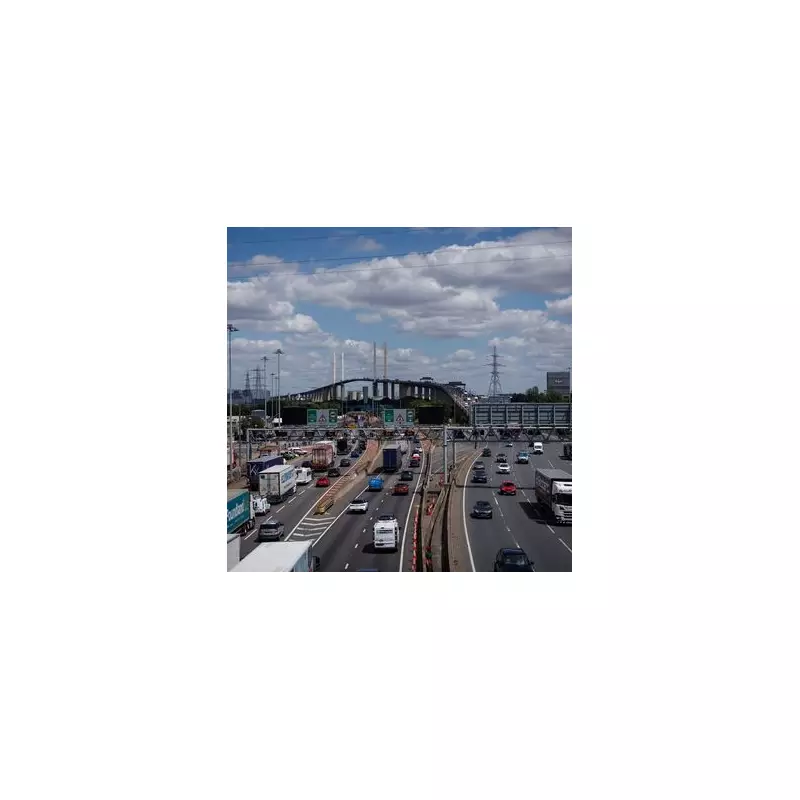
British motorists have forfeited more than £3.6 million in unused payments for the Dartford Crossing over the last two years, with the vast majority of these funds being retained by the UK Government.
Millions in Expired Payments
A recent Freedom of Information (FOI) request has uncovered the scale of the losses. The data shows that £1,812,379 in Dart Charge payments went unused in the 2023/24 financial year. This comes on top of a further £1,790,559 that expired in the previous year, creating a combined total of £3,602,938.
The Department for Transport (DfT), which received the FOI findings from This is Money, confirmed that the "vast majority" of these expired payments are not refunded to drivers. Instead, the money is kept by the Government.

How the Dart Charge System Works
The Dart Charge is the payment system for the busy Dartford Crossing, which links Essex and Kent. Each crossing costs £2.50 if paid in advance or by midnight the next day, or £5 if paid later. Payments remain valid for a period of 12 months before they expire.
Drivers are entitled to request a refund for any unused credit within that 12-month window. For those with dormant Dart Charge accounts, any remaining balance is supposed to be refunded automatically using the original payment details.
Despite these mechanisms, the FOI data reveals that significant sums are still lapsing. The crossing itself is a critical piece of infrastructure, used by an estimated 180,000 vehicles every day.
Government Defence and Historical Controversy
A spokesperson for the DfT stated: “All Dart Charge revenue is paid to the DfT and spent on transport projects which benefit people across Essex and Kent, such as the Lower Thames Crossing.”
This justification has been met with criticism. AA president Edmund King highlighted the historical context, noting the original agreement that tolls would cease once the bridge's construction costs were paid off—a milestone reached back in 2003.
"The real irony is the Dartford crossing original agreement was that the tolls would stop once the bridge's construction costs were paid off," said King. "However, the government reversed its decision, retaining the charges to manage traffic and as a general revenue raiser."
The continuation of the charge was enabled by the Transport Act 2000, which introduced charging schemes for major trunk roads, bridges, and tunnels. The Government further increased the Dart Charge fee in September 2025, the first rise since 2014.
This news coincides with the Government's ongoing commitment to the Lower Thames Crossing project. This new route, intended to alleviate congestion at Dartford, will connect Kent and Essex via a 2.6-mile tunnel, set to be the UK's longest road tunnel. Planning for the project began in 2009, with over £800 million of taxpayer money already spent.