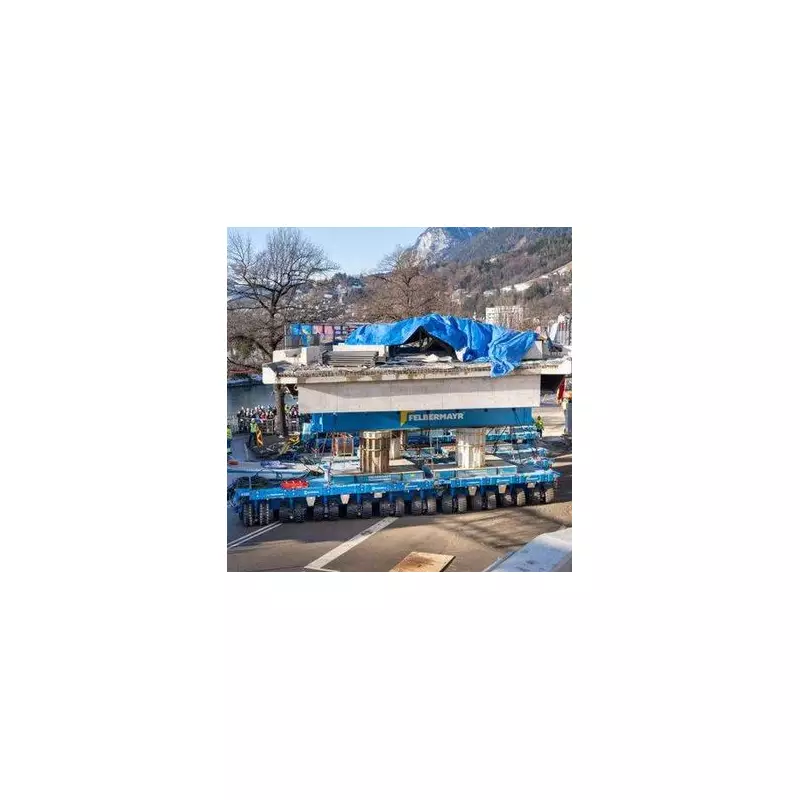
In a remarkable feat of modern engineering, a colossal 1,400-tonne bridge has been successfully transported nearly 100 metres through the centre of Innsbruck, Austria, without the use of a single crane. The operation, carried out by Austria's state-owned railway operator ÖBB over the weekend, forms part of a major overhaul of the city's rail infrastructure, designed to minimise disruption to daily life.
Innovative Lifting and Moving Techniques
The new Rauchmühle bridge was constructed close to its final location to reduce logistical challenges. Once assembled, engineers began by raising the structure more than five metres off the ground using hydraulic presses, a phase that required meticulous execution to ensure the bridge's stability throughout the process.
On Sunday morning, the bridge commenced its slow journey across the urban landscape. Instead of relying on traditional cranes, the engineering team employed heavy-duty platforms, typically used in industrial settings, to move the massive load. This approach was chosen for its enhanced safety and precision, particularly in Innsbruck's densely populated environment.

Precision Engineering in Action
A total of 12 self-propelled modular transporter units were deployed, featuring 56 axles and 112 wheels. These units moved the bridge at a controlled speed of approximately 1-2 km/h, allowing for exact positioning as it rolled into place over Hallerstraße. During the move, the structure was also rotated roughly 90 degrees before being carefully lowered onto its new supports.
Engineers involved in the project have described the relocation as one of the most complex moves undertaken on an Austrian railway site in recent years. The method proved not only safer but also more accurate than conventional crane hoisting, showcasing advanced engineering capabilities in urban construction.
Ongoing Work and Infrastructure Benefits
Construction on the scheme continues, with teams now focusing on installing bearings, completing the supports, fitting railway equipment, and preparing the line for reopening. Rail services between Rum and Innsbruck Central Station remain suspended until January 29, with replacement buses operating in the interim.
The new bridge replaces a metal structure that had been in service for over 60 years, which carried around 270 trains daily. Due to heavy use and harsh Alpine weather conditions, the old bridge had reached the end of its technical lifespan. In contrast, the replacement is constructed from concrete, offering a longer operational life, reduced noise levels, and a smoother ride for passengers.
Future Implications and Completion
ÖBB has released several figures highlighting the scale of this ambitious operation, though specific details remain part of their technical documentation. The bridge is expected to come into full use once the remaining work is completed later this month, marking a significant upgrade to Innsbruck's transport network.
This project underscores the importance of innovative engineering solutions in maintaining and improving critical infrastructure, especially in challenging urban settings where minimising disruption is paramount.