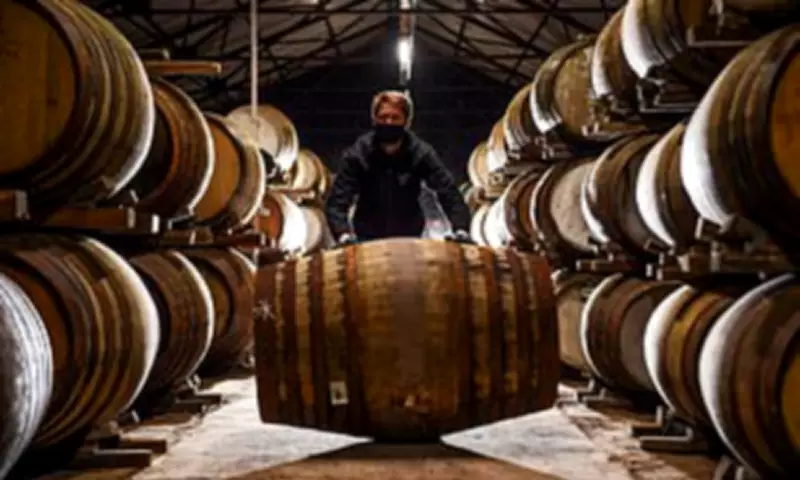
One of Scotland's most iconic and economically significant products, whisky generates billions in export revenue annually. This remarkable success story is now creating an unexpected revival for another beverage that has faced declining global popularity in recent decades.
Sherry Finds Unlikely Saviour in Scottish Distilleries
Major sherry producers have revealed that distilleries north of the border are driving renewed demand for the fortified wine, which plays a crucial role in seasoning the oak casks used for maturing single malt whisky. Once a popular tipple among Britons during the 1970s, sherry has struggled with slumping sales across recent years as consumer tastes evolved.
Tim Holt, a director of leading sherry producer Barbadillo, explained how Scottish demand is now providing vital support to the industry. He stated: 'We are relatively new to this business, having started three years ago, but we already hold a few thousand casks in our cellars for seasoning purposes. This represents a growing segment of our overall business operations.'

The Science Behind Cask Seasoning
Newly distilled whisky begins as a plain, colourless liquid lacking distinctive flavour or aroma characteristics. These essential qualities develop during the extended aging process within carefully prepared barrels. The specific type of cask used significantly impacts both the colour and flavour profile of the finished whisky.
Sherry casks, typically constructed from European oak, help produce distinctive fruity or nutty aromas that whisky enthusiasts highly prize. Mr Holt elaborated on this process, noting that whisky 'leaches out' tannins and acids from the wood over years of maturation, gradually mellowing the final product to achieve its characteristic complexity.
Substantial Investment in Seasoning Process
The cask seasoning process represents a substantial investment for producers. New casks undergo seasoning with sherry that must be at least two years old, with this preparation period typically lasting one year or longer. This extensive process creates significant added value: before seasoning, a standard 500-litre cask costs approximately 900 euros, but this price can rise to thousands of euros depending on the specific variety of sherry employed.
Prices escalate further for whisky aged in older casks that previously contained rarer sherry varieties, with collectors prepared to pay thousands for these premium bottles. This creates a valuable secondary market that benefits both industries.
Spanish Confidence in Continued Partnership
Spain's sherry producers remain confident that their growing reliance on whisky production will not leave them vulnerable in the foreseeable future. In the sherry capital of Jerez, producers are investing significantly in this lucrative expansion into whisky-related markets.
César Saldaña, president of the region's regulating body, provided detailed statistics: 'There are approximately 340,000 500-litre casks in Jerez currently undergoing the ageing process for sherry production. Roughly one third of that quantity represents barrels being specifically seasoned for later sale to whisky distilleries.'
He emphasised the importance of this trade: 'The supply of sherry casks to Scottish distillers is undoubtedly a hugely important activity for the Jerez region and its economy.'
Export Statistics Reveal Scale
During the past year alone, over 120,000 certified sherry casks of different sizes, primarily 500 and 250 litre capacities, were shipped to more than thirty different countries worldwide. Remarkably, approximately eighty percent of this quantity was exported directly to Scotland, demonstrating the extraordinary scale of this cross-border industry partnership.
This symbiotic relationship between Scottish whisky and Spanish sherry represents a fascinating example of how traditional industries can adapt and support each other in changing global markets, creating economic benefits across international borders while preserving centuries-old production methods.