Venezuela Pledges Security to Foreign Mining Firms Amid US Push for Critical Minerals
Venezuela Offers Security Assurances to Mining Companies

US Interior Secretary Doug Burgum has announced that Venezuela is extending security assurances to foreign mining companies seeking to invest in the country's perilous, resource-abundant areas. This development comes as part of a broader US strategy to stabilise Venezuela and secure access to essential minerals, countering China's dominant position in the global market.

Security Promises in High-Risk Zones

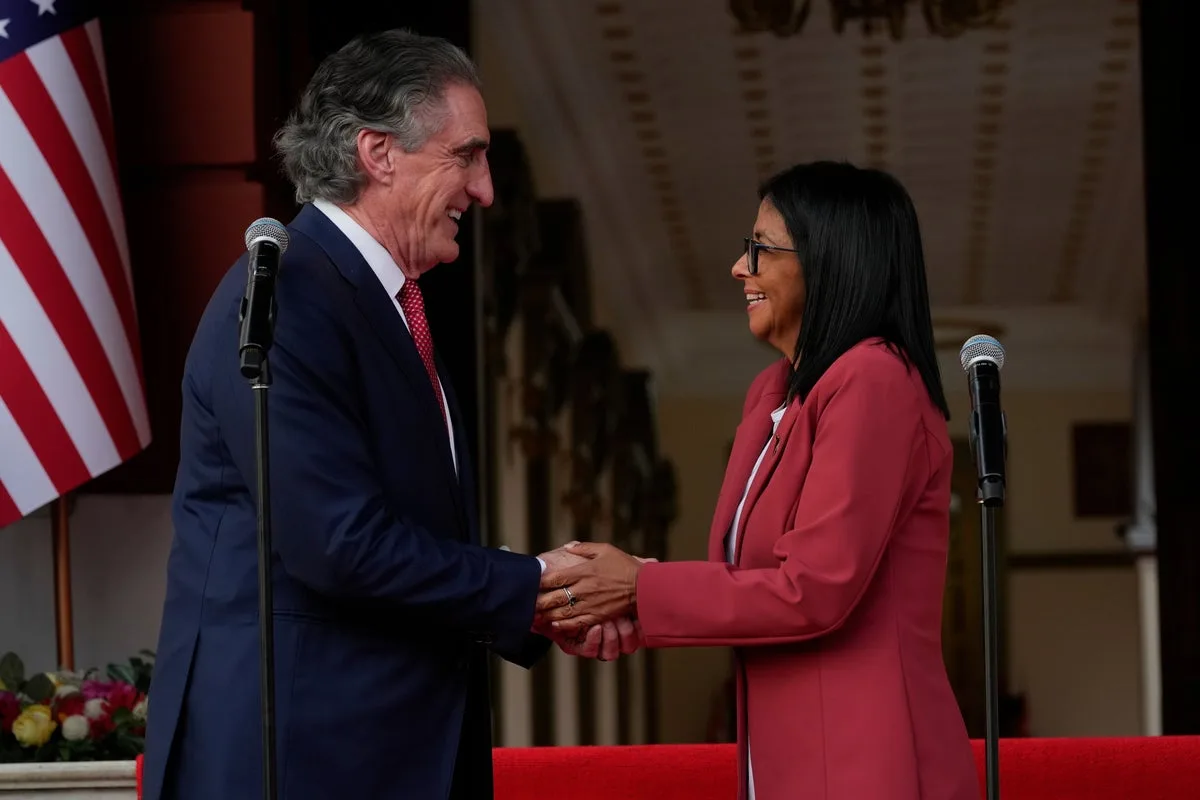
During a two-day visit to Caracas, Burgum met with acting President Delcy Rodríguez, who acknowledged the significant security risks in Venezuela's mineral-rich regions. These areas have historically been controlled by guerrilla factions, criminal gangs, and other illicit groups, often operating with the tacit approval—and financial benefit—of local officials and military personnel.

Burgum emphasised that the Venezuelan government has committed to ensuring the safety of companies conducting due diligence or planning to reopen mines, including those abandoned 15 to 20 years ago. "We heard assurances in the meeting today and yesterday that if companies wanted to get to these areas, do due diligence, think about reopening mines, maybe even getting back to mines that they themselves were running 15 or 20 years ago, that this government would ensure their security," Burgum stated.

US Strategic Interests and Economic Opportunities

Burgum, who leads President Donald Trump's National Energy Dominance Council, argued that while illegal mining has created some economic activity, legal investments offer a "superior economic opportunity." His trip aligns with the Trump administration's aggressive push to defend against China's stranglehold on critical minerals, many of which are abundant in Venezuela, such as gold, copper, coltan, bauxite, and diamonds.

The US is actively working to shore up supplies of these minerals, crucial for manufacturing electric vehicles, missiles, and other high-tech products. This urgency follows China's restrictions on rare earth exports in response to Trump's tariffs, with tensions persisting despite a recent truce.

Venezuela's Mining Reforms and Historical Context

Acting President Rodríguez has pledged to overhaul Venezuela's mining law to attract foreign investment, mirroring recent oil industry reforms that introduced privatisation. This marks a significant shift from the socialist policies that have governed the country for over two decades, during which many foreign companies saw their assets expropriated.

In 2016, under former President Nicolás Maduro, Venezuela established a vast mining development zone to offset declining oil revenues, plagued by mismanagement, corruption, and US sanctions. Since then, mining operations have proliferated, often under brutal conditions with criminal involvement, yet drawing desperate Venezuelans hoping to escape poverty.

Ongoing Challenges and International Implications

Despite the new security assurances, the mining industry in Venezuela remains poorly regulated, with unsafe working conditions and widespread illegal activity. Officials and military members frequently profit from these operations by taking cuts from revenue in exchange for permits, fuel, and transportation.

Rodríguez expressed optimism about the potential for cooperation, stating, "I believe the steps we are taking demonstrate the goodwill to build this cooperation agenda in the energy and mining sectors, which will strengthen relations between our two countries for the benefit of the people of Venezuela and the people of the United States."

This move represents a bold attempt by the US to reshape Venezuela's economy and secure critical mineral supplies, while navigating complex geopolitical rivalries and internal instability.




