US Grants India 30-Day Waiver for Russian Oil Purchases Amid Hormuz Disruption
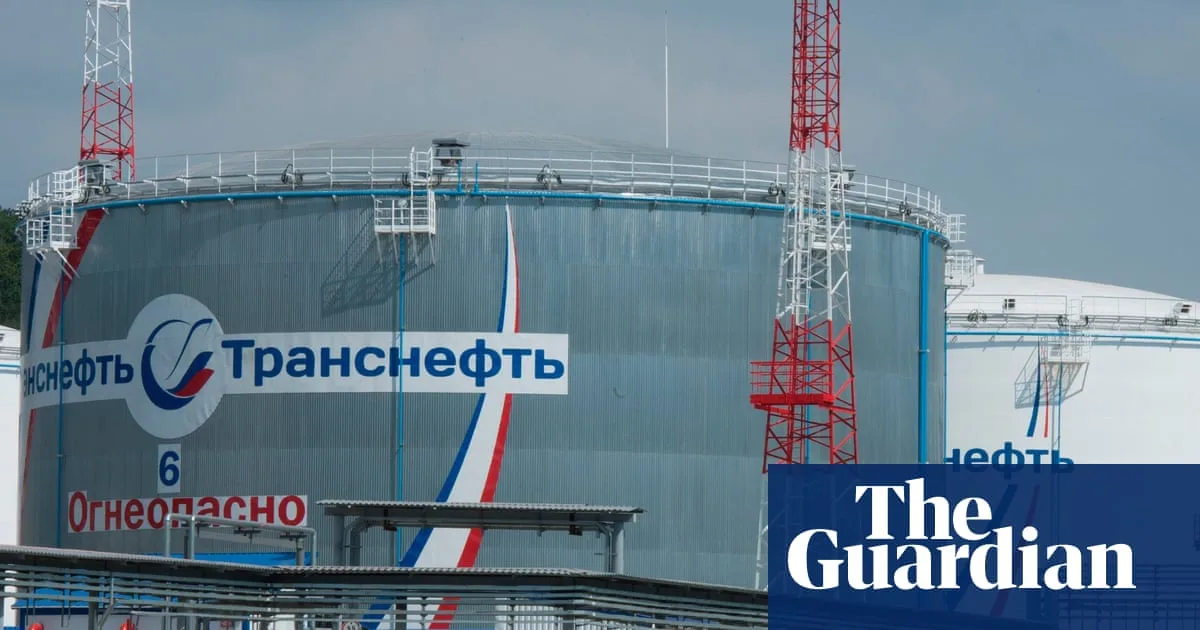
The United States has issued a significant 30-day waiver permitting Indian refiners to purchase Russian oil without facing any tariff repercussions. This emergency measure comes as severe disruptions at the critical Strait of Hormuz shipping route continue to threaten global oil supply chains and push prices higher.
Strait of Hormuz Effectively Closed, Sparking Global Energy Fears
The Strait of Hormuz, a vital maritime chokepoint through which approximately one-fifth of global oil and liquefied natural gas supplies pass, has remained effectively closed since Iranian forces issued threats to "set fire" to vessels attempting passage. This blockade has caused oil prices to surge past $80 per barrel for the first time in months, with analysts warning that a prolonged crisis could drive prices above $100, exacerbating inflationary pressures worldwide.
The Treasury Department's Office of Foreign Assets Control (OFAC) issued the specific license on Thursday. It authorises the delivery and sale of Russian crude oil and petroleum products to India, but with a critical limitation: the waiver only applies to oil already loaded onto vessels as of 5 March 2026. This authorization is set to expire on 4 April, creating a narrow window for transactions.
US Frames Move as Response to Iranian "Hostage" Tactics
Treasury Secretary Scott Bessent announced the policy shift on social media platform X, explicitly framing it as a direct response to Iran's attempt to "take global energy hostage." He sought to downplay any potential benefit to Moscow, stating, "This waiver will not provide significant financial benefit to the Russian government as it only authorises transactions involving oil already stranded at sea."
Bessent further emphasised the strategic partnership, writing, "India is an essential partner of the United States, and we fully anticipate that New Delhi will ramp up purchases of US oil." This statement underscores Washington's view of the waiver as a temporary stopgap, with expectations that India will ultimately shift its procurement towards American suppliers in the longer term.
Indian Refiners Pivot to Available Russian Supplies
The announcement coincided with practical shifts already underway. According to vessel-tracking data, at least three sanctioned tankers carrying around 2.1 million barrels of Russian Urals crude were diverting to Indian ports this week. Furthermore, Reuters reported that Indian refiners, whose regular supplies were trapped in the Gulf due to the blockade, had already begun purchasing readily available Russian oil.
India moved swiftly to bolster its domestic energy security. On Thursday, the government ordered all refiners to maximise production of liquefied petroleum gas (LPG) and restrict its supply to three major state-run companies: Indian Oil, HPCL, and BPCL. Additional directives instructed refiners not to divert propane and butane to petrochemical production, mandating that state firms sell LPG exclusively to domestic customers.
Geopolitical and Market Repercussions Unfold
Russia's Deputy Prime Minister Alexander Novak told state-run television that Moscow was "getting signals of renewed interest from India" in purchasing additional crude volumes, expressing confidence that the trade remains mutually beneficial. This development occurs against a backdrop where the US had previously claimed India committed to halting Russian crude purchases—a claim never publicly confirmed by Indian authorities.
Recent import data reveals a shifting landscape: in January 2026, Russian crude accounted for less than 20% of India's imports, the lowest share in nearly four years. Concurrently, imports from Saudi Arabia rose to their highest level in almost six years. The US had already reduced tariffs on Indian imports to 18% amid broader trade talks, with Bessent signalling in January that further tariff relief was possible given a perceived sharp reduction in Indian purchases of Russian oil.
Unprecedented Closure of a Critical Maritime Artery
The crisis stems from an unprecedented effective halt of traffic through the Strait of Hormuz. Iran's Islamic Revolutionary Guard Corps (IRGC) declared the Strait closed to vessels from the US, Israel, Europe, and their Western allies—potentially leaving passage open for others like India, though no formal exemption has been confirmed. Tehran had earlier suggested it might permit Chinese-flagged vessels through as a diplomatic gesture.
However, the fundamental issue became insurance. With Iranian forces threatening strikes, insurance cover for the route evaporated, causing most shipping companies and vessel operators to halt crossings entirely regardless of nationality. Real-time tracking shows clusters of over 150 tankers anchored outside the waterway near Kuwait, off Dubai, and at the channel's entrance.
Tanker traffic through the Strait has plummeted by roughly 70%. Major container lines, including industry giants Maersk and Hapag-Lloyd, have suspended transits completely. This marks a historic first; even during the intense Iran-Iraq war from 1980 to 1988, merchant vessels continued operating despite frequent attacks.
International Responses and Limited Alternatives
In response, US President Donald Trump announced that the US Development Finance Corporation would provide political risk insurance for ships transiting the Gulf, aiming to address the core insurance problem directly. Separately, France dispatched the Charles de Gaulle aircraft carrier to the Mediterranean, with President Emmanuel Macron stating French forces had already engaged drones in "legitimate self-defence." Despite these measures, commercial flows have not returned to normal.
Alternative land-based routes offer only limited relief. Saudi Arabia's East-West Pipeline and the UAE's Fujairah pipeline can carry some volume but lack the capacity to replace the normal, massive flows through the Strait of Hormuz. The global energy market remains in a precarious state, with the US waiver for India representing a calculated, temporary intervention in a deeply unstable geopolitical and economic landscape.




