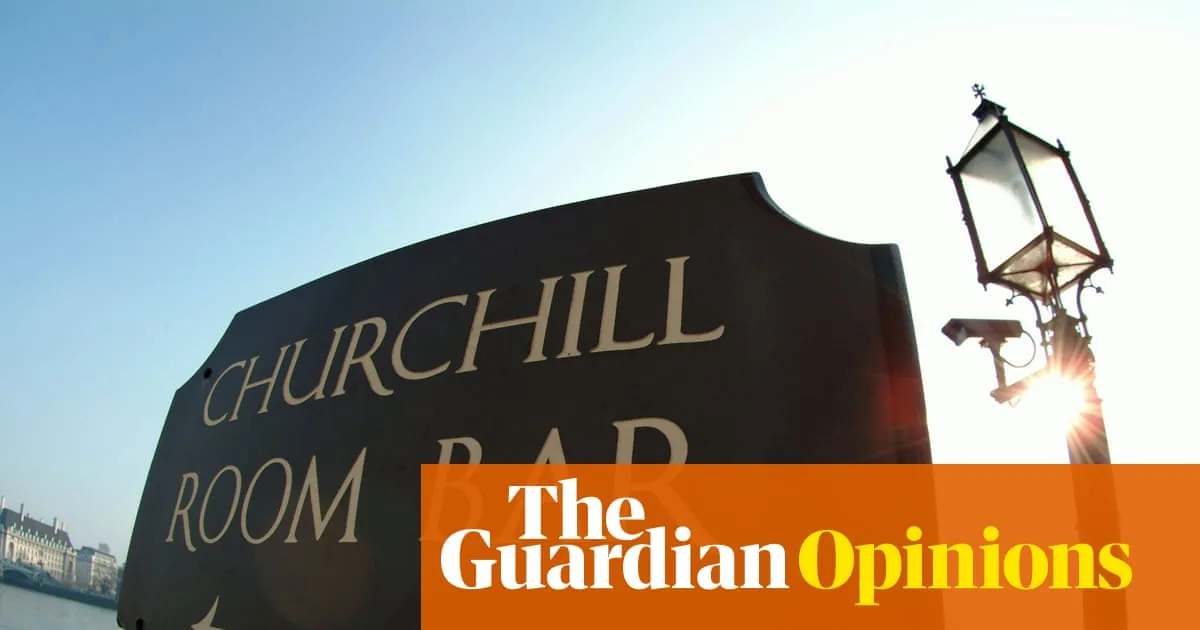
When the Green MP Hannah Spencer took to the airwaves last week to criticise Westminster’s drinking culture, I rolled my eyes. I’ve always had concerns about the pessimistic way we talk about MPs. It feels unfair to tar them all with the same brush, and I certainly don’t think it’s healthy for democracy for people to feel like there are no good ones out there. There certainly are – many of them care deeply and work hard.
A fresh perspective on an old problem
But then I really tuned in. “You can smell the alcohol when people are in between votes”, she told the news site Politics Joe. Gorton & Denton’s shiny new MP Spencer, 34, a former plumber and a darling with Gen Z voters, has only been in Westminster a matter of weeks, having won her seat from Labour in a by-election in February. In other words, she’s seeing things here with fresh eyes. And what those eyes have seen is a “questionable and dangerous behaviour” by staff and potentially some MPs because of the “unprofessional” drinking culture.
The more I thought about it, the more I realised I agreed. I had felt a similar shock when I first started as a journalist in Westminster four years ago. My first feeling of unease was before I even started in the lobby and it came from an unlikely place – a phone call with Mum. Before my first party conference, she – who grew up around politics herself and is usually so relaxed – gave me the most strongly worded personal safety lecture I had ever heard from her. “Don’t find yourself alone with MPs. Don’t drink too much. Don’t accept lifts alone with anyone, even if they seem respectable. And you’re always allowed to say no.”
For the first time in my life, aged 24, I finally thought she was being overbearing. But reflecting on that conversation four years later, I’m now less sure. We only need to take a brief look at the news in the last few years to see where boozing in Westminster has turned darker.
Incidents highlight the risks
Last year, parliament’s Strangers Bar closed temporarily after an alleged spiking incident. In 2023, former Tory MP Chris Pincher was forced to resign for drunkenly groping two men. And in the same year, Labour MP Neil Coyle was suspended after a parliamentary probe found he had made racist comments towards a journalist in a Commons bar.
It was only days after that conversation with my mum that my then editor described party conference season to me as “being exactly like university freshers week, except you have to show up for the lectures”. And just three months after that, I found myself on the receiving end of late night messages from an MP (I won’t say which party) asking what I was up to. It was past midnight, and I had bumped into him about four hours earlier putting it away in one of the pubs on the parliamentary estate (yes, there is more than one). I was 25 at the time. He will have at least been in his forties. There was no doubt in my mind his line of questioning was not work related.
There have been countless times I have encountered MPs who smelt of alcohol or who were slightly slurring their words. And while the drinking culture has certainly mellowed in the last decade, Westminster is still an extremely “traditional” place to work. Aside from insurance or some parts of the finance sector, it is one of the only workplaces where a boozy lunch during the working day is still a very regular occurrence.
Pressure to drink and taxpayer subsidies
It is also one of the only places in my life where I get heckled for refusing an alcoholic drink. When I’m out with my friends, if I choose to have a lime soda instead of a gin, nobody says anything (granted, this is perhaps simply a symptom of being Gen Z myself). But in the parliamentary bars, someone will almost always point it out – usually adding something along the lines of “go on, have a proper drink”. It amuses me more than bothers me. But in a broader sense, it is definitely a worrying sign of the way alcohol is such a fundamental part of Westminster’s culture. With MPs working late at night, a quick drink between votes is a common and almost expected part of the job. Meanwhile, the bars in parliament are subsidised by the taxpayer.
The argument in favour of having bars on the parliamentary estate is that MPs face enough security problems as they go about their lives and their work as it is – they should at least be allowed to have a pint in peace. With increasing abuse, vitriol and threats of violence being directed towards members of Parliament in recent years, this is an argument I can support. But the idea that the drinks they sell should be taxpayer subsidised is, frankly, nonsense (and I say that as someone who currently benefits from cheap pints on the estate).
Yes, MPs work long hours. But so do many people, and it is still – in the vast majority of jobs – frowned upon to booze at work. And that’s before you even get into the fact that MPs are being paid by the taxpayer to represent the public and make our laws.
A call for modernisation
For fear of sounding like a killjoy, I don’t think a blanket ban on alcohol, or closure of the bars, is the answer. But I do think that a wider conversation about what is normal for a professional environment (and what is not) could not come sooner. Like a lot of the archaic mechanisms of government – Westminster has a lot of modernising to do.






