The United States Treasury Department has issued a significant 30-day waiver, allowing India to continue purchasing Russian oil until April 4. This decision arrives against the volatile backdrop of escalating conflict in Iran, where hostilities have disrupted global energy supplies and driven oil prices sharply higher.
A Strategic Reprieve in Turbulent Times
Treasury Secretary Scott Bessent announced the temporary measure, framing it as a necessary step to alleviate upward pressure on oil prices that directly impact gasoline costs for American consumers. In a statement on social media platform X, Bessent emphasized that this "stop-gap measure will alleviate pressure caused by Iran’s attempt to take global energy hostage."
However, this waiver also inadvertently bolsters Moscow's financial position. Russia's oil export earnings are a critical revenue stream that helps fund its ongoing military operations in Ukraine. With the Iran conflict tightening global oil markets, Russian crude has become increasingly valuable.

Complex Geopolitical Calculations
The decision follows a period of tension between Washington and New Delhi over energy imports. Former President Donald Trump had previously imposed 25% tariffs on India for continuing to purchase Russian oil after Moscow's full-scale invasion of Ukraine in February 2022. Those tariffs were lifted on February 6 after what Trump described as a promise from India to cease buying Russian oil.
Now, with the Middle East conflict creating new market realities, the US has reversed course. The Treasury Department specifically noted that the waiver applies only to Russian oil already stranded on tankers after failing to find other buyers—estimated at approximately 125 million barrels of crude.
Market Disruptions and Price Surges
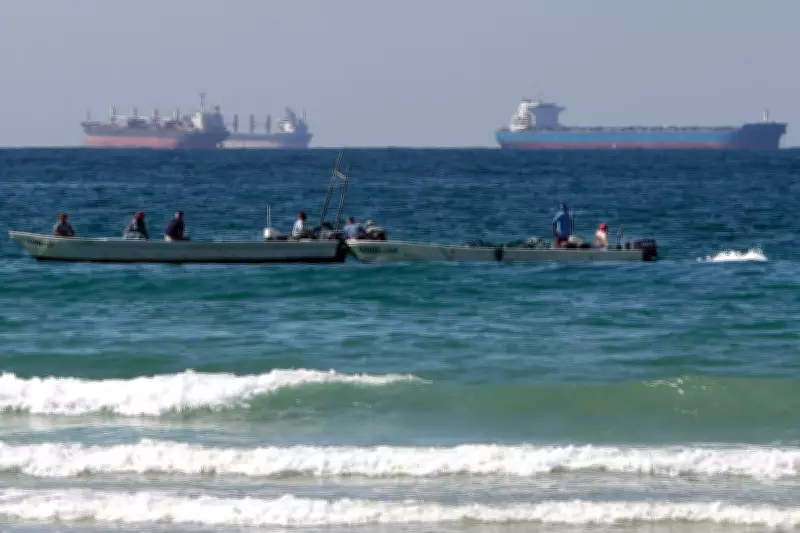
The widening war in Iran has produced dramatic effects on global energy markets. Iranian drone and missile attacks have effectively shut down nearly all tanker traffic through the Strait of Hormuz, the vital sea passage from the Persian Gulf that handles 20% of the world's oil needs.
This closure has sent prices soaring. International benchmark Brent crude rose to $89 per barrel, up from just under $73 a week earlier. Russia's Urals blend export price hit $70, a substantial increase from below $40 as recently as December.
The timing represents a potential reversal of fortune for Russia's fossil fuel revenues, which had been dwindling due to previously weak global prices and tightening Western sanctions targeting Russia's "shadow fleet" of tankers used to evade price caps.
Broader Energy Market Implications
The conflict's ripple effects extend beyond crude oil. Qatar, a major supplier of liquefied natural gas (LNG), suspended production after an Iranian drone strike on its largest LNG plant early in the conflict. This development will sharply increase global competition for available cargoes, including those from Russia.
European natural gas prices for future delivery have soared, raising questions about the European Union's plans to halt remaining imports of Russian gas by 2027. The disruption highlights the interconnected nature of global energy markets and how conflicts in one region can create unexpected consequences elsewhere.
Russia's Financial Position
For Moscow, the timing is particularly significant. Russian state oil and gas revenue had fallen to a four-year low of 393 billion rubles ($5 billion) in January, with that month's budget shortfall of 1.7 trillion rubles ($21.8 billion) representing the largest on record.
Oil and gas tax revenues typically constitute 20% to 30% of the Russian federal budget. With tax calculations based on oil prices after producers cover costs of approximately $15 per barrel, price fluctuations can substantially impact government revenue.
Kremlin spokesman Dmitry Peskov acknowledged the increased demand for Russian oil amid the Middle East conflict, stating that "India and China are guided by their national interests, and we do the same." He added that Russia "can guarantee all contracted supplies" despite the challenging circumstances.

Uncertain Future Scenarios
Much depends on the duration of the Iran conflict. Oil market analysts suggest that if hostilities conclude within one to two weeks, prices could quickly return to prewar levels around $65 per barrel, providing Russia with minimal lasting benefit.
However, a prolonged conflict that causes long-term damage to oil infrastructure in Saudi Arabia, Iraq, the United Arab Emirates, and Kuwait—potentially sending oil prices above $100 per barrel—could deliver a substantial and lasting windfall to Russia.
As the situation develops, this temporary waiver highlights the complex balancing act between geopolitical objectives, economic pressures, and energy security concerns in an increasingly volatile global landscape.