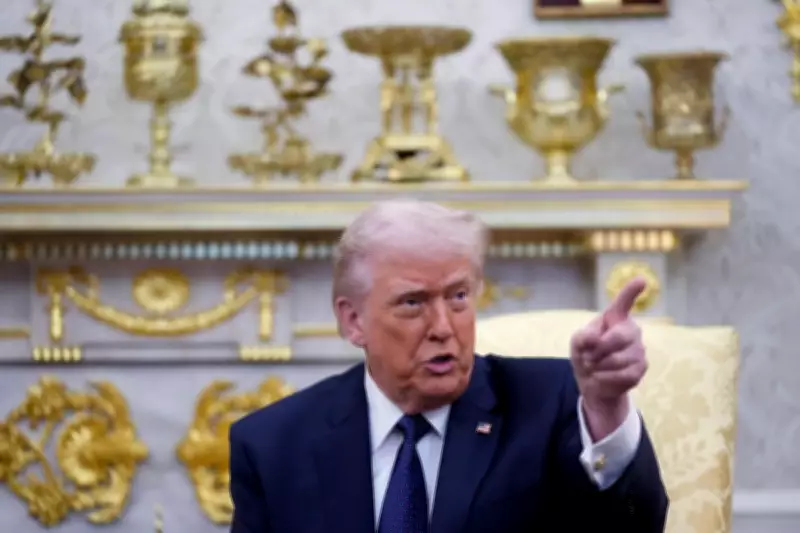
Trump's Spain Trade Threat: Legal Realities of EU Single Market
Donald Trump's dramatic threat to "cut off all trade with Spain" has generated immediate and forceful reactions from political figures and media outlets worldwide. Beyond the sensational headlines, this declaration raises fundamental questions about international trade law and the practical realities of global commerce. The central issue revolves around whether the United States can genuinely suspend all commercial relations with a nation like Spain under current international frameworks.
The EU's Integrated Trade Architecture
The primary legal obstacle to Trump's threat lies in the European Union's integrated trade structure. The United States does not conduct trade with Spain as an independent sovereign state in commercial matters, but rather with the European Union as a whole. Since the establishment of the Single Market in 1993, authority over tariffs, trade agreements, and protective trade measures has resided exclusively with EU institutions rather than individual member states.
This means external trade relations are managed at the European level, not through bilateral national agreements. The integration is so profound that trade between EU members isn't legally classified as "exports" but rather as "intra-community deliveries." These transactions appear in trade statistics as dispatches from the country of origin and arrivals in the destination country, illustrating the seamless nature of the internal market.

Economic Interdependence and Production Networks
The legal framework is reinforced by economic realities that make isolating any single EU member exceptionally challenging. Europe's economy functions as an integrated production network where goods frequently contain components manufactured across multiple countries. A German-assembled automobile might incorporate parts produced in Spain or Italy, while Spanish agricultural products often undergo processing or distribution in other EU nations before reaching global markets.
This phenomenon, known as global value chains, characterizes much of contemporary international trade and is particularly evident within the European Union. The deep economic interdependence between developed, highly integrated economies means commercial isolation of one member state from the broader European internal market would be extraordinarily complex, far more so than political rhetoric might suggest.
International Trade Rules and WTO Principles
Despite recent pressures on multilateral systems through trade wars, economic sanctions, and unilateral measures, international trade remains governed by established rules and principles. The World Trade Organization's foundational guidelines include non-discrimination between trading partners and prohibitions against arbitrary trade restrictions.
A complete suspension of commercial relations with a trading partner would represent a significant challenge to these governing principles and raise serious questions about compliance with international trade law. The move would test the resilience of the global trading system and potentially trigger broader consequences beyond the immediate bilateral relationship.
The European Union's Decisive Response
The ultimate viability of any U.S. trade measures against Spain depends crucially on the European Union's response. Even if Washington implemented targeted trade pressure through harsh tariffs or product restrictions, the EU's reaction would determine the outcome. Should Brussels determine that U.S. measures targeting Spain affect the internal market's functioning, it could treat them as initiating a trade conflict between the United States and the entire European Union.
This would transform what might appear as a bilateral dispute into a comprehensive transatlantic trade confrontation. The alternative approach—allowing Washington and Madrid to handle the matter independently—would carry profound implications by treating an EU member as if it operated outside European trade frameworks, directly challenging the internal market's unity.

Broader Implications for European Integration
Trump's threat extends far beyond a simple bilateral disagreement between nations. Such a measure would inevitably impact the European Single Market and, consequently, the European Union in its entirety along with continental trade systems. The European Commission has consistently maintained that trade measures directed at individual EU members must be addressed at the Union-wide level, reflecting treaty obligations regarding external trade relations.
The fundamental question isn't whether the United States could attempt to implement such measures, but whether the European Union would respond as a unified trading bloc as required by its own treaties when engaging with third countries. This scenario presents a significant test of European cohesion and the practical application of shared trade policy in the face of external pressure.