

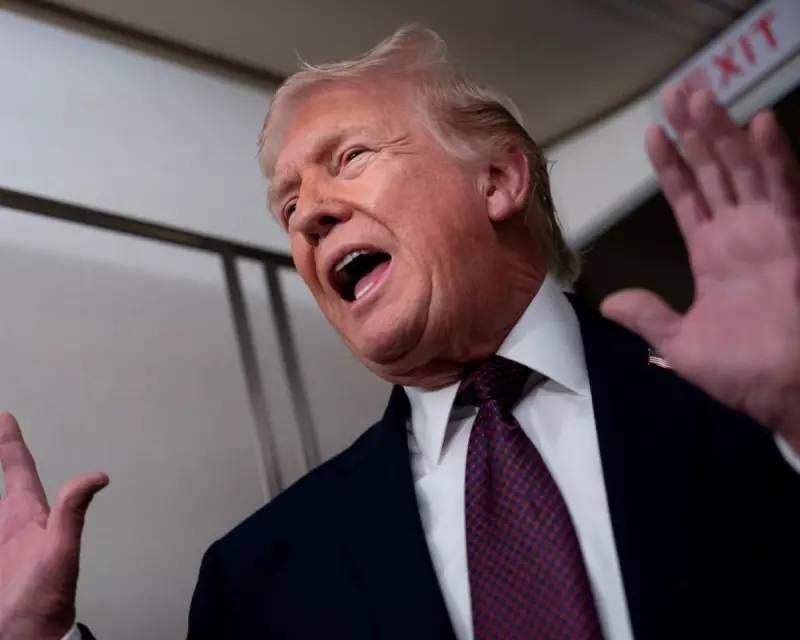
Former US President Donald Trump has issued a stark warning, declaring it would create a "complete mess" if the Supreme Court of the United States moves to strike down his administration's sweeping global trade tariffs.
A Crucial Legal Test Looms
In a lengthy social media post, Trump stated unequivocally that the country would be "SCREWED" should the highest court rule against the tariffs. A decision in this pivotal case, which represents a crucial legal test of both his controversial economic strategy and his presidential power, could come as soon as Wednesday.
The former president argued that reversing the tariffs would be exceptionally difficult, as businesses and nations could immediately begin claiming refunds. He elaborated, suggesting the process would take many years to untangle the sums involved and determine who should be paid, and when.

Supreme Court Scepticism and the Path to a Ruling
Trump's comments follow a hearing before the Supreme Court in November, where justices appeared deeply sceptical of the legal foundation for the Trump administration's tariff regime. During oral arguments, the court questioned the extent of presidential authority to impose such wide-reaching levies unilaterally.
The impending ruling will decide the legality of tariffs that formed a cornerstone of Trump's "America First" trade policy. The outcome carries significant weight, not just for past actions but for defining the boundaries of executive power in international trade for future administrations.
Potential Fallout and Economic Consequences
Trump emphasised the scale of the potential disruption, stating, "It would be a complete mess, and almost impossible for our Country to pay." His warning underscores the high stakes of the court's deliberation, which could force a complex and costly unwinding of trade policies affecting billions of dollars in goods.
Observers note that a decision against the former president could trigger a wave of litigation and refund claims, creating prolonged uncertainty for global markets and businesses that have adjusted their supply chains around the tariff landscape established during his term in office.






