Trump Announces Sweeping 10% Global Tariffs Following Supreme Court Defeat
In a dramatic escalation of his trade agenda, former President Donald Trump has announced the imposition of a blanket 10% tariff on all countries, effective almost immediately. This move comes directly after the US Supreme Court delivered a major blow by overturning his previous "reciprocal tariffs" policy on Friday, February 21, 2026.
Supreme Court Overturns Reciprocal Tariffs, Prompting Presidential Fury
The Supreme Court, in a 6-3 majority decision, ruled that a 1977 law did not grant Trump the authority to impose tariffs without congressional approval. These reciprocal tariffs, which had been levied on most of the world since April 2025 under an emergency powers law, were consequently struck down. The court's decision represents a significant setback for Trump's economic strategy, which had collected over $133 billion (£98.4 billion) in revenue, now potentially subject to refunds to importers.
Trump responded with characteristic fury, branding the ruling "terrible" and labelling the justices who opposed him as "fools and lapdogs." In a series of posts on Truth Social around midnight UK time, he claimed the court "has been swayed by foreign interests" and asserted that while other nations might be "dancing in the streets" following the ruling, "they won't be dancing for long."

New Global Tariff Structure and Legal Justifications
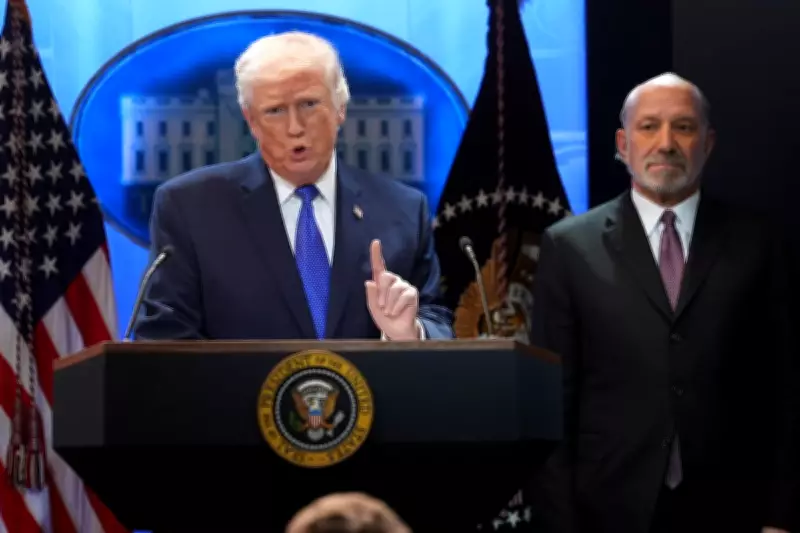
Undeterred, Trump swiftly announced a new trade offensive. Speaking from the Oval Office, he declared it his "Great Honor" to sign an order for a "Global 10 per cent Tariff on all Countries." He argued that the Supreme Court's decision paradoxically affirmed his ability to charge tariffs under different legal statutes.
"In order to protect our country, a president can actually charge more tariffs than I was charging in the past," Trump stated at the White House. "Under the various tariffs authorities, so we can use other of the statutes, other of the tariff authorities, which have also been confirmed and are fully allowed."
He detailed that existing national security tariffs under Section 232 and Section 301 would remain fully in force. The new 10% global tariff is being imposed under Section 122, layered over normal tariffs already in place. Trump indicated this blanket tariff would be operational for approximately five months, during which time his administration would conduct investigations to establish what he termed "fair tariffs" on other countries through Section 301 and other mechanisms.
"Their decision was ridiculous but, now the adjustment process begins, and we will do everything possible to take in even more money than we were taking in before!" Trump added in a follow-up social media post, directly criticising the Supreme Court Justices.
Implications for the United Kingdom and Global Trade
The ruling and subsequent tariff announcement have created significant uncertainty for international trade partners, including the United Kingdom. Previously, the UK had secured a privileged trading position, receiving the lowest tariff rate of 10% under the reciprocal system, with subsequent deals negotiated by Sir Keir Starmer and Trump providing further carve-outs for Britain's steel industry and car manufacturers.
A UK Government spokesperson commented: "This is a matter for the US to determine but we will continue to support UK businesses as further details are announced. Under any scenario, we expect our privileged trading position with the US to continue and will work with the administration to understand how the ruling will affect tariffs for the UK and the rest of the world." This statement was an updated version that notably removed an earlier reference to the UK enjoying "the lowest reciprocal tariffs globally."
Trump himself cast doubt on the longevity of some post-reciprocal tariff deals, stating, "Some of them stand. Many of them stand. Some of them won't, and they'll be replaced with the other tariffs." UK officials, however, are understood to believe the Supreme Court's decision will not impact most of Britain's trade with America, including preferential agreements on steel, cars, and pharmaceuticals.

Business and Campaign Group Reactions
The British Chambers of Commerce (BCC) expressed concern, stating the Supreme Court's decision did little to "clear the murky waters for business" regarding US tariffs. William Bain, head of trade policy at the BCC, noted that Trump could utilise other legislation to reimpose tariffs and emphasised the ongoing priority for the UK to negotiate reductions, particularly on steel and aluminium tariffs.
Campaign group Best for Britain offered a stark assessment, arguing the situation "underlines the instability of doing deals with Trump's USA and the importance of forging deeper, more reliable trade with our EU neighbours."
As the global trading community braces for impact, Trump's latest tariff decree signals a renewed and aggressive approach to international economic policy, setting the stage for potential trade disputes and diplomatic tensions in the months ahead.