Iran Appoints Supreme Leader's Son Amid War, Sending Oil Prices Soaring
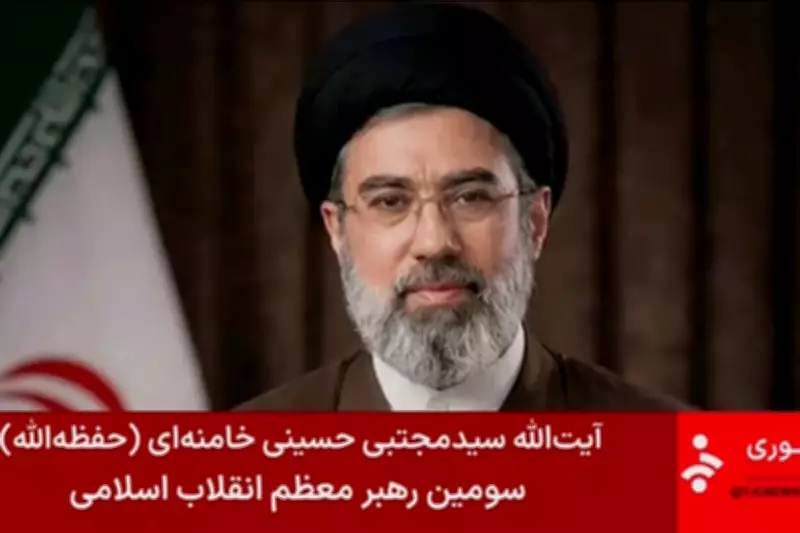
Mojtaba Khamenei, the 56-year-old son of Iran's late supreme leader, was officially named on Monday as the Islamic Republic's next ruler. This appointment places a hard-line cleric with deep ties to the paramilitary Revolutionary Guard in charge, as escalating conflict across the Middle East drives oil prices to unprecedented heights. The Assembly of Experts selected Khamenei following more than a week of intense assaults by the United States and Israel on Iran's theocratic regime.
War Escalation and Oil Market Turmoil
Since the death of Ayatollah Ali Khamenei on February 28, during the initial stages of the war, Iran's Revolutionary Guard has launched a relentless barrage of missiles and drones targeting Israel and Gulf Arab states. This aggressive military posture has coincided with Iran's effective blockade of the Strait of Hormuz, a critical shipping lane through which approximately one-fifth of the world's oil transits. The disruption has severely hampered tanker traffic between the Persian Gulf and the Gulf of Oman.
As a direct consequence, Brent crude oil, the international benchmark, surged to over $114 per barrel on Monday. This represents a staggering increase of around 60% since the commencement of hostilities involving Israel and the United States against Iran. The dramatic spike has ignited widespread global concern over potential economic repercussions. In response, U.S. President Donald Trump sought to downplay the situation, characterizing the price surge as a temporary phenomenon. On social media, Trump asserted, "Short term oil prices, which will drop rapidly when the destruction of the Iran nuclear threat is over, is a very small price to pay for U.S.A., and World, Safety and Peace."

New Leader and Regional Attacks
Mojtaba Khamenei, who had maintained a low public profile since the war began, now assumes control of Iran's armed forces and will oversee critical decisions regarding the nation's nuclear program. He is widely perceived as holding even more hard-line views than his late father. His selection, however, was not without internal controversy. Some political figures within Iran voiced criticism, arguing that the hereditary transfer of the supreme leader's title risked creating a clerical dynasty reminiscent of the deposed shah's rule, which was overthrown during the 1979 Islamic Revolution.
Despite these objections, top clerics in the Assembly of Experts reportedly favored Khamenei's appointment to ensure a steadfast prosecution of the ongoing war. The Revolutionary Guard issued a statement of support for the new leader, as did the Iran-backed Lebanese militant group Hezbollah. Ali Larijani, a senior Iranian security official, praised the assembly for convening "courageously" amidst continuing airstrikes in Tehran, expressing confidence in Khamenei's ability to manage the crisis.
Infrastructure Strikes and Regional Fallout
Iran has expanded its offensive beyond military targets, launching attacks on critical energy and water infrastructure across the region. On Monday, a fire erupted at an oil facility in Fujairah, United Arab Emirates, following an assault. Saudi Arabia reported intercepting several drones targeting its massive Shaybah oil field, while Israel announced new airstrikes on central Iran. Additional attacks were reported in Kuwait, Qatar, and Bahrain, where a residential area was struck, injuring 32 people, including several children.
Bahrain also accused Iran of damaging one of its desalination plants, though authorities confirmed that water supplies remained operational. These attacks on desalination facilities pose a severe threat to millions of residents and stranded travelers in the arid region, raising alarms about potential humanitarian crises. In Iraq, a drone was shot down as it approached a U.S. military compound at Baghdad International Airport, though no injuries were reported. Pro-Iranian Iraqi militias have previously targeted the base.

Diplomatic and Human Toll
The escalating conflict has prompted significant diplomatic responses. The U.S. State Department ordered nonessential personnel and families of staff to evacuate Saudi Arabia, with similar directives issued for diplomatic missions in Bahrain, Iraq, Jordan, Kuwait, Lebanon, Qatar, the United Arab Emirates, and the consulate in Karachi, Pakistan. The human cost of the war continues to mount, with official reports indicating at least 1,230 fatalities in Iran, 397 in Lebanon, and 11 in Israel. Israel recently reported its first soldier deaths, with two killed in southern Lebanon during clashes with Hezbollah.
Furthermore, the U.S. military confirmed that a service member died from injuries sustained in an Iranian attack on troops in Saudi Arabia on March 1, bringing the total American military deaths to seven. As the conflict intensifies, regional anger is palpable. Saudi Arabia condemned Iran following the thwarted drone attack on the Shaybah oil field, warning that Tehran would be the "biggest loser" if it continues to target Arab states. The Saudi Foreign Ministry cautioned that Iranian aggression would lead to "further escalation which will have grave impact on the relations, currently and in the future."