The Strategic 'Gate of Tears': A Global Trade Chokepoint Under Threat
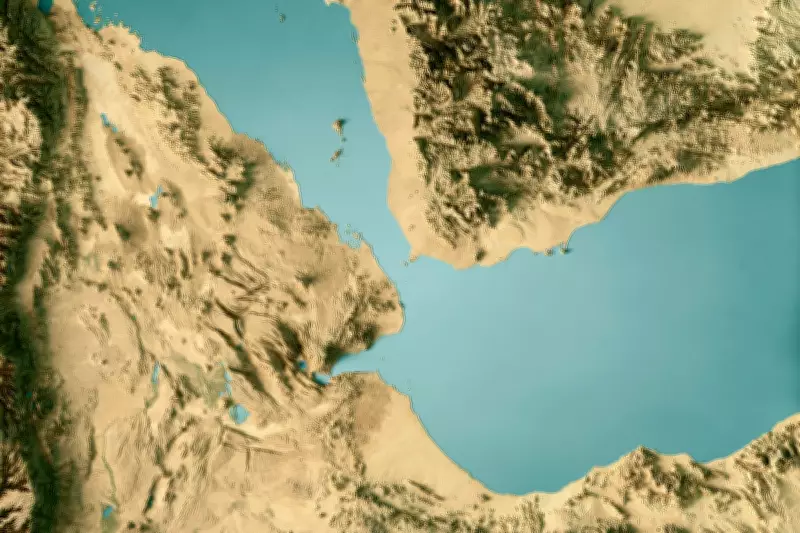
Escalating tensions in the Middle East have cast a spotlight on the Bab al-Mandab Strait, a crucial maritime passageway that could become the next flashpoint in a widening regional conflict. Known historically as the 'Gate of Tears', this narrow waterway between Yemen and Djibouti serves as a vital artery for global commerce, particularly for oil and liquefied natural gas shipments. The potential for Houthi rebels, backed by Iran, to blockade this strait has raised alarm bells among economists and security analysts worldwide.
Geopolitical Tensions and the Threat to Shipping Lanes
The situation has intensified following former US President Donald Trump's threats to blockade the Strait of Hormuz, another critical Middle Eastern chokepoint. In response, Iran could potentially deploy its Houthi allies in Yemen to halt maritime traffic through Bab al-Mandab, creating a dual crisis for global shipping. Since the outbreak of war in Iran at the end of March, the Houthi rebels' entry into the conflict has specifically heightened concerns about their capacity to disrupt this essential corridor.
Iran's current control of the Strait of Hormuz has already constrained approximately 20% of the world's oil supply – a figure nearly three times larger than during the 1973 oil crisis. This has sent shockwaves through energy markets, with Brent crude oil prices surging past $100 per barrel recently, marking a 7% increase that threatens to worsen the ongoing global energy crisis.

The Economic Significance of Bab al-Mandab
Measuring approximately 50 kilometres in length and 16 kilometres in width, the Bab al-Mandab Strait connects the Red Sea to the Arabian Sea, forming a crucial link in the maritime trade route between the Mediterranean and the Indian Ocean via the Suez Canal. While the Strait of Hormuz typically handles around one-fifth of global oil and gas transit, Bab al-Mandab sees approximately 12% of worldwide oil shipments pass through its waters, along with substantial volumes of other commercial goods.
According to US Energy Information Administration data, daily oil transit through Bab al-Mandab peaked at 9.3 million barrels between 2020 and 2023. However, this figure plummeted to 4.1 million barrels in 2024 after Houthi forces launched systematic attacks on commercial vessels associated with Israel using the strait. The economic repercussions have been severe, with trade through the Suez Canal falling by 50% in early 2024 compared to the previous year.
Consequences of Potential Closure
The closure or significant disruption of both the Strait of Hormuz and Bab al-Mandab would represent a catastrophic scenario for international trade, potentially severing energy supplies from the Middle East entirely. Mona Yacoubian, an expert at the US Center for Strategic and International Studies, warned that Iran's escalation strategy could involve ensuring Gulf countries cannot export oil either, potentially through further attacks on energy infrastructure or deploying Houthi forces to blockade Bab al-Mandab.
Already, major shipping firms have been forced to reroute vessels around the Cape of Good Hope in South Africa, adding 10-14 days to journey times and dramatically increasing transportation costs. Insurance premiums for vessels navigating the region have surged alongside these operational challenges.
Saudi Arabia's Strategic Dependence
Bab al-Mandab has provided Saudi Arabia with a crucial alternative route for oil exports since the closure of the Strait of Hormuz. The kingdom has strategically utilised its Yanbu port on the west coast, which receives oil through an east-to-west pipeline operating at maximum capacity. According to freight analyst Matthew Wright of Kpler, Yanbu has become 'the most active port out of the Middle East gulf at the moment', with Saudi Arabia exporting 4.6 to 5 million barrels of crude oil daily from this facility, 80% of which is destined for Asian markets.

Wright emphasised that losing Yanbu's export capacity, combined with the existing restrictions on Hormuz shipments, would create a 'major problem' for global energy supplies. The Bab al-Mandab Strait also provides access to other vital regional ports including Djibouti's Doraleh, Eritrea's Assab, Somalia's Kismayu, and Somaliland's Berbera, making its security essential for multiple economies.
As geopolitical tensions continue to simmer, the world watches nervously to see whether the 'Gate of Tears' will live up to its ominous name, potentially delivering another devastating blow to an already fragile global economy struggling with energy insecurity and trade disruptions.