

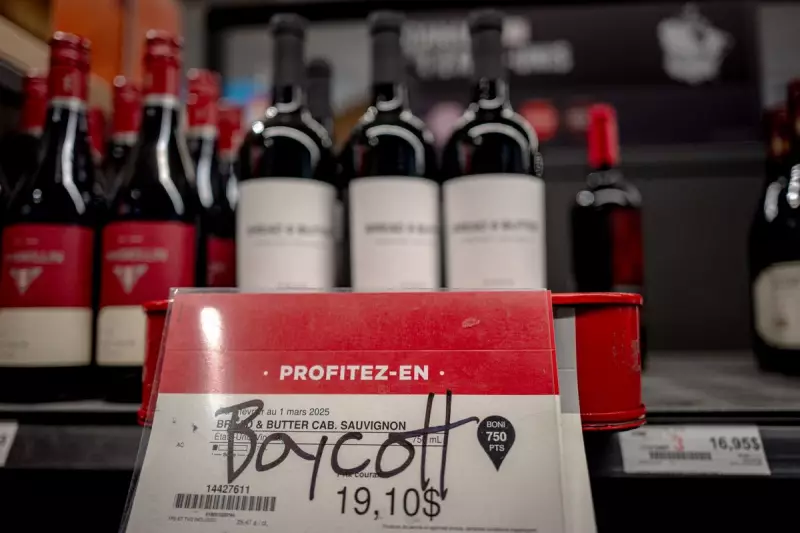
A steadfast consumer boycott in Canada, driven by anger over former President Donald Trump's aggressive trade policies, has caused sales of American wine to its northern neighbour to collapse by a staggering 91 percent since 2024. The dramatic slump underscores a deep-seated resentment that continues to define cross-border relations.
Patriotic Pushback: The Boycott's Enduring Support
According to a new survey by the Nanos Research Group for Bloomberg, almost three-quarters (73 percent) of Canadians remain in favour of maintaining the boycott of American alcohol brands. This shows little sign of abating, with only 20 percent believing it is time to retreat from the trade conflict. The movement was ignited by President Trump's return to power and his threats to use "economic force," the imposition of 25 percent tariffs on Canadian steel and aluminum, and rhetoric about crushing the nation's auto industry.
Provinces including Quebec and Ontario took direct action last year, pulling US spirits and wines from store shelves and actively encouraging consumers to buy local alternatives. This patriotic response has had a devastating commercial impact. In October 2025 alone, US Department of Agriculture data shows wine sales to Canada were down 84 percent year-on-year, with spirits falling 56 percent.

Distillers in Distress: The Cost for American Brands
The consequences for specific American producers have been severe. In a complaint to US Trade Representative Jamieson Greer, vintners highlighted that Canada was the top export market for US wine in 2024 before the boycott. The situation is equally dire for spirits giants.
Brown-Forman Corporation, the Kentucky-based maker of Jack Daniel's, reported organic net sales of its Tennessee whiskey to Canada plummeted by more than 60 percent in the first half of fiscal 2026. Rival Jim Beam has been forced to pause production at its main Kentucky distillery, citing not only the Canadian slump but also falling bourbon exports to Europe and Japan.
Some companies have been compelled to make radical changes. Minnesota’s Phillips Distilling Company, facing a 70 percent sales decline in Canada, opted to outsource production for that market to a contractor in Montreal rather than continue distilling products domestically for export north.
Political Stalemate and Wider Economic Chill
The White House has responded by ramping up pressure on Prime Minister Mark Carney’s government to lift the provincial bans. Trade Representative Greer has warned that doing so is a condition for a successful review of the crucial US-Mexico-Canada Agreement this year. However, talks were derailed in October 2025 when Trump became infuriated by an Ontario government advert featuring a clip of Ronald Reagan condemning tariffs as a foreign policy tool.
The political impasse reflects a broader economic cooling. The Nanos poll found that 71 percent of Canadians are now "less likely" to purchase any US-made goods, with a further 11 percent "somewhat less likely." Statistics Canada also noted this week that trips to the US by plane and car are down 28 percent compared to last year, clear evidence of a neighbour giving the cold shoulder for as long as Trump remains in office.
Despite the economic pain on both sides, the mood in Canada remains resolute. The boycott has evolved from a protest against specific tariffs into a broader symbol of national defiance and economic self-reliance.






