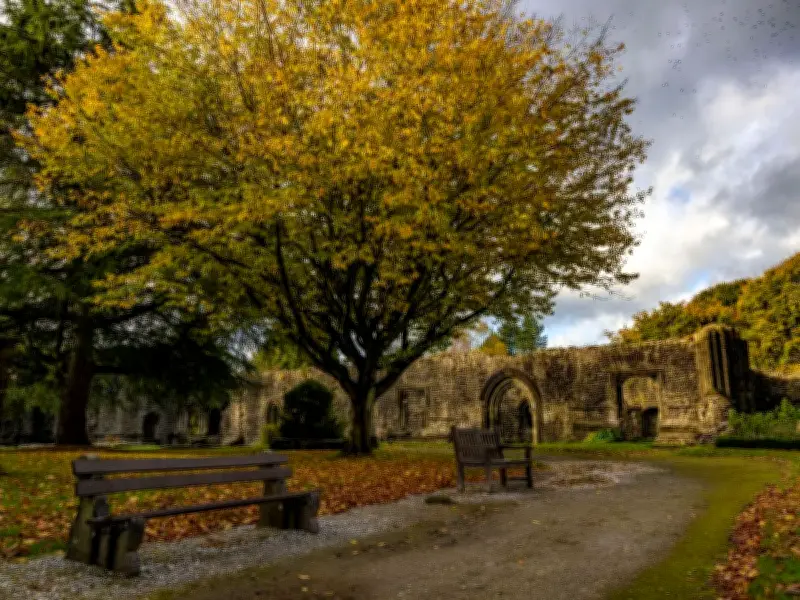
Whalley, a village in the Ribble Valley, is a prime spot for an autumnal day out, boasting medieval ruins, a viaduct and a woodland. Located on the banks of the River Calder, it is a bustling village with independent shops, cafes and restaurants, and has a railway station with a direct train from Manchester.
Historic buildings and gastronomy
The village is packed with historic buildings set against the backdrop of the Ribble Valley. Walk along its streets and you’ll catch glimpses of green hills in the distance between the rooftops.
The Ribble Valley is known for its gastronomy, and Whalley is no exception. The village is home to numerous bars, pubs and restaurants, including the Whalley Wine Bar, which serves sharing boards and small plates along with a selection of wines; Vault Bar & Kitchen, offering a range of international dishes; and The Dog Inn, offering traditional pub grub.
Whalley Abbey and the gatehouse
On the edge of the village is Whalley Abbey, a 14th-century Cistercian monastery. Today its buildings are used for several purposes, whether it’s booking an escape at the Retreat House or using the Conference House for meetings. The abbey’s grounds are open to visitors and free to walk around. Here you’ll find the remains of the old monastery, and one of the best times to see it is during autumn, as the ruins look particularly spectacular against the golden autumn leaves.
Close to the abbey is the gatehouse, which has a road running through it. Looked after by English Heritage, this small building features vaulted ceilings and was one of the first buildings belonging to the abbey to be built.
The viaduct and Spring Wood
Another special feature of the village is the viaduct, completed in 1850. Built to carry the railway over the River Calder, it is longer than the Ribblehead Viaduct, consisting of 48 arches and reaching 600 yards long.
For an autumnal walk, Spring Wood on the edge of the village is well worth a visit. Once owned by the monastery, this semi-natural ancient woodland dates back before 1600 and was one of the few areas not cleared for agriculture. It is known for its spectacular bluebell and ransom displays in the spring but can be equally magical at this time of the year. There are lots of easy-to-follow paths weaving through the wood, and if you climb up the hill you’ll be rewarded with views of Longridge Fell and the surrounding fells of the Forest of Bowland.