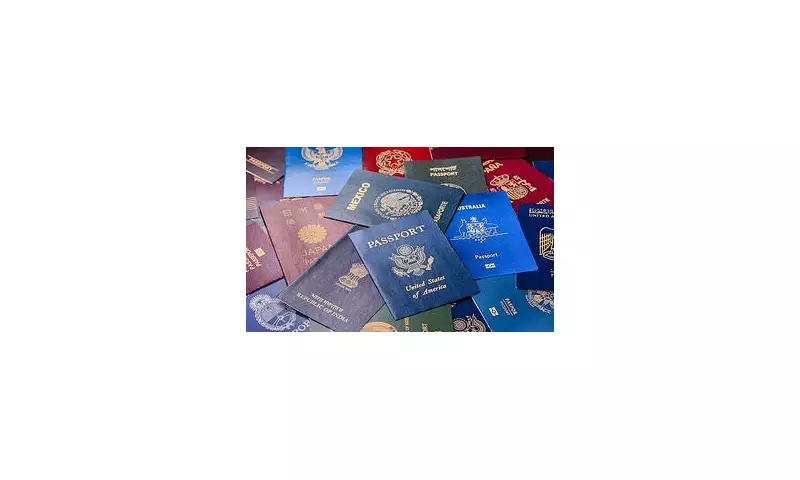
As millions of Brits look ahead to booking their 2026 holidays, a surge in passport applications has highlighted a curious global uniformity. Despite a world of colour, more than 90 per cent of the planet's passports are confined to just four hues: red, blue, green, and black.
The Secret Language of Passport Colours
According to travel expert Jamie Fraser of Wildpacks, the choice is far from arbitrary. "People assume every country simply picks a colour they like, but passport colours carry deep meaning," he explains. The colours often signal political alliances, religious identity, or practical considerations.
Red passports are frequently linked to European Union identity or historic political ties, with many member states and nations like Turkey opting for the shade. Blue is dominant across the Americas and is also used by the United Kingdom post-Brexit. Green covers are commonly associated with Islamic nations, while black is chosen for its dignified, practical appearance by countries like New Zealand.

Durability and Security Dictate the Palette
The move towards standardisation accelerated in the 20th century as global travel expanded, requiring documents that were easy for border officials to quickly identify. However, the reasons for the limited palette extend beyond simple recognition.
Printing specialists Carrick Signs point to manufacturing and longevity demands. "Darker colours, like navy, black and deep burgundy, hide dirt, scuffs and wear much better than bright tones," they state. This is critical for a document handled constantly for up to a decade.
Furthermore, passport covers must be made from highly durable materials with embedded security fibres and anti-tamper laminates. These specialised materials and the inks that withstand UV light perform best with deep, solid colours. Printers cannot guarantee the same level of security or longevity for pastel or neon shades.
Global Passport Power: UK Slips to 35th Place
This insight into passport design comes as the UK's standing in global travel freedom has seen a notable shift. The latest Nomad Capitalist Passport Index, which ranks 199 countries, has placed the United Kingdom in 35th position.
The annual index evaluates nations on five key factors: visa-free travel opportunities, taxation of citizens, global perception, dual citizenship availability, and personal freedom. The top spot was claimed by Malta, praised for its strong performance across all categories.
Greece, Ireland, and Romania shared second place. Greece scored highly for visa-free access, Ireland for perception and freedom, and Romania for personal freedom. All three also received top marks for allowing dual citizenship. Cyprus completed the top five, also recognised for its dual citizenship policies.
Only two nations significantly break the four-colour mould: Norway, with its distinctive salmon pink ordinary passport, and Fiji, which uses a turquoise shade taken directly from its national flag.