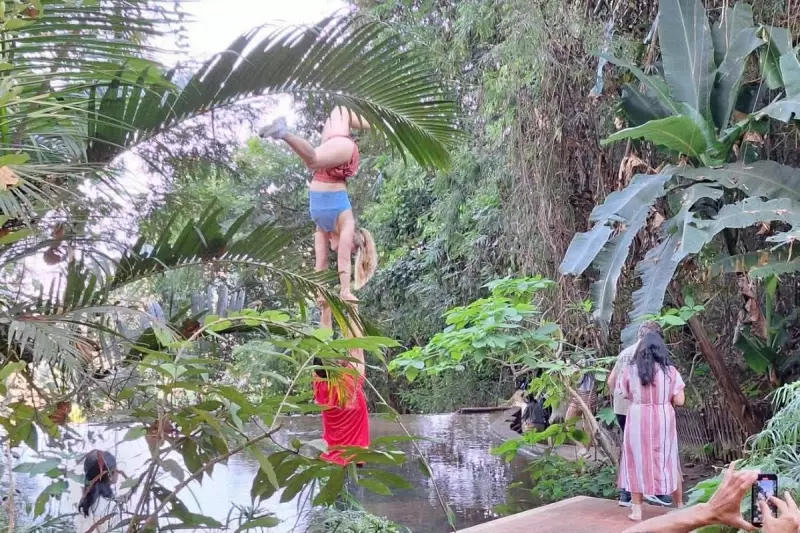
Authorities at a revered 14th-century Buddhist temple in northern Thailand have issued a stern warning to foreign visitors, cautioning against performing yoga and gymnastics on the premises while wearing what they deem "revealing" clothing. The administration of Wat Pha Lat in Chiang Mai has declared such acts disrespectful and inappropriate for the sacred sanctuary, which remains an active place of worship for monks.
A Sacred Site, Not a Recreational Space
The temple, often referred to as the "hidden temple" due to its peaceful and secluded jungle setting on the slopes of Mount Doi Suthep, has seen a surge in tourist popularity in recent years. Located approximately halfway to the famous Wat Phra That Doi Suthep, the site has traditionally offered a tranquil retreat. However, recent incidents have prompted a forceful response from temple officials.
In a strongly worded Facebook post, the temple administration clarified its status, stating: "Wat Pha Lat is a Buddhist temple and a sacred sanctuary – NOT a recreational park or a gym." The post highlighted specific behaviours that have caused concern, including acro-yoga, climbing on ancient structures and rocks, and wearing revealing clothing within the temple grounds.

Triggering Incidents and Public Backlash
The warning follows several documented incidents where foreign tourists were observed engaging in activities considered inappropriate. Images shared online showed tourists sunbathing in bikinis near the temple, sparking significant backlash from local communities. Furthermore, photographs circulated of individuals performing yoga and gymnastic poses against the backdrop of the ancient temple, actions widely criticised as showing disregard for cultural and religious norms.
One particularly shared picture depicted a man assisting a woman in performing an acro-yoga pose, a physical practice blending yoga and acrobatics. The image showed the woman in a handstand-styled pose with onlookers nearby, either watching or taking photographs. Such displays have been deemed incompatible with the site's primary function as a place of spiritual reflection and worship.
Consequences of Continued Disrespect
The temple administration has delivered an ultimatum: if such behaviour persists, they will be compelled to permanently close the site to all foreign tourists. This drastic measure underscores the seriousness with which temple authorities view the preservation of decorum and sanctity. The warning serves as a clear call for visitors to respect the cultural and religious significance of the location.
Broader Context of Tourist Behaviour in Asia
This incident is not isolated within the region. In Indonesia's Bali last year, authorities introduced new guidelines to address "misbehaviour" among foreign tourists, aiming to protect the island's cultural integrity. These rules included requirements for modest dress at sacred sites, polite behaviour, and specific prohibitions, such as barring menstruating women from entering certain temple areas.
Similarly, in Japan, the Watadzumi Shrine on Tsushima Island has restricted access to all non-worshippers following repeated disrespect from a foreign visitor, even banning photography and casual sightseeing. Historical precedents also exist, such as the 2017 case where two American tourists were detained and fined in Thailand after sharing photographs of themselves baring their buttocks in front of a famous Bangkok temple landmark.
The situation at Wat Pha Lat highlights an ongoing tension between increasing tourist numbers and the preservation of cultural and religious sites. Temple officials emphasise that while visitors are welcome, they must adhere to standards of respect that honour the site's primary purpose as a sanctuary for Buddhist practice and reflection.