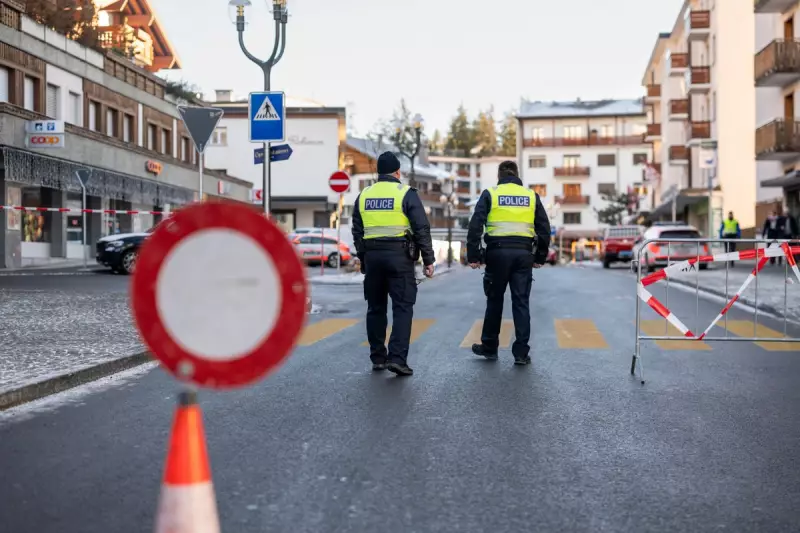
A devastating fire at a bar in the Swiss ski resort of Crans-Montana in the early hours of New Year's Day has resulted in a significant loss of life, with dozens of people presumed dead and approximately 100 more injured, authorities have confirmed. This tragic incident adds to a long and sombre history of deadly fires in entertainment venues across the globe, where a combination of overcrowding, flammable materials, and inadequate safety measures has repeatedly led to catastrophe.
A Global Catalogue of Tragedy
The recent Swiss fire is a stark reminder of similar disasters. In March 2025, a pyrotechnic flame at the Pulse club in Kocani, North Macedonia, ignited the roof, causing a fire and stampede that killed 63 and injured over 200. Just a year earlier, in April 2024, a blaze at Istanbul's Masquerade nightclub claimed 29 lives, trapping workers during renovations.
Other recent tragedies include a fire across three clubs in Murcia, Spain, in October 2023 (13 dead), and two separate incidents in January 2022: one in Sorong, Indonesia (19 dead), and another in Yaounde, Cameroon, where fireworks triggered explosions, killing 17.

Historic Disasters and Recurring Causes
Looking further back, the patterns of cause and preventable loss become chillingly clear. The 2003 Station nightclub fire in Rhode Island, USA, where band pyrotechnics set fire to flammable foam, killed 100 people. In 2004, a flare ignited ceiling foam at the Cromagnon Republic club in Buenos Aires, Argentina, killing 194.
Perhaps the most infamous in recent European history was the 2015 Colectiv nightclub fire in Bucharest, Romania, where a pyrotechnics display during a rock gig led to 64 deaths. Similarly, the 2013 Kiss nightclub fire in Santa Maria, Brazil, killed over 200 when ceiling foam caught fire and released poisonous gases.
Lessons from the Past
Many of history's deadliest venue fires share common, preventable factors. The use of indoor pyrotechnics and fireworks near flammable decor is a frequent catalyst, as seen in Perm, Russia (2009, 152 dead) and Bangkok, Thailand (2009, 67 dead). Blocked or inaccessible exits have consistently turned blazes into death traps, notably at the Happy Land club in New York (1990, 87 dead) and the Ghost Ship warehouse in Oakland (2016, 36 dead).
These recurring tragedies have sometimes spurred changes in safety regulations. The 1942 Cocoanut Grove fire in Boston, which killed 492, led to new requirements for sprinklers and exits in the United States. However, as the ongoing list of incidents demonstrates, the enforcement of such measures and the dangers of complacency remain a global challenge.
The fire in Crans-Montana is a heartbreaking start to the new year and a solemn addition to a history that underscores the critical, non-negotiable importance of rigorous fire safety in all public spaces where people gather to socialise and celebrate.